

Preserving the flavour of coffee and the dry, pourable texture of sugar requires careful control over environmental factors like humidity, oxygen, and temperature. By understanding the chemical properties of these kitchen staples, you can select the ideal storage vessels and locations to prevent staleness and clumping.
The Chemistry of Coffee Degradation: Oxygen and Light
Coffee beans are complex organic structures containing volatile aromatic compounds, lipids, and carbon dioxide. As soon as roasting is complete, these compounds begin to degrade through oxidation and off-gassing. Oxygen is the primary catalyst for staling; it reacts with the delicate lipids in the beans, leading to rancidity and a flat, bitter taste profile. This oxidation process is significantly accelerated by exposure to ultraviolet (UV) light, which breaks down chemical bonds in a process known as photodegradation.
To prevent this, coffee must be stored in completely opaque containers. Clear glass jars, whilst aesthetically pleasing, allow light waves to penetrate and initiate chemical decay. Additionally, the container must feature a reliable airtight seal—typically a food-grade silicone gasket with a mechanical clasp—to isolate the beans from atmospheric oxygen. Ground coffee is even more vulnerable than whole beans due to its drastically increased surface area, making rapid sealing critical after every use.
The Physics of Sugar: Moisture and Caking
Unlike coffee, sugar (sucrose) does not spoil or oxidise in a way that alters its chemical composition over time. Instead, its main enemy is moisture. Sucrose is highly hygroscopic, meaning it readily attracts and binds water molecules from the surrounding air. When relative humidity rises above a critical threshold, a thin film of water forms on the surface of the sugar crystals, dissolving a tiny fraction of the sucrose.
When the humidity drops again, this moisture evaporates, and the dissolved sugar recrystallises. This process creates solid crystalline bridges between the individual grains, turning loose granulated sugar into a hardened, brick-like mass. To maintain free-flowing sugar, you must store it in a strictly airtight environment where humidity cannot fluctuate. Opaque containers are not strictly necessary for sugar from a chemical perspective, but a perfect hermetic seal is mandatory.
Material Science: Selecting the Best Canister
Choosing the right material for your storage canisters involves balancing thermal mass, light transmission, and chemical inertness. Here is how the most common materials perform:
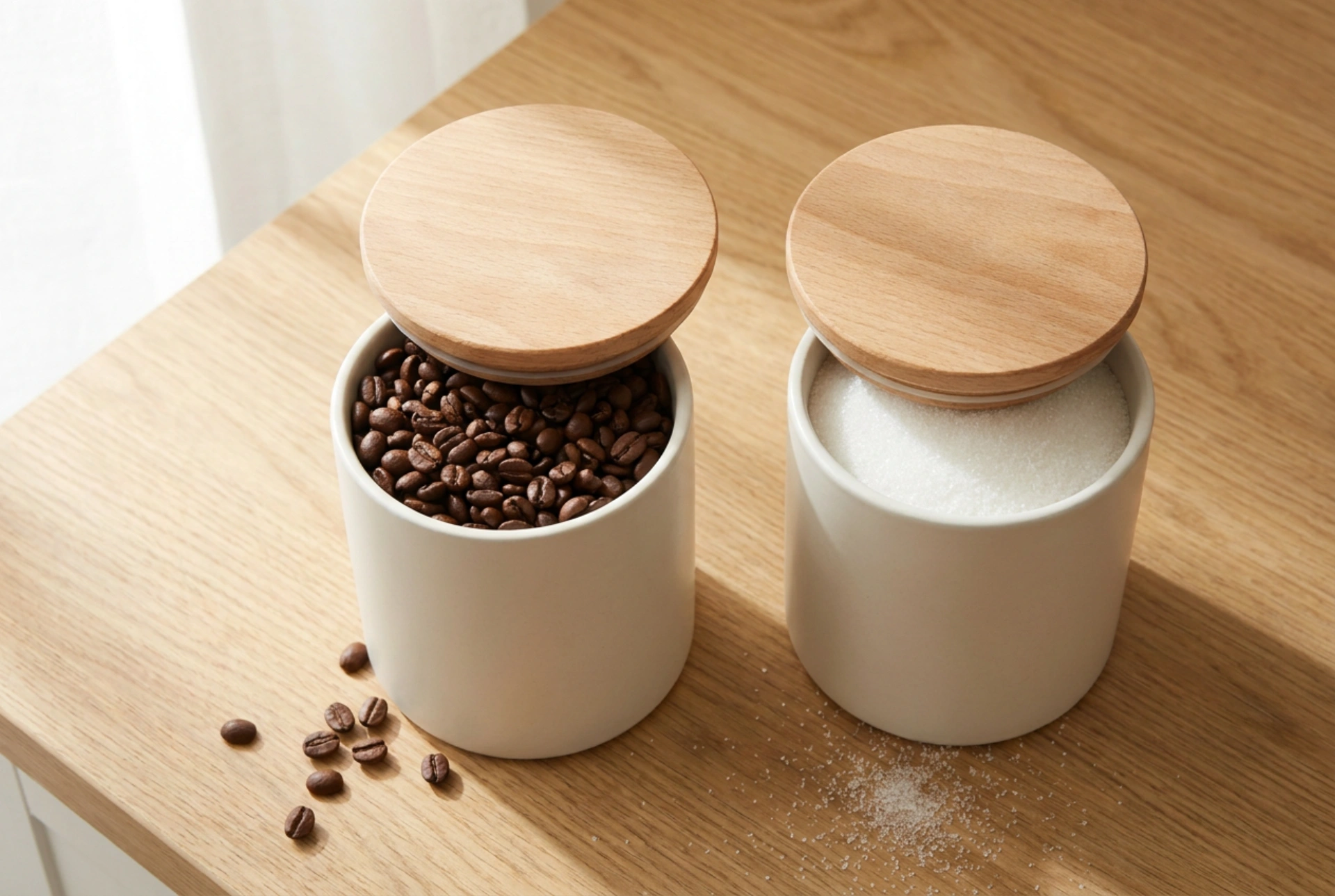
- Ceramic: Excellent for both coffee and sugar. Glazed ceramic is chemically inert, blocks 100% of light, and possesses high thermal mass, which helps buffer against sudden ambient temperature swings in the kitchen.
- Stainless Steel: Highly durable and completely opaque. Ensure the canister is made of food-grade stainless steel (such as 304 grade) to prevent any metallic taste transfer. It is ideal for coffee but requires a high-quality silicone seal.
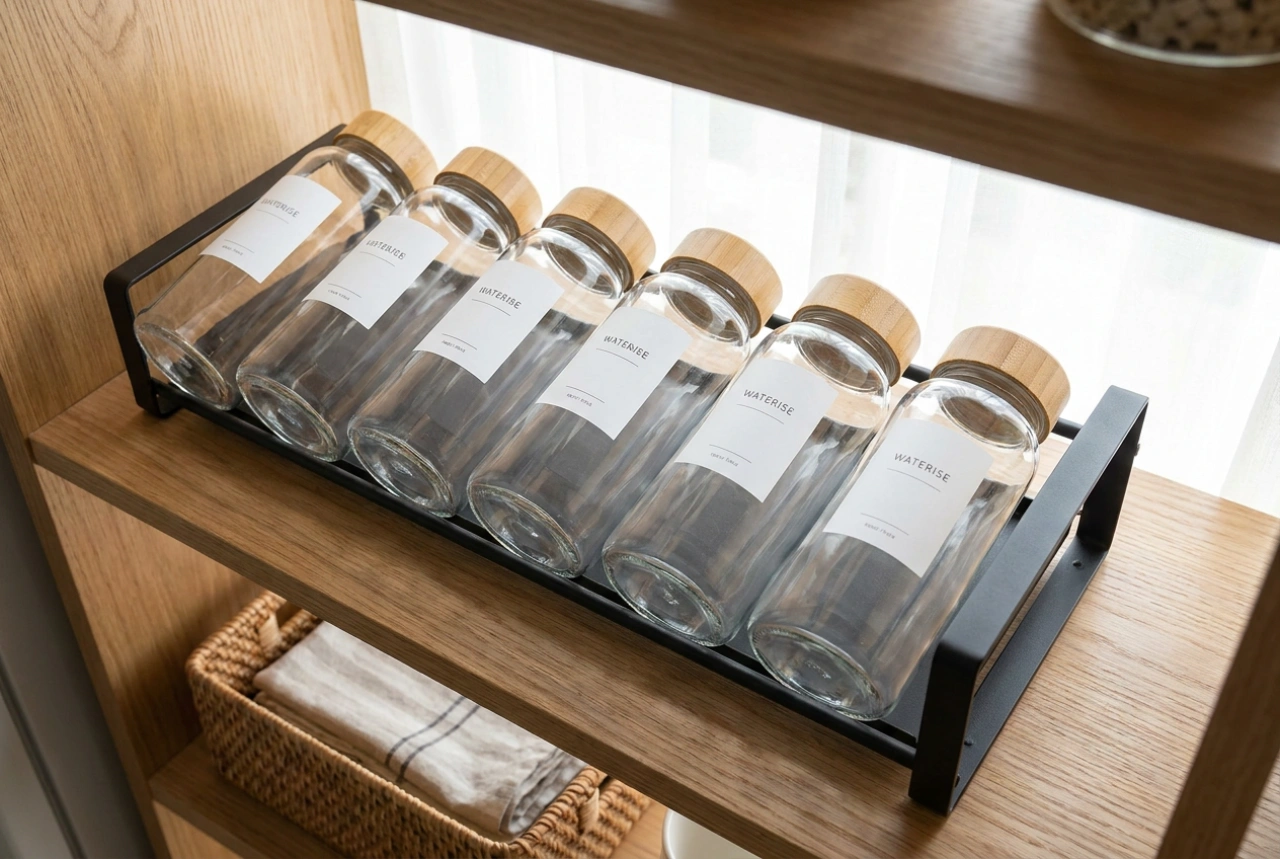
- Glass: Chemically inert and easy to clean, but its transparency makes it unsuitable for coffee unless kept inside a dark cupboard. It works well for sugar, provided it features an airtight lid.
- Wood and Bamboo: While visually appealing, natural wood is porous and can absorb moisture or transfer organic compounds and odours to your coffee or sugar. If using wood, ensure it serves only as an external lid coupled with a silicone seal, rather than the primary storage wall.
Temperature Control and the Myth of the Fridge
Many homeowners instinctively place coffee in the refrigerator or freezer to extend its shelf life. However, this practice often backfires due to the physics of condensation. Every time a cold canister is opened in a warm room, moisture from the air instantly condenses on the cold surfaces of the beans or sugar. This moisture accelerates the staling of coffee and causes immediate clumping in sugar.
The optimal location for both canisters is a cool, dark pantry or a cupboard positioned far away from heat sources like ovens, dishwashers, or direct sunlight. A stable temperature between 15°C and 20°C is ideal for maintaining the molecular integrity of both ingredients.