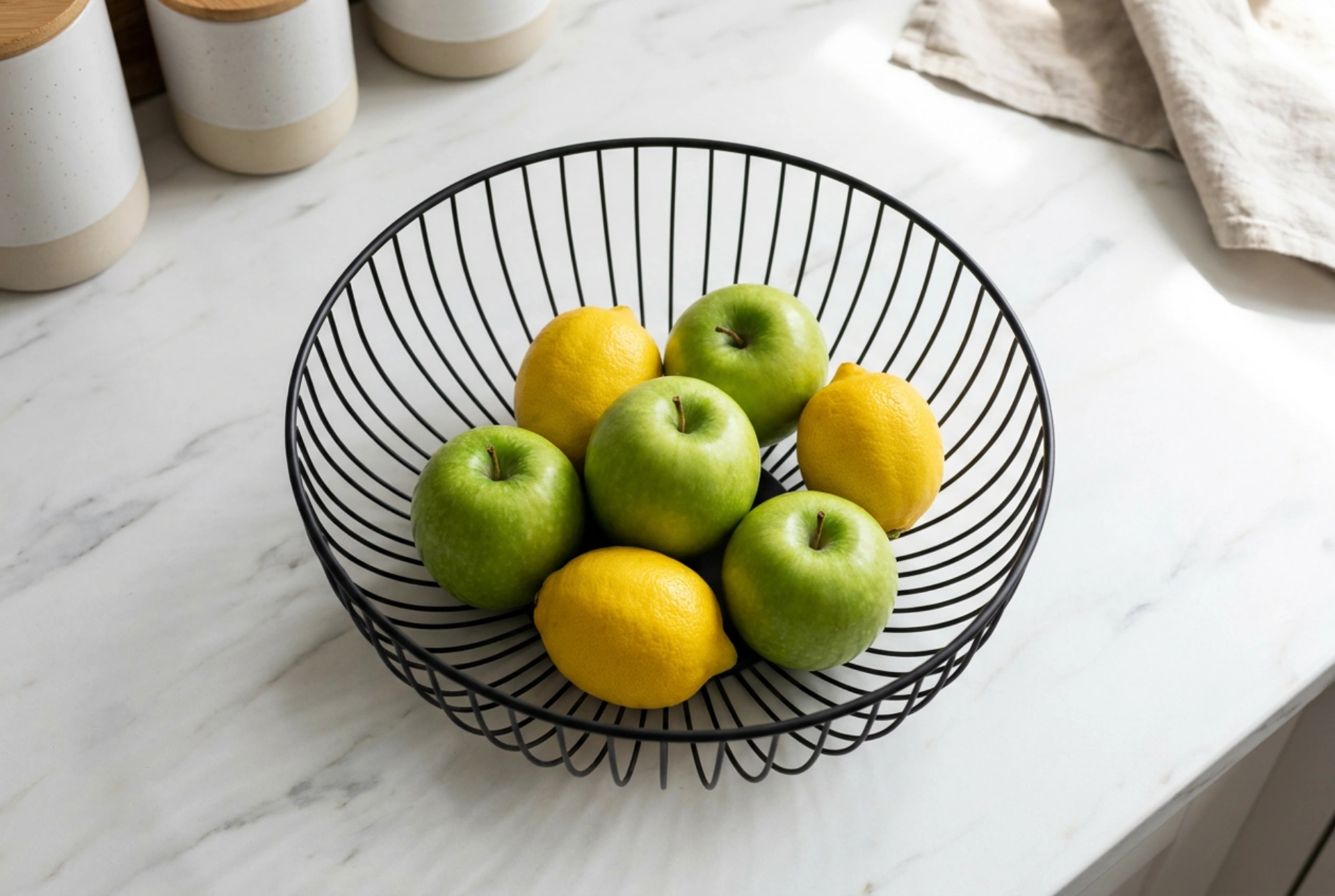


Proper fruit storage relies on managing respiration rates and ethylene gas accumulation. Storing fresh produce in an open metal wire basket is an excellent way to harness natural airflow, preventing premature spoilage and moisture buildup.
The Science of Respiration and Ethylene Gas
Even after harvest, fruits remain living organisms that undergo cellular respiration. This process involves taking in oxygen, breaking down stored sugars, and releasing carbon dioxide, water vapour, and heat. A critical byproduct of this metabolic activity is ethylene, a natural plant hormone that triggers and accelerates ripening. If fruits are kept in enclosed containers, ethylene and moisture accumulate rapidly, creating a warm, humid microclimate that encourages mould spores to germinate and speeds up decay.
A metal wire basket solves this problem through physics. The open, latticed structure maximizes air movement, allowing gases to disperse instantly. This continuous passive ventilation prevents localized humidity spikes on the surface of the fruit skins, keeping the protective outer layer dry and intact. To optimise this natural draft, place your basket in an open area rather than tucked away in a cramped corner or under a low cabinet, which can trap air pockets.
Strategic Layering: Managing Weight and Airflow
The arrangement of fruit within a metal basket directly influences its shelf life. Gravity and pressure are major catalysts for spoilage. When fruits are piled haphazardly, the weight of the upper layers exerts physical pressure on those at the bottom. This pressure damages the delicate cell walls of the fruit, a process known as bruising. Once cell walls rupture, polyphenol oxidase enzymes react with oxygen, leading to browning, tissue softening, and an open invitation for fungal infections.
To mitigate mechanical damage, follow a strict layering hierarchy based on weight and structural density:
- Base Layer: Place heavy, thick-skinned fruits such as citrus (lemons, oranges, grapefruits) or unripe melons at the very bottom. Their robust rinds can withstand physical loads without bruising.
- Middle Layer: Position medium-weight fruits like apples or pears. Ensure they are spaced out to allow air channels between them.
- Top Layer: Reserve the peak for delicate, thin-skinned fruits like peaches, nectarines, or bananas. These should never support any weight.
Furthermore, avoid overfilling the basket. A good rule of thumb is to leave at least 30% of the basket's volume as empty space to ensure air can circulate freely around every single piece of produce.
Separating Climacteric and Non-Climacteric Varieties
Understanding the distinction between climacteric and non-climacteric fruits is essential for maintaining freshness. Climacteric fruits, such as bananas, apples, and tomatoes, continue to ripen after picking and release high volumes of ethylene gas. Non-climacteric fruits, including citrus and grapes, do not ripen significantly after harvest and produce very little ethylene, but they are highly sensitive to its presence.
If you store a high-ethylene producer like a ripe banana directly adjacent to a lemon, the ethylene will trigger the rapid breakdown of chlorophyll in the lemon, causing it to turn yellow, soften, and spoil prematurely. While a metal basket's open airflow helps dilute this gas, direct physical contact can still cause localized over-ripening. Position ethylene-sensitive fruits on the outer edges of the basket, and consider keeping heavy ethylene producers on a separate hook or a dedicated shelf.
Preventing Acid-Metal Chemical Reactions
Fresh fruits contain various organic acids, primarily citric, malic, and tartaric acids. While metal baskets are highly durable, the type of metal matters. Raw, untreated metals like iron, copper, or low-grade steel can react chemically with these organic acids, especially if the fruit skin is slightly damaged or damp. This reaction, a form of chemical corrosion, can leave dark stains on the fruit, impart a metallic taste, and degrade the metal itself.
To prevent this, ensure your metal basket is made of food-grade stainless steel or coated with a food-safe powder finish. The powder coating acts as an inert barrier, preventing direct contact between the metal atoms and the fruit acids. If you are unsure about the finish of your metal basket, line the bottom with a single layer of unbleached parchment paper. This provides a breathable barrier that protects both the fruit and the metal without restricting the vital airflow coming through the sides of the wire mesh.