

Wooden laundry hampers add a natural, aesthetic warmth to modern bathrooms, but their organic structure makes them highly susceptible to humidity, warping, and mould if left unprotected.
The Science of Wood and Moisture Absorption
Wood is a naturally hygroscopic material, meaning it constantly interacts with its environment by absorbing and releasing water vapour to reach an equilibrium moisture content. In a humid bathroom, wood fibres swell as they take in moisture from hot showers. When the room cools and dries, these fibres contract. This continuous cycle of expansion and contraction stresses the timber, eventually leading to warping, joint separation, and structural cracking.
Furthermore, placing damp towels or sweaty clothing inside an enclosed wooden space creates a confined microclimate with high relative humidity. This dark, moist environment is the ideal breeding ground for fungal spores, such as mould and mildew, which feed on the organic cellulose within the wood, causing permanent structural decay and persistent musty odours.
Protective Finishes: Oils versus Polyurethane
To shield a wooden hamper from moisture, you must apply a hydrophobic protective barrier. The choice of finish determines how the wood handles moisture exposure:
- Penetrating finishes: Natural oils like tung oil or polymerised linseed oil sink deep into the wood pores. They cure through oxidation, hardening within the timber fibres to repel liquid water while preserving the natural texture of the wood grain. These require periodic reapplication but allow the wood to breathe.
- Film-forming finishes: Acrylic varnishes and polyurethane sealants create a completely solid, impermeable plastic barrier over the wood surface. For bathrooms with poor natural ventilation, a water-based polyurethane coating is highly effective, as it prevents any ambient water vapour from reaching the timber.
When applying any finish, it is crucial to coat all surfaces thoroughly. Moisture often penetrates through untreated joints, raw edges, and the underside of the lid, leading to internal rotting that remains invisible until the structural damage is severe.
Optimising Airflow and Interior Fabric Liners
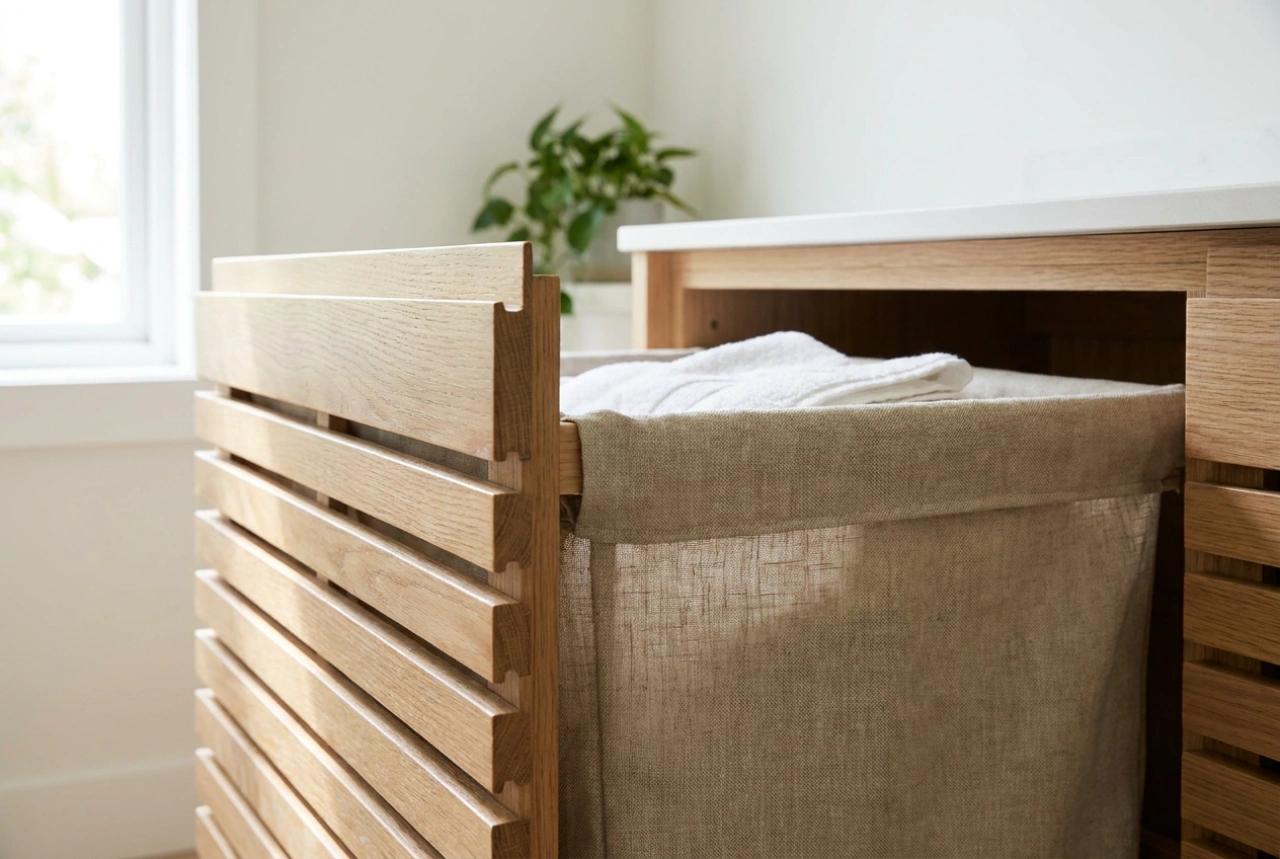
Physical barriers and airflow are your primary lines of defence against moisture accumulation inside the hamper. A well-designed wooden hamper should never rely on solid wood panels alone. It must incorporate slatted sides, decorative lattice patterns, or strategically placed ventilation holes to facilitate passive air circulation. Continuous airflow helps evaporate residual moisture from damp garments, keeping the internal humidity levels low.
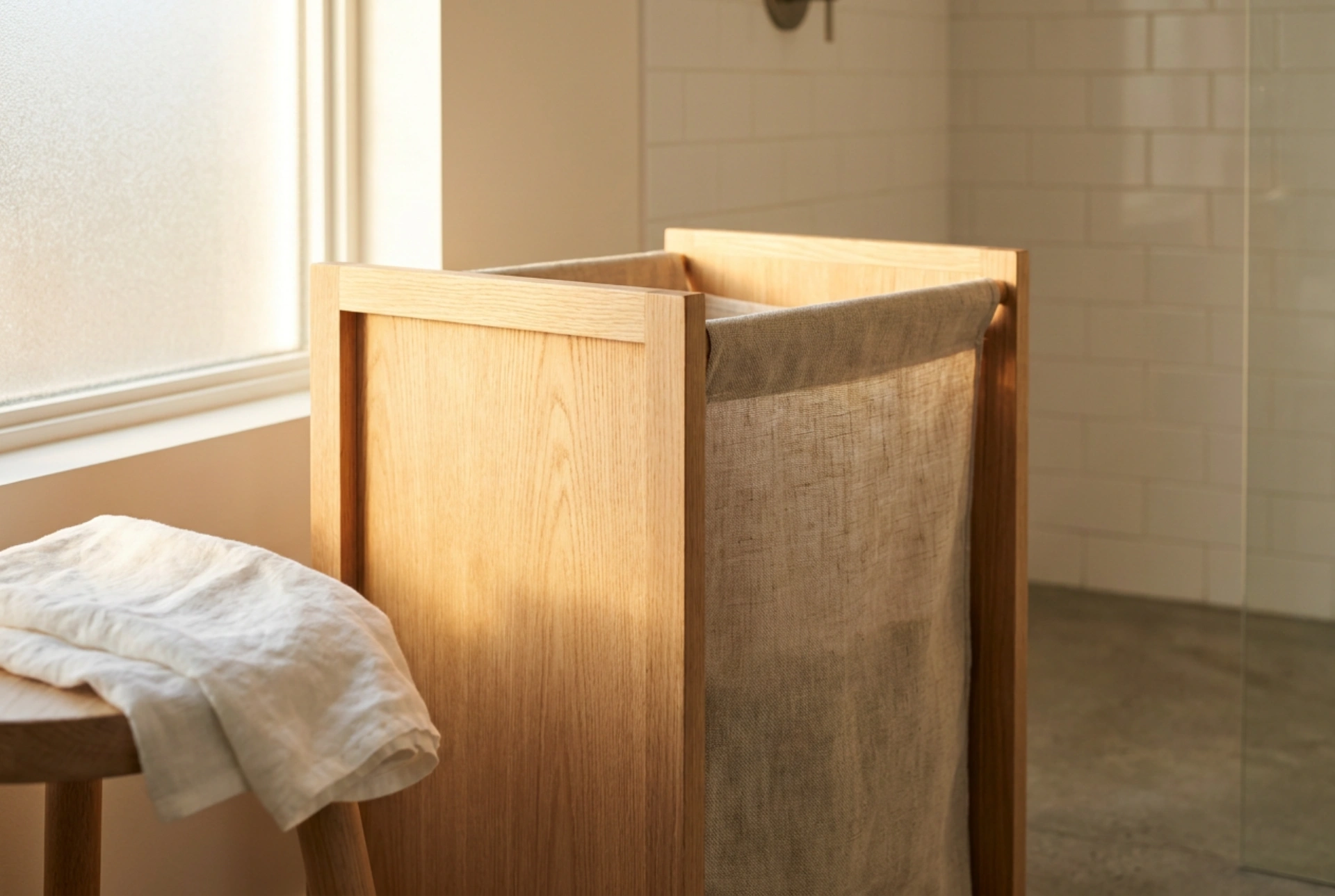
Additionally, always use a removable, washable fabric liner made from natural, breathable fibres such as heavy cotton or linen. The liner acts as a physical barrier, absorbing moisture from damp clothes before it can transfer to the wood. Because these liners can be easily removed, they should be washed at high temperatures regularly to kill any transferred bacteria and fungal spores, keeping the laundry system hygienic.
Capillary Action and Strategic Placement
Moisture damage does not only come from the air or the clothes inside; it also rises from the floor. Bathrooms frequently experience standing water on tiles due to splashes from showers and baths. Through capillary action, raw wooden legs can draw water upward into the main structure of the hamper, leading to localized rotting and discolouration at the base.
To prevent this, elevate the hamper off the wet floor. Choose a design with raised legs, or manually install small silicone, rubber, or plastic glider pads to the bottom of the wooden feet. This simple physical separation breaks the capillary pathway, ensuring the timber remains dry even if the bathroom floor is temporarily wet.