

Ground coffee degrades rapidly when exposed to oxygen, moisture, light, and heat. Understanding the physical and chemical factors behind this staling process allows you to choose the right storage vessels and techniques to preserve its volatile aromatic compounds.
The Chemistry of Coffee Degradation
Once coffee beans are roasted, they begin to release carbon dioxide in a process known as degassing. When these beans are ground, their surface area increases exponentially, accelerating this gas release and exposing the interior lipids and delicate volatile compounds directly to the environment. The primary driver of staling is oxidation. Oxygen reacts with the coffee's oils (lipids), leading to rancidity, while volatile organic compounds (VOCs)—which give coffee its distinct aroma and flavour—evaporate into the surrounding air. Additionally, coffee is highly hygroscopic, meaning it readily absorbs water vapour from the air, which initiates hydrolytic reactions that dull the taste and introduce musty notes.
The Four Environmental Elements to Neutralise
To slow down the staling process, you must construct a barrier against four specific environmental catalysts:
- Oxygen: Atmospheric oxygen is the most destructive element. Standard containers trap a significant volume of air inside when closed, continuing the oxidation process even if the seal is tight.
- Moisture: Relative humidity alters the water activity within the coffee grounds, promoting enzymatic breakdown and flavor spoilage.
- Light: Photodegradation occurs when ultraviolet (UV) light breaks down organic molecules, accelerating the decomposition of the coffee’s chemical structure.
- Heat: Higher temperatures increase the kinetic energy of molecules, doubling the rate of chemical reactions (including oxidation) for every 10°C rise.
Choosing the Right Storage Vessel: Materials and Mechanisms
Choosing a container requires evaluating its material properties and sealing mechanics. Standard plastic containers often fail because certain polymers are gas-permeable, allowing oxygen to slowly diffuse through the walls over time.
Material Properties
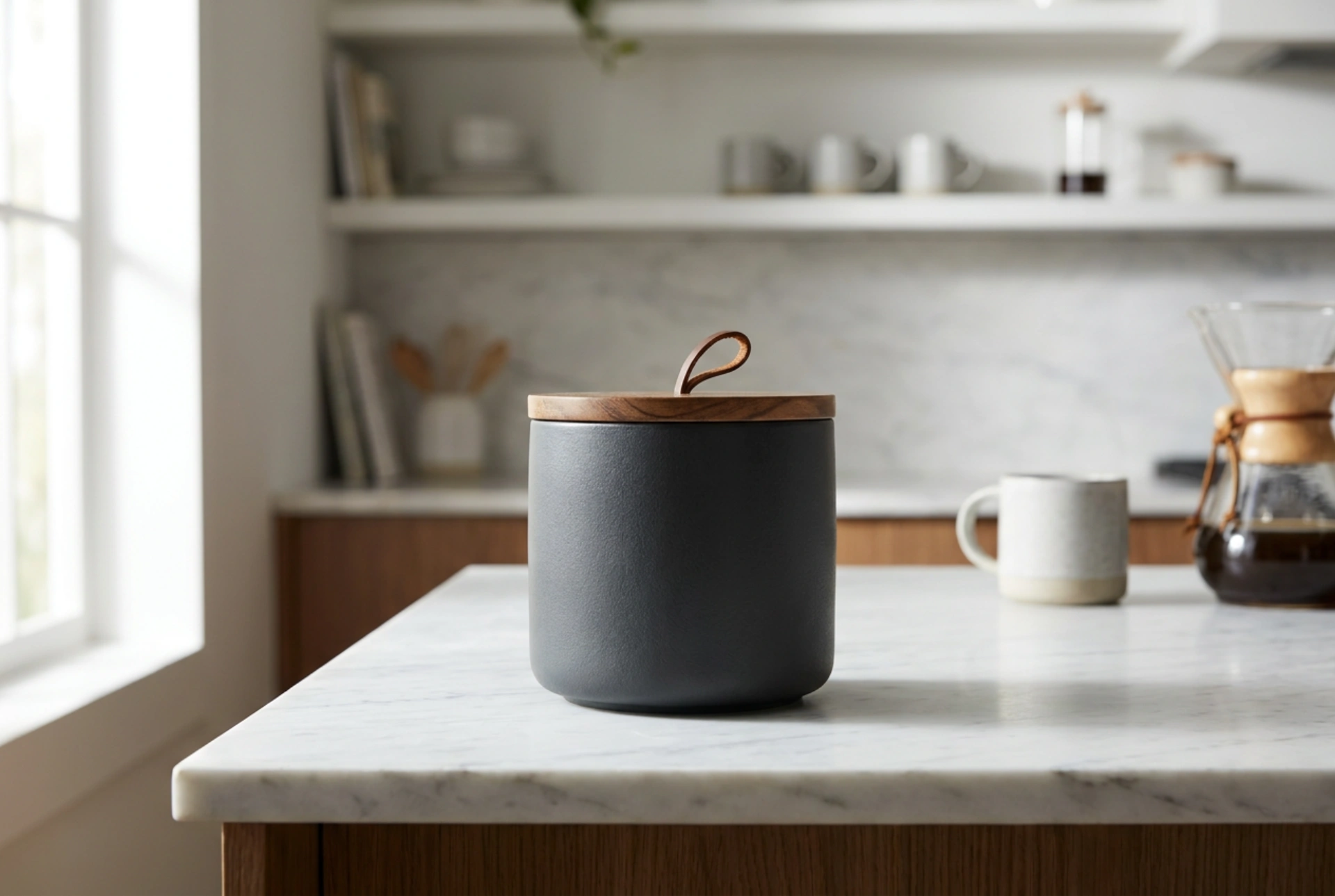
Opt for non-reactive, opaque materials. Stainless steel (specifically food-grade 304 or 18/8) is excellent as it blocks all light and does not absorb oils. High-density, glazed ceramics also provide an effective barrier and thermal mass, helping to buffer minor temperature changes. If using glass, it must be dark-tinted or kept inside a completely dark cupboard to prevent light transmission.
Sealing Mechanisms
Simple airtight lids with silicone gaskets are a basic defense, but they trap ambient air inside the vessel. To truly delay oxidation, utilize containers with a displacement mechanism. These designs feature a plunger or a one-way valve. A plunger lid pushes down directly onto the surface of the coffee grounds, physically expelling the head-space air before locking in place. One-way valves are useful because they allow carbon dioxide to escape without letting oxygen back in, maintaining a low-oxygen environment inside the container.
The Truth About Cold Storage and Temperature Management
While chemical reactions slow down at lower temperatures, storing ground coffee in the refrigerator or freezer is highly risky due to physics. Every time you open a cold container in a warm room, moisture from the air instantly condenses on the cold coffee grounds. This condensation introduces localized moisture that accelerates degradation far quicker than room-temperature storage would. If you must freeze coffee for long-term storage, divide it into single-use portions in completely sealed, airtight bags, thaw them completely before opening, and never re-freeze them. For daily use, store your airtight ceramic or steel canister in a cool, dark pantry away from heat sources like ovens, dishwashers, or direct sunlight.