

Keeping a pizza hot during transport without ending up with a soft, soggy cardboard box and a rubbery crust is a challenge of thermodynamics. The secret to maintaining that perfect pizzeria crispness lies in managing the balance between heat retention and moisture dissipation.
The Physics of Steam and Condensation
A freshly baked pizza emerges from the oven at temperatures exceeding 200°C. As it cools slightly inside the cardboard box, it continuously releases water vapor from the crust, sauce, and cheese. This steam rises and quickly saturates the air inside the box. When you place this box into a standard, tightly sealed thermal bag, the moisture has nowhere to go.
As the warm, humid air hits the slightly cooler inner walls of the thermal bag, it reaches its dew point and condenses into liquid water. This water then drips back onto the cardboard box, weakening its structure and turning your crisp crust into a soggy, chewy mess. To prevent this, you must understand how to facilitate moisture escape while trapping thermal energy.
Selecting the Right Thermal Carrier
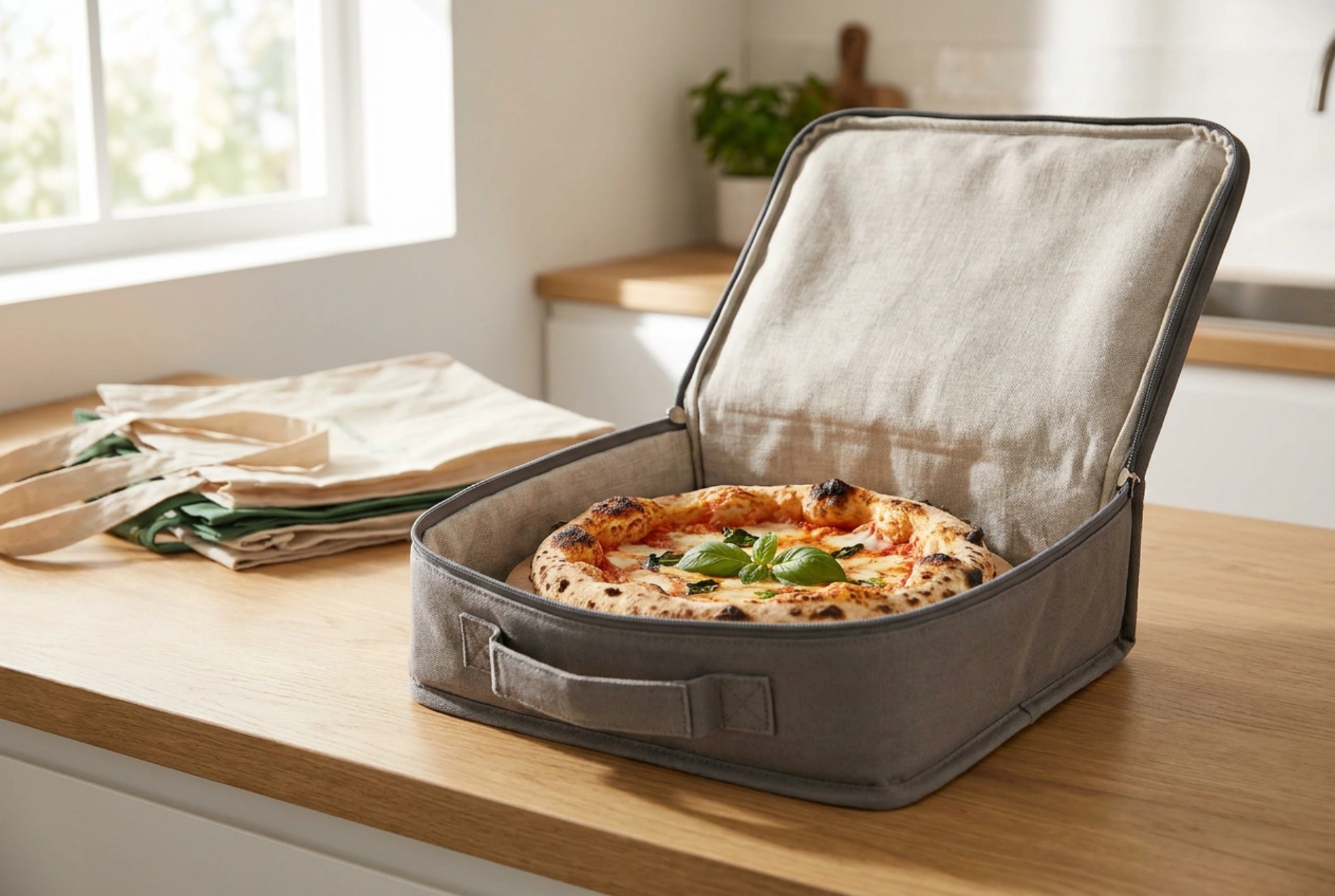
The material composition of your thermal bag dictates how well it handles moisture. Inexpensive bags lined with cheap PVC or non-porous foil act as vapor barriers, trapping all moisture inside. Professional-grade thermal bags utilise breathable fabrics or are engineered with specialized ventilation grommets.
If you are using a standard foil-lined bag, you can manually manage the humidity by utilizing the chimney effect. Leave the zipper slightly open—about two to three centimetres—at the top. This allows the highly energetic, moisture-laden hot air to escape, while the dense, insulated side walls continue to shield the box from lateral heat loss.
Step-by-Step Technique for Moisture-Free Transport
To achieve the best results, follow a precise order of operations when preparing and packing your pizza for transport:
- Pre-warm the bag: Placing a cold box into a cold bag accelerates condensation. Place a warm, dry cloth or a reusable heating pad inside the bag for five minutes beforehand to raise the internal temperature.
- Open the box vents: Most pizza boxes feature small, perforated tabs on the sides. Always push these open to allow steam to exit the box before it enters the thermal bag.
- Create an air gap: Do not let the cardboard box sit flat against the bottom of the thermal bag. Place a small, heat-resistant spacer—such as a small wire cooling rack or a piece of crumpled parchment paper—at the bottom of the bag. This allows air to circulate underneath the box, preventing moisture from pooling.
- Elevate and isolate: If transporting multiple pizzas, insert a thin layer of corrugated cardboard between each box. This prevents heat transfer between the boxes from trapping steam in the middle layers.
The Science of Post-Transport Recovery
Even with perfect airflow, some humidity will inevitably linger inside the box. When you arrive at your destination, immediately remove the box from the thermal bag. Open the lid of the box for thirty seconds to allow the trapped steam to billow out. If the crust has absorbed a minor amount of ambient moisture, placing the pizza on a pre-heated baking steel or a wire rack in a 200°C oven for two minutes will quickly evaporate the surface water, restoring the original crisp texture of the dough.