

Packing a lunch for work is more than just meal preparation; it is an exercise in thermodynamics, material science, and organic chemistry. Managing moisture migration, thermal transfer, and oxidation ensures that your meal remains structurally intact, safe, and texturally appealing after hours of transport.
The Thermodynamics of Temperature Preservation
Controlling the temperature of your lunchbox is critical for slowing down bacterial reproduction and maintaining structural integrity. Heat transfers through three main mechanisms: conduction, convection, and radiation. When you place a warm container next to a cold one, conduction rapidly equalises their temperatures, ruining both dishes.
To keep cold food at safe temperatures (below 4°C), leverage the physics of air density. Because cold air is denser than warm air, it naturally sinks. Placing your gel ice packs directly on top of or wrapped around your food containers—rather than beneath them—creates a downward convection current of cold air, maintaining an even, low temperature throughout the insulated bag. Conversely, when transporting hot meals in a vacuum-insulated stainless steel flask, you must prime the vessel. Stainless steel has high thermal conductivity. If you pour hot food directly into a cold flask, the metal instantly absorbs heat, dropping the food's temperature. Filling the flask with boiling water for two minutes before adding your food warms the inner steel wall, preserving the thermal energy of your meal.
Controlling Moisture Migration and Osmosis
The most common failure in lunchbox organisation is sogginess, which is governed by the principles of osmosis and capillary action. Osmosis occurs when water moves from an area of low solute concentration (inside plant cells) to high solute concentration (the salty or sugary dressing on the outside). If you dress a salad in the morning, the salt draws out the cellular water of your greens, resulting in wilted, limp leaves swimming in a puddle.
To prevent this, use a strict layering technique based on density and hydrophobicity:
- The Hydrophobic Shield: Create a physical barrier. Fats are hydrophobic (water-repelling). Spreading a thin, even layer of butter, cheese, or oil-based pestos on sliced bread blocks moisture from ingredients like tomatoes or cucumbers from penetrating the porous starch matrix of the bread.
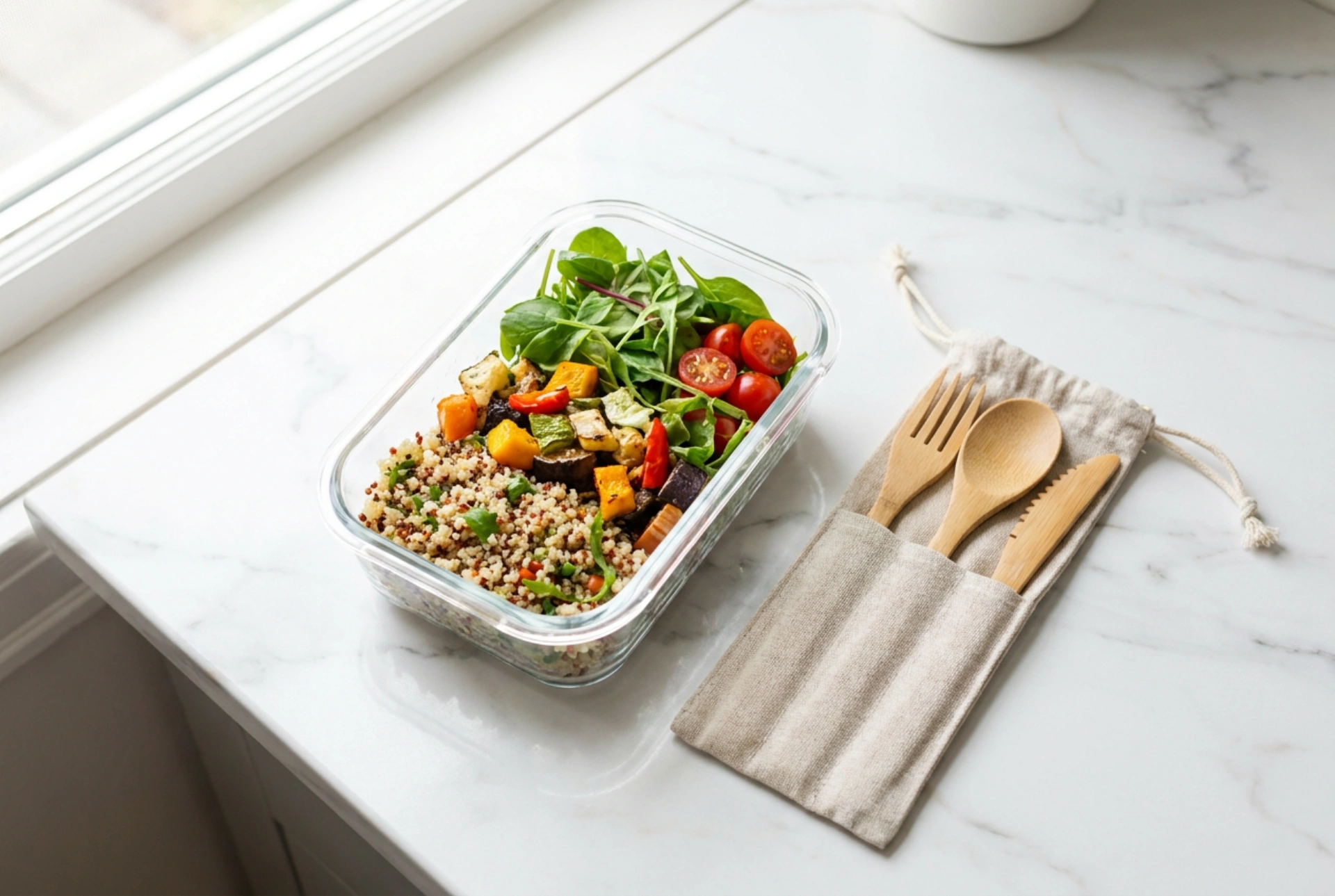
- The Bottom-Up Wet Layering: When packing mixed bowls, place heavy, wet, and dense ingredients (such as quinoa, roasted root vegetables, and dressed proteins) at the absolute bottom. Place dry, delicate ingredients like spinach, arugula, or herbs at the very top. Use a physical barrier, such as a piece of parchment paper or a silicone divider, to separate these zones completely.
- Late Dressing Integration: Keep acidic and saline dressings in a separate, airtight micro-container. Only combine them with the salad immediately before consumption to preserve cellular turgor pressure.
Material Science: Selecting the Right Container
The chemical composition of your lunchbox directly influences food preservation, taste transfer, and ease of sanitisation. Understanding how different materials interact with lipids, acids, and gases is key to selecting the right vessel.
- Borosilicate Glass: Highly inert and non-porous. It does not react with acidic foods (like citrus or vinegar) and has a very low coefficient of thermal expansion, making it highly resistant to thermal shock. Its smooth, non-polar surface prevents hydrophobic lipids and strong aromatic compounds from binding to the container, ensuring no residual flavours remain after washing.
- Stainless Steel: Exceptionally durable and impervious to light and oxygen, which protects light-sensitive vitamins and fats from photo-oxidation. However, it is highly thermally conductive, meaning it requires double-walled vacuum insulation to keep food hot or cold without external temperature interference.
- Polypropylene (Plastic): Lightweight and flexible, but chemically lipophilic. Polypropylene contains polymer chains that easily attract and bond with organic fats and pigments (such as those in tomato sauce), making them difficult to clean without using high-temperature water and strong surfactants. Plastic is also slightly semi-permeable to gases over extended periods, meaning food will oxidise faster in plastic than in glass or steel.