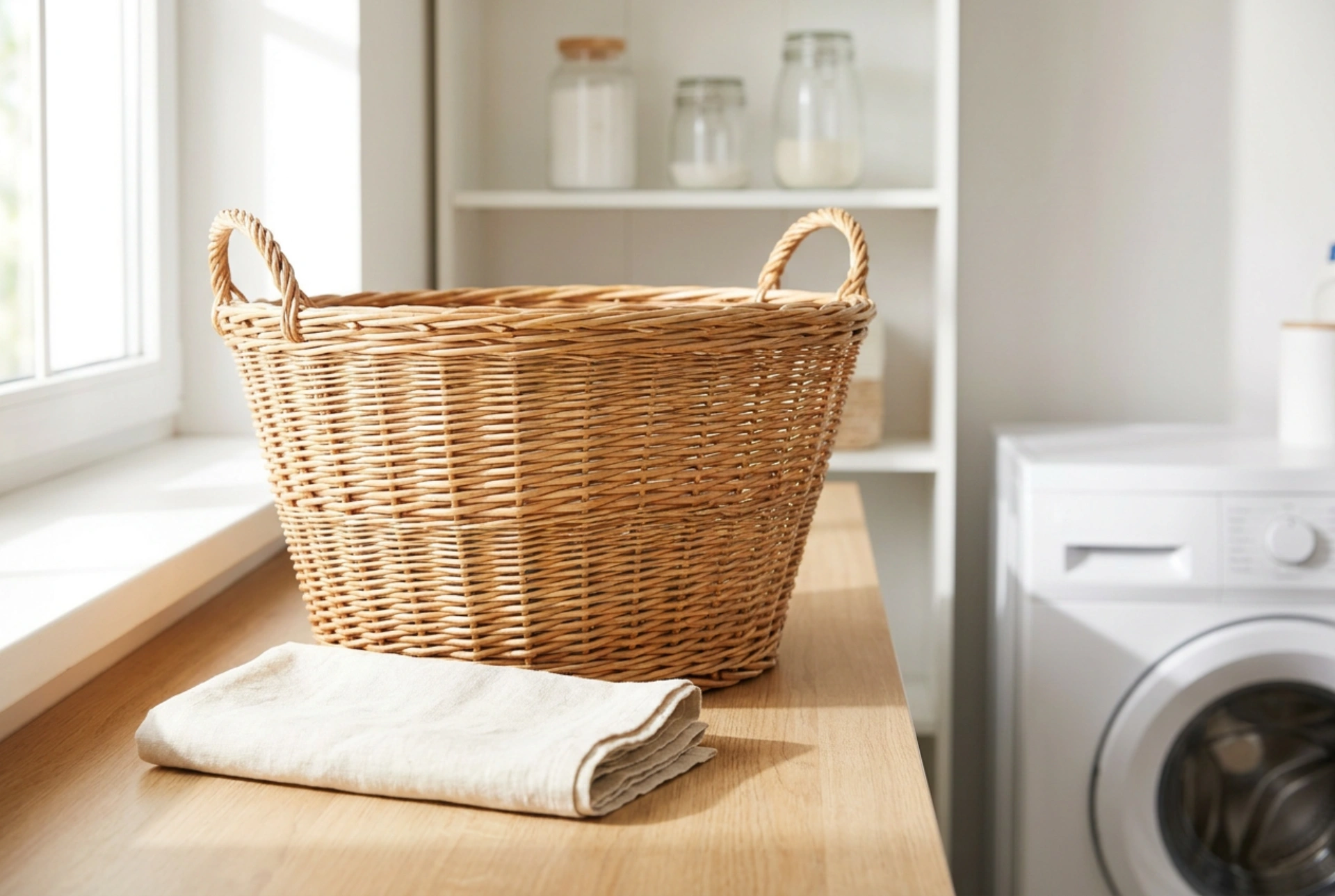


Wicker is a highly porous natural material that readily absorbs atmospheric humidity, leading to structural weakening and mold growth. Protecting your wicker laundry basket requires understanding the capillary action of plant fibers and applying the correct physical and chemical barriers to repel moisture.
The Material Science of Wicker and Moisture
Wicker is not a single material but a weaving technique utilizing natural plant fibers such as willow, rattan, reed, or bamboo. At a microscopic level, these materials are composed of cellulose, hemicellulose, and lignin. Cellulose contains numerous hydrophilic (water-attracting) hydroxyl groups. When the relative humidity in a room rises, these hydroxyl groups form hydrogen bonds with water molecules in the air, causing the fibers to swell.
This moisture absorption creates a perfect breeding ground for fungal spores. If a wicker basket remains damp for more than 24 to 48 hours, mold and mildew begin to digest the hemicellulose, leading to musty odors, staining, and ultimate structural failure. To prevent this, you must interrupt the material's ability to absorb water while maintaining its natural flexibility.
Step 1: Deep Cleansing and Spore Neutralization
Before applying any protective barrier, the wicker must be completely clean and free of existing fungal spores. Applying a sealant over active mold will trap moisture inside, accelerating rot from the inside out.
- Preparation: Vacuum the basket thoroughly using a brush attachment to remove dust and loose organic particles from the tight crevices of the weave.
- Chemical Neutralization: Prepare a mild solution of warm water and hydrogen peroxide (3% concentration) or white vinegar (acetic acid). Both substances act as oxidizers that denature the proteins in fungal spores without degrading the wood fibers. Avoid chlorine bleach, as its high alkalinity can break down lignin, making the wicker brittle.
- Application technique: Dip a soft-bristled brush into the solution and gently scrub the weave, following the direction of the strands. Do not saturate or submerge the wicker, as excess water will warp the fibers.
- Dehydration: Place the basket in a warm, well-ventilated area with active airflow. Allow it to dry completely for at least 24 to 48 hours. The moisture content of the wood must drop below 12% before sealing.
Step 2: Choosing and Applying the Protective Barrier
To block humidity, you must coat the pores of the wicker. There are two primary methods: natural polymerizing oils or synthetic clear sealants.
Option A: Penetrating Natural Oils
Boiled linseed oil or tung oil are excellent natural sealants. Unlike petroleum-based oils, these plant-derived oils undergo a chemical process called polymerization when exposed to oxygen. They dry to a tough, water-resistant, yet flexible solid within the wood pores.
- Apply the oil using a clean lint-free cloth or a soft brush, ensuring it penetrates deep into the overlapping joints of the weave.
- Allow the oil to sit for 20 minutes to be absorbed, then thoroughly wipe away any excess liquid to prevent a sticky, dust-attracting buildup.
- Let the oil cure in a warm room for 48 hours. A second thin coat can be applied for enhanced protection.
Option B: Synthetic Acrylic or Polyurethane Sealers
For high-humidity environments like unventilated bathrooms, a clear, micro-porous synthetic sealer is highly effective. A spray-on polyurethane or acrylic lacquer provides an even, ultra-thin physical barrier without clogging the intricate weave.
- Select a matte or satin finish to maintain the natural look of the wicker.
- Apply the spray in thin, sweeping motions from a distance of 20 to 30 cm. Avoid heavy coats, which can pool in the crevices, dry unevenly, and crack.
- Apply two coats, allowing the recommended drying time between applications. This creates a continuous, hydrophobic shield.
Step 3: Implementing a Sacrificial Barrier and Airflow
Chemical protection should be paired with smart physical habits to keep the basket dry during daily use.
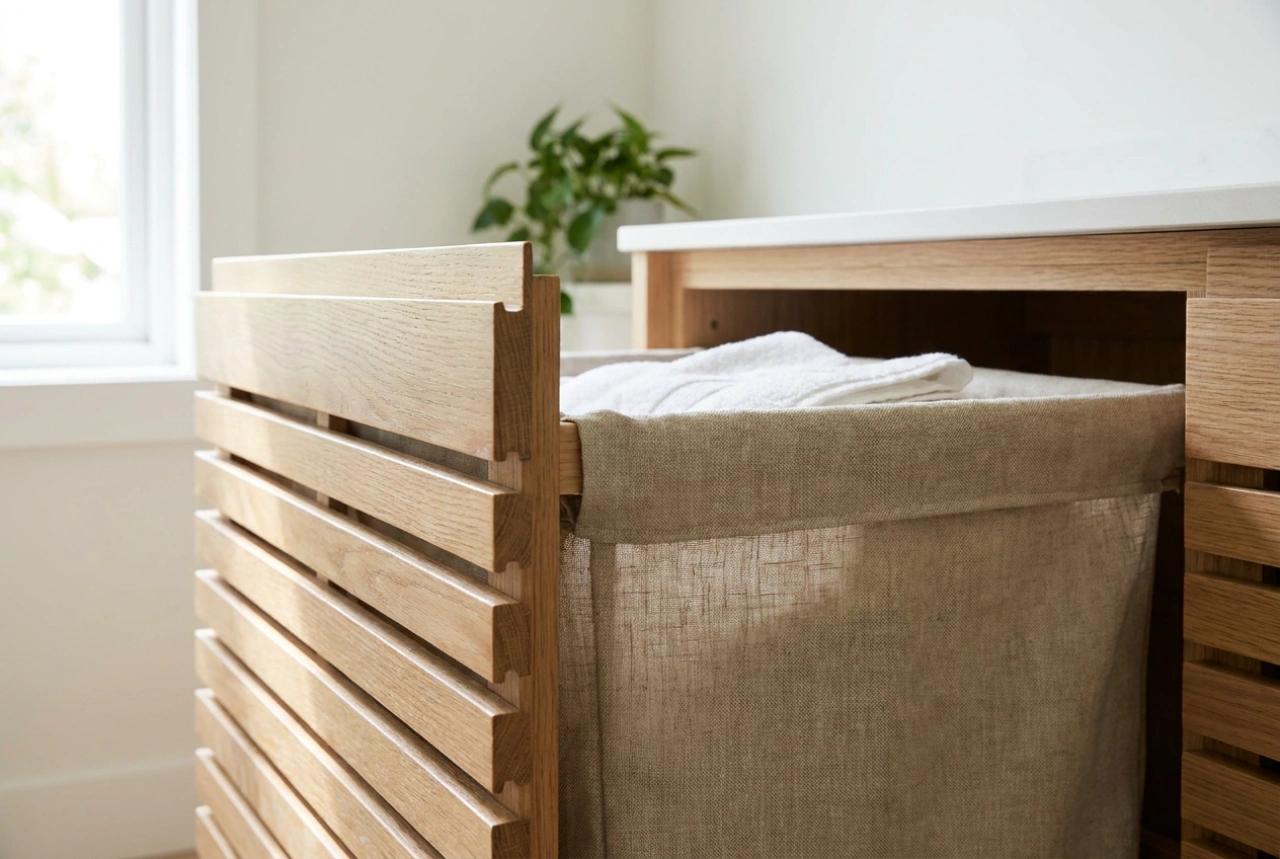
- Use a Breathable Fabric Liner: Always line your wicker basket with a removable canvas, cotton, or linen bag. These natural fabrics act as a sacrificial moisture absorber, catching dampness from wet towels or gym clothes. Wash the liner regularly at high temperatures to eliminate bacteria.
- Create a Capillary Break: Never place a wicker basket directly on a tiled bathroom floor where water might pool. Attach small adhesive rubber, silicone, or felt pads to the wooden base. This lifts the basket slightly, preventing capillary draw from wet floors and allowing air to circulate underneath.
- Active Ventilation: Keep the basket in an area with good air exchange. If stored in a bathroom, run the exhaust fan for at least 20 minutes after showers to lower the ambient relative humidity below the critical threshold of 60%.