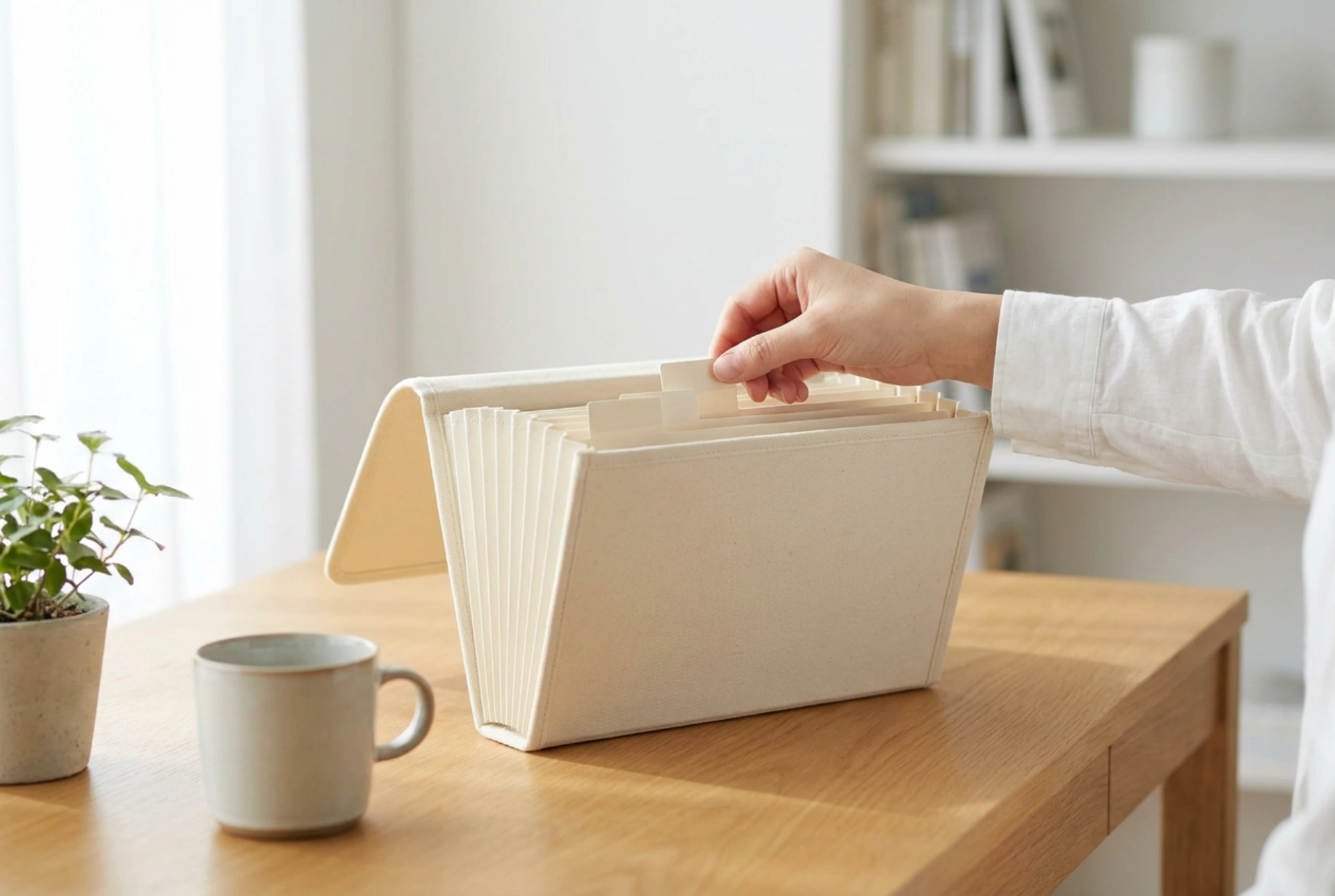


Managing a home document folder is a balancing act between physical space, paper weight, and structural tension. Overloading a thick binder or accordion file not only damages the storage medium but also creates microclimates that can degrade paper fibres and cause ink transfer.
Understanding the Physics of Binder Tension and Paper Weight
Every document organiser has a physical limit determined by its mechanical components. Standard lever-arch files and ring binders rely on metal tension rings to keep documents secure. When you exceed the maximum capacity, the weight of the paper exerts a constant lever force against the locking mechanism. Over time, this constant outward pressure warps the rings, leading to misalignment where pages catch, tear, or slip out completely.
Furthermore, paper is deceptively heavy. A standard pack of 500 sheets of 80gsm A4 paper weighs approximately 2.5 kilograms. When compressed inside a plastic or cardboard expansion folder, this weight exerts lateral force on the seams. High humidity accelerates this issue; paper fibres absorb moisture from the air, increasing their volume and weight, which causes the folder walls to bow and eventually split at the glued joints.
The Spatial Strategy: Categorisation by Lifespan
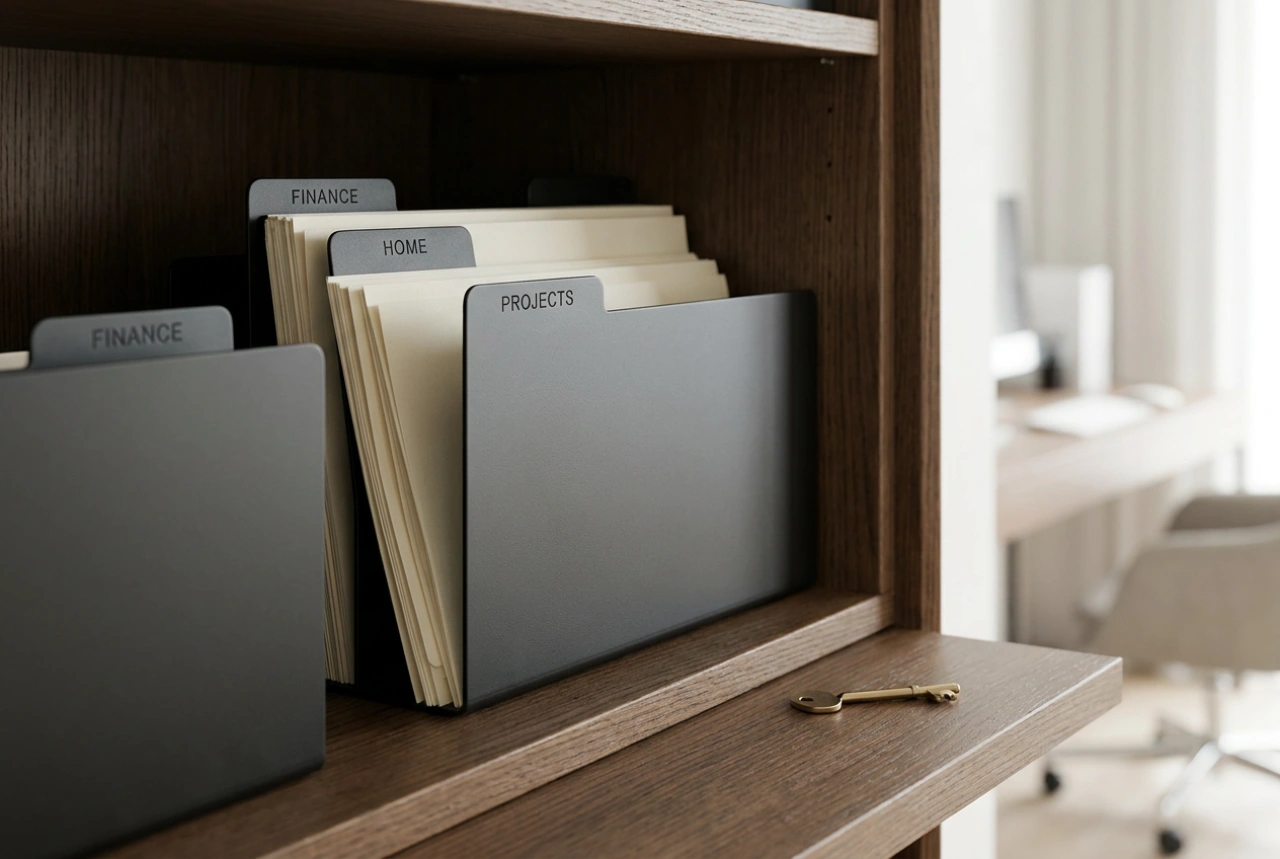
To prevent structural overload, you must categorise documents by their natural expiration cycles rather than keeping everything indefinitely. Implementing a tiered sorting system reduces the volume of paper stored in your primary active folder:
- Active Documents (High Access): Insurance policies, current utility bills, and active contracts. These should occupy the most accessible sections and be purged annually.
- Permanent Archives (Low Access): Birth certificates, property deeds, and qualification certificates. These require archival-grade protective sleeves and should ideally be stored in a separate, rigid protective box rather than a daily binder.
- Temporary Papers (Short Lifespan): Receipts, short-term warranties, and medical prescriptions. These should be stored in a secondary, smaller wallet and disposed of as soon as the warranty expires or the transaction is cleared.
Optimising the Interior: Materials and Thickness Management
The accessories you use inside your folder significantly affect its overall thickness. Plastic pocket sleeves (polypropylene pockets) are highly durable, but they add substantial bulk. When every page is housed in an individual plastic sleeve, the sleeve material itself can account for up to 30% of the folder’s total thickness.
To optimise space, group related, multi-page documents (such as a multi-page insurance policy) within a single sleeve, or use thin, acid-free paper dividers instead of plastic pockets. If you must use plastic sleeves, select low-micron (thin) variants to minimise bulk. Ensure that metal staples are removed before filing, as staple crowns create localised pressure points that unevenly increase the folder's thickness on one side, leading to an unbalanced, wedge-shaped binder that resists flat storage.
The Physical Purge and Rotation Protocol
Maintaining a lean home folder requires a strict rule of one-in, one-out. Whenever you file a new annual document—such as a new car insurance certificate—remove the previous year’s document. Unless required for tax or legal purposes, older versions can be safely shredded and recycled. Establish an annual audit during a low-humidity month to review the integrity of the binder. Inspect the rings for alignment, wipe down the exterior to remove dust, and ensure that the compression bar is properly locked to distribute the weight evenly across the binder's spine.