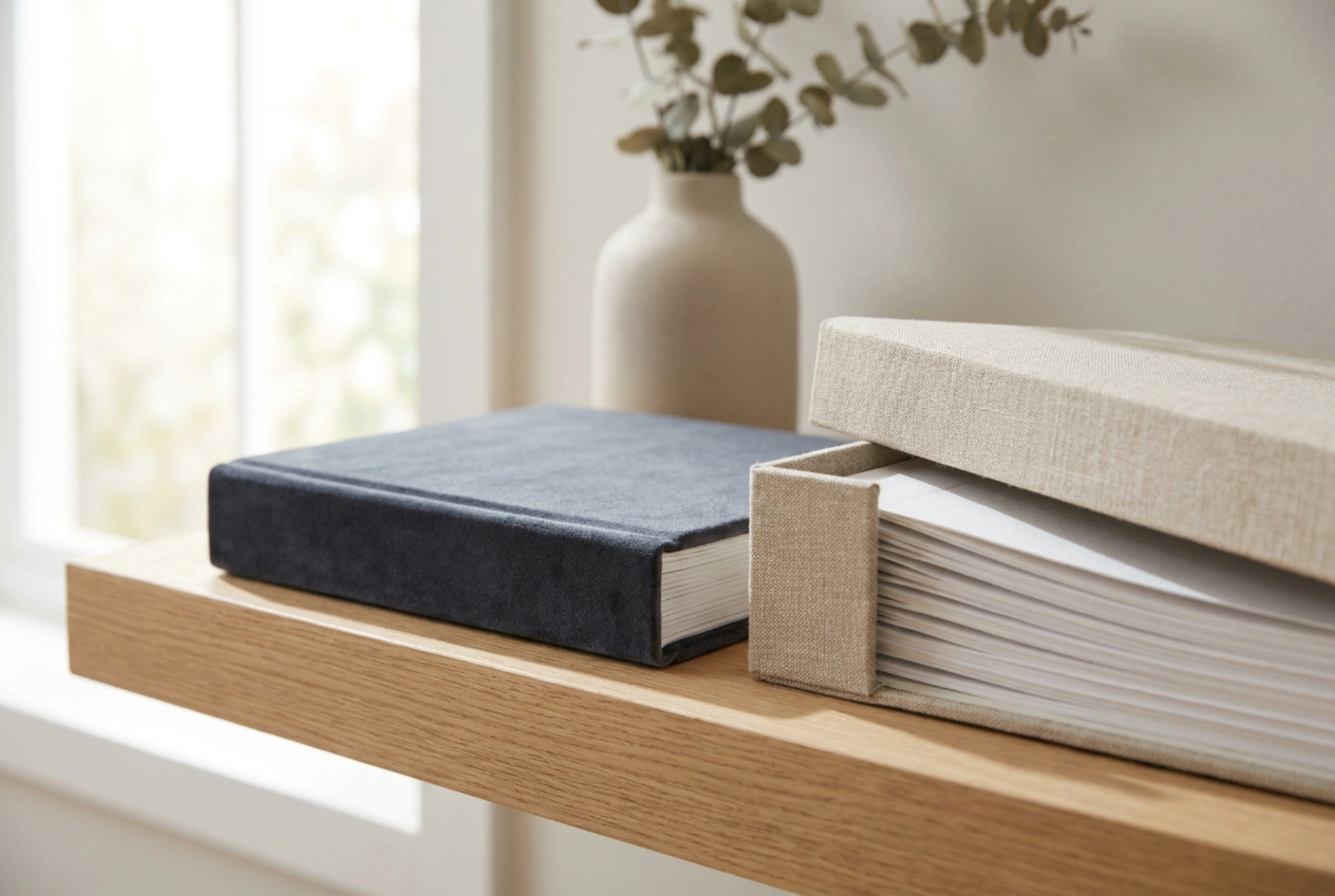


Velvet photo albums are cherished keepsakes, but their dense, raised pile acts as a highly effective trap for dust, lint, and airborne particles. Understanding the physical properties of velvet and implementing proper storage techniques will preserve the fabric's rich texture and protect your photographs for decades.
Why Velvet Attracts Dust: The Physics of the Pile
Velvet is characterised by its pile, which is a dense distribution of short, upright cut fibres. While this structure gives the material its signature soft texture and light-reflecting qualities, it also increases the overall surface area of the fabric. This high surface area acts as a physical filter, catching floating dust particles that would otherwise slip off smoother surfaces. Furthermore, many modern velvet fabrics contain synthetic fibres like polyester or nylon. These synthetic materials are highly prone to building up static electricity, especially in low-humidity environments. This electrostatic charge actively pulls microscopic dust, pet dander, and clothing fibres out of the air and binds them to the album cover.
Selecting the Perfect Storage Enclosure
To shield the album from dust, you must choose a protective barrier that does not compromise the preservation of the photographs inside. Avoid airtight plastic containers made of polyvinyl chloride, as they can off-gas harmful chemicals and trap residual moisture, leading to mould growth within the pile. Instead, opt for acid-free, lignin-free archival storage boxes. A rigid cardboard box lined with acid-free paper or wrapped in a neutral, breathable textile like unbleached linen is ideal. These materials allow air circulation, preventing moisture build-up, while blocking physical dust deposition. When placing the album inside the box, wrap it loosely in acid-free tissue paper to add an extra layer of filtration against microscopic particles.
Storage Orientation and Environmental Control
Where and how you position the album plays a critical role in dust prevention. Storing albums flat, horizontally, creates a large, horizontal surface area that naturally collects settling dust. Storing the album vertically on a shelf, much like a book, significantly reduces the exposed surface area. However, ensure it is supported on both sides by other books or bookends to prevent warping. The environment should be kept at a stable temperature of fifteen to twenty degrees Celsius with a relative humidity between thirty and fifty percent. High humidity causes dust particles to stick together and adhere more firmly to the fibres, while excessively dry air increases the electrostatic charge that pulls dust to the synthetic fibres.
Safe Dust Removal and Maintenance Techniques
If your velvet album has already collected dust, never rub it with a damp cloth, as moisture will flatten the pile and permanently alter the fabric's texture. Use the following step-by-step cleaning method instead:
- Dry brushing: Use a clean, soft-bristled brush, such as a makeup brush or a specialty textile brush. Gently sweep the brush in the direction of the nap, which is the natural direction the fibres lie when patted down, to lift loose particles.
- Vacuum filtration: If you must use a vacuum cleaner, cover the nozzle with a clean piece of nylon stocking or fine mesh. Hold the nozzle slightly above the surface without pressing it directly into the velvet, using the lowest suction setting to draw out deeply embedded dust.
- Fibre alignment: Finish by gently brushing the pile back into its natural alignment to maintain its reflective sheen.
By combining physical protection, electrostatic mitigation, and gentle mechanical maintenance, you can keep your velvet photo album pristine and dust-free without risking damage to its delicate fibres or the precious memories stored inside.