

Maximising the utility of a large magnetic board requires more than just pinning papers randomly; it demands a systematic approach based on visual ergonomics and physical organisation. By understanding how to structure space, select the correct magnetic forces, and maintain the board surface, you can transform a simple metal sheet into an efficient household command centre.
The Physics of Magnetic Retention and Material Selection
To build a functional planning board, you must understand the relationship between the board surface and the magnets used. Most domestic magnetic boards are either painted steel, glass-backed steel, or magnetic vinyl. Each has a different level of ferromagnetic pull. Glass boards, for instance, have a thick non-magnetic barrier between the magnet and the steel sheet behind it, requiring high-coercivity neodymium magnets to overcome the gap. Standard ferrite magnets will simply slide down a glass surface due to insufficient shear force.
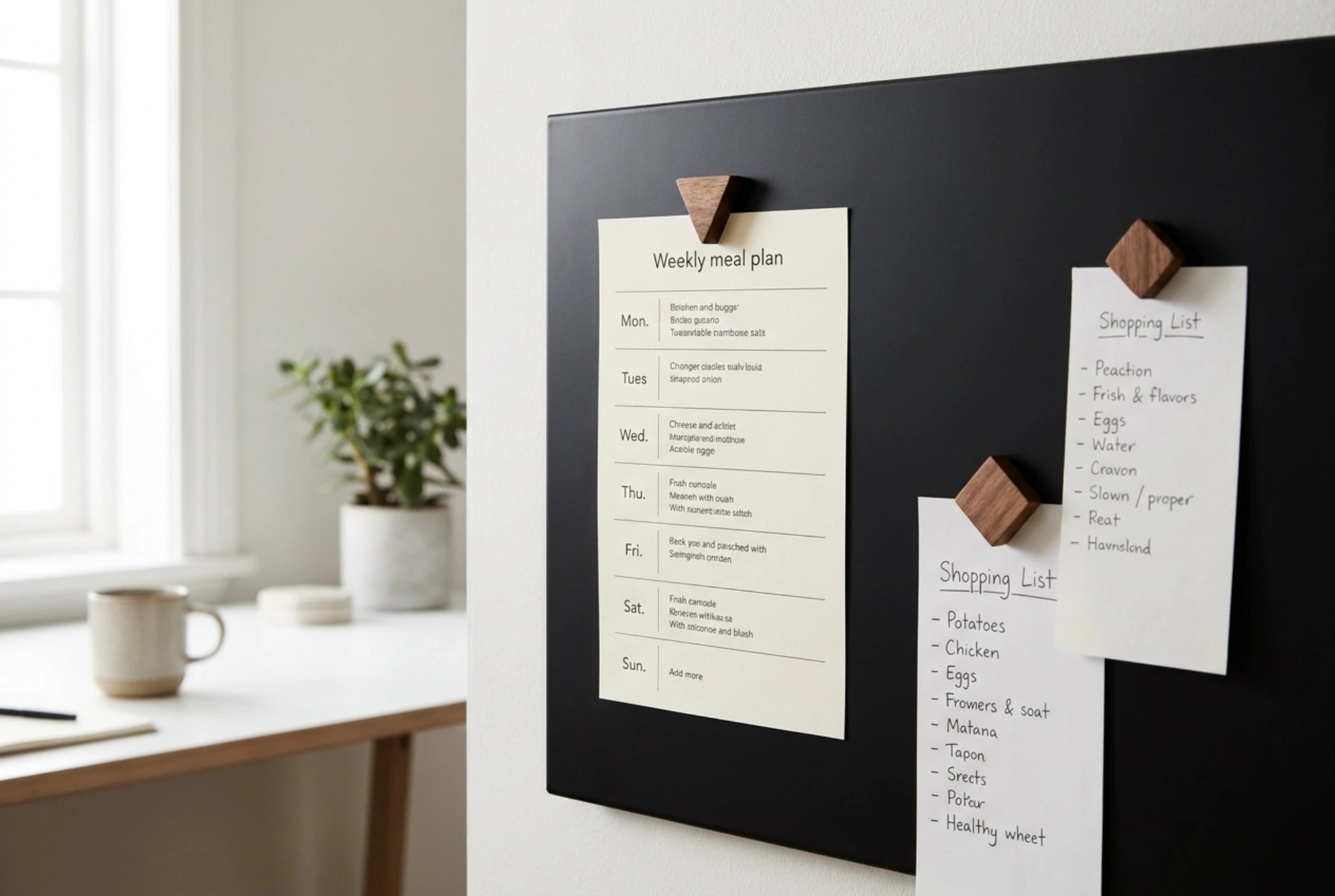
When organizing documents, leverage the concept of friction. A magnet holds paper against gravity not just through direct pull, but through lateral friction. Smooth, laminated papers reduce friction, causing heavy packets to slide. To counter this, use raw wooden or textured silicone-coated magnets which increase the coefficient of friction against the paper surface, securing multiple sheets without needing excessive magnetic force that could dent the underlying steel.
Dividing the Board: Spatial Ergonomics and Zonal Planning
A large board succeeds when it is partitioned into functional zones based on human eye movement and reach. The human brain processes information most efficiently when it is categorised spatially from left to right and top to bottom.
- The Header Zone (Top 10%): Reserved for permanent, high-priority reference material such as the current month's calendar or emergency contact protocols. Keep this out of the daily interaction zone to prevent accidental displacement.
- The Active Workspace (Middle 60%): Positioned at eye level, this zone holds dynamic documents like weekly meal plans, rotating chores, and incoming mail. Divide this section into vertical columns (e.g., Monday to Sunday) or functional columns (To Do, In Progress, Done) to mimic professional Kanban systems.
- The Archive and Storage Zone (Bottom 30%): Accessible but out of the primary line of sight. This area is ideal for storing blank templates, incoming coupons, or holding spare magnetic markers and cleaning cloths.
Optimising Information Density with Tactile and Visual Coding
Clutter is the primary enemy of a planning board. To maintain readability, limit the amount of text and rely on visual cues. Use standardised paper sizes—such as A5 or A6—printed on heavyweight cream paper (around 120 gsm) to prevent the edges from curling under humid household conditions. Curled paper disrupts the clean profile of the board and reduces visual clarity.
Employ color-coded geometric magnets to establish a tactile filing system. Assign specific shapes or materials to different family members or task types. For example, round wooden magnets can signify academic tasks, while hexagonal metal magnets denote domestic maintenance. This allows the brain to categorise information instantly from a distance of several metres, reducing the cognitive load required to read individual sheets.
Long-Term Surface Maintenance and Performance
Over time, magnetic boards accumulate oils from fingerprints, adhesive residues, and dust, which degrade both the aesthetic appeal and the friction required for magnets to hold securely. Regular maintenance is essential to preserve the surface coating.
Avoid abrasive scrubbing pads or chlorine-based household detergents, which can micro-scratch the paint or lacquer, leading to oxidation (rust) over time. Instead, clean the board using a microfiber cloth dampened with a 50% solution of isopropyl alcohol and distilled water. This mixture dissolves greasy fingerprints and adhesive residues instantly, evaporating quickly without leaving a film that could reduce magnetic friction.