

Maintaining a secure, orderly lockable filing cabinet is not merely about tidiness; it is a critical practice in preserving paper integrity and ensuring rapid retrieval during emergencies. By understanding the chemical properties of paper and the physics of spatial organisation, you can protect your vital documents from physical degradation and unauthorised access.
The Science of Paper Preservation: Chemistry in the Drawer
Paper is organic matter, primarily composed of cellulose fibres which are highly susceptible to environmental factors such as moisture, temperature, and light. When stored in a sealed, lockable metal cabinet, several microclimatic reactions occur. Standard copy paper and historical documents can become brittle over time due to acid hydrolysis, a chemical reaction accelerated by residual acids from the manufacturing process. To prevent this, always store critical documents in acid-free, lignin-free folders. Standard manila folders can transfer acidity over decades, causing yellowing and degradation.
Furthermore, special care must be taken with thermal paper, commonly used for receipts and certain certificates. Thermal paper relies on a chemical reaction between a heat-sensitive dye and an acid developer. Exposure to heat, UV light, or contact with polyvinyl chloride (PVC) plastic sleeves causes the dyes to revert, turning the print invisible. For long-term preservation, photocopy thermal receipts onto standard acid-free paper, or store them in polypropylene (PP) sleeves, which do not contain harmful plasticisers.
Structuring the Hierarchy: Categorisation Logic
An efficient filing cabinet relies on a clear, logical architecture. Before placing a single sheet into the drawer, establish a three-tiered indexing system that minimises search time and reduces physical wear on the documents. The system should categorise items by utility, accessibility, and retention periods.
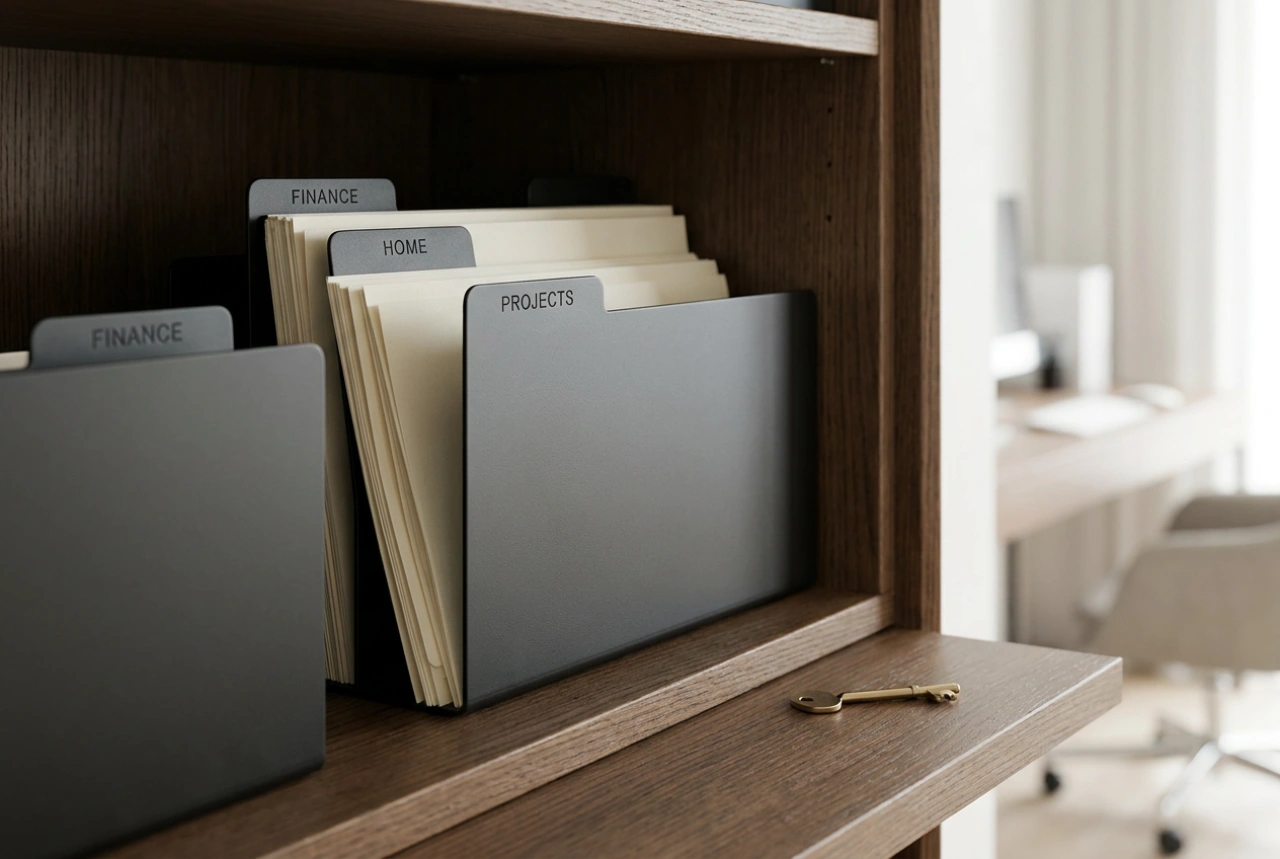
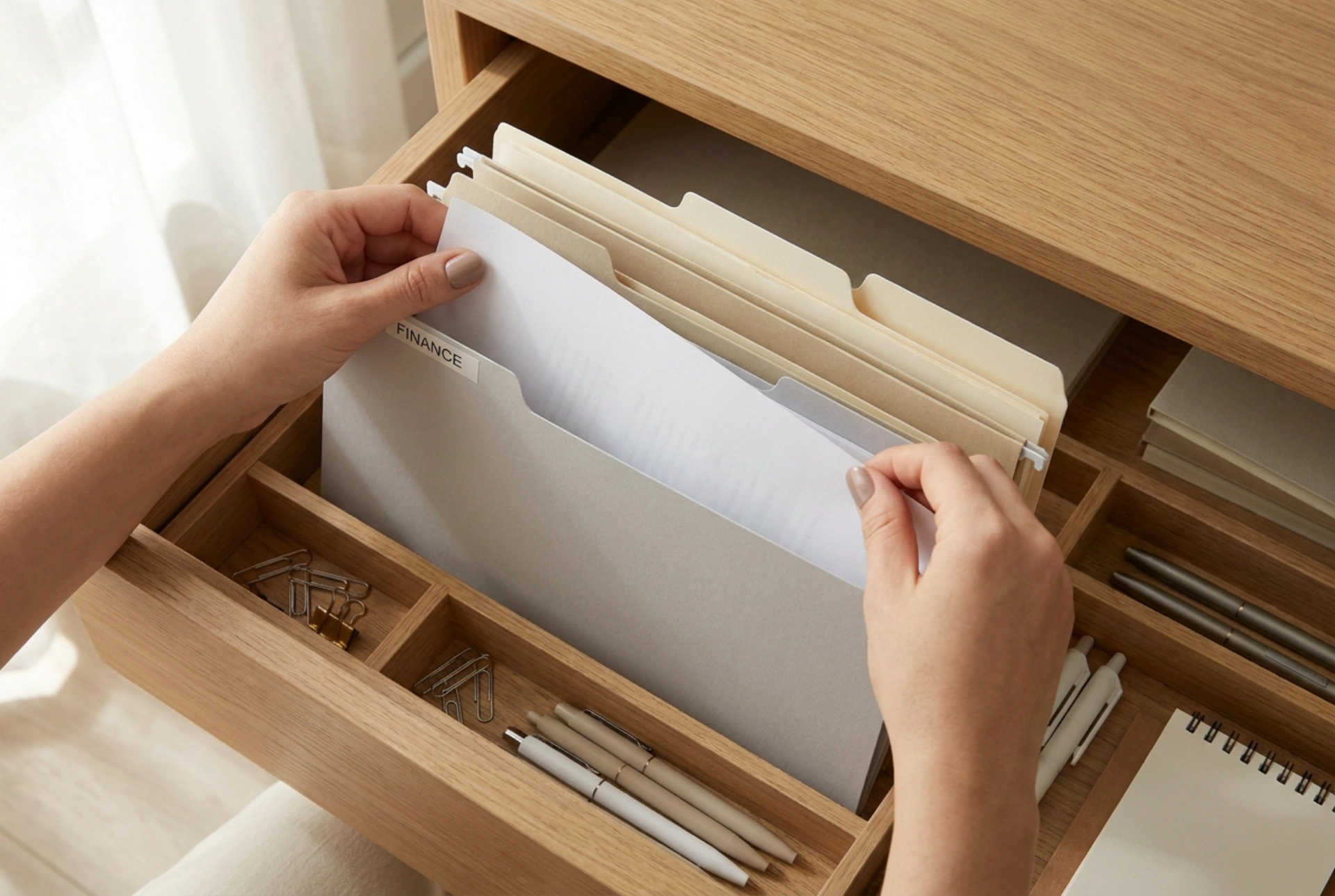
- Primary Category (Suspension Files): Group documents by broad functional domains, such as household, finance, health, and identity. Assign a distinct colour-coded tab to each domain to speed up visual scanning.
- Secondary Category (Sub-folders): Within each suspension file, use lightweight internal folders for specific sub-topics, such as utility bills, medical records, or insurance policies.
- Tertiary Order (Internal Sequence): Arrange documents chronologically within each sub-folder, placing the most recent document at the front. This order of operations prevents the need to shuffle through older papers, minimising mechanical damage such as creasing and tearing.
Physical Mechanics and Weight Distribution
A lockable filing cabinet presents specific mechanical risks, particularly regarding weight distribution and structural balance. Heavy paper loads can accumulate surprising mass. To prevent the cabinet from tipping forward when a drawer is fully extended, place the heaviest archival files in the bottom drawer. Reserve the top drawers for active, lighter documents that require frequent access.
Suspension files are the backbone of a professional filing system. They slide along parallel metal runners, reducing friction and preventing folders from slumping to the bottom of the drawer. Slumping not only damages the paper edges but also restricts airflow, creating pockets where relative humidity can rise and promote mould growth. Keep a small packet of silica gel at the back of each drawer to absorb excess moisture and maintain a stable relative humidity level below 50%.
Secure Access and Key Management
The lock on your cabinet is only as secure as your key management strategy. Dual-key custody or a designated, secure off-site backup key ensures access is never lost during an emergency. Avoid storing the primary key inside the same room as the cabinet. For documents requiring the highest level of security, such as property deeds or identity papers, place them in a secondary fire-resistant lockbox within the cabinet itself, ensuring that the heavy metal layers act as dual barriers against both theft and thermal hazards.