

Proper storage of fresh produce is not just about aesthetics; it is a matter of organic chemistry. Segregating fruits and vegetables correctly prevents premature decay caused by natural ripening gases and moisture accumulation.
The Ethylene Effect: Why Chemistry Dictates Separation
The primary driver behind rapid spoilage in a shared fruit and vegetable basket is ethylene gas. This naturally occurring hydrocarbon gas acts as a plant hormone, regulating growth and development, including the ripening process. Plants are generally divided into two categories: climacteric, which continue to ripen and release significant amounts of ethylene after harvest, and non-climacteric, which do not. When climacteric fruits are stored in close proximity to ethylene-sensitive vegetables, the gas accelerates the breakdown of chlorophyll, softens the cell walls, and converts starches into sugars prematurely. This leads to yellowing, soft spots, and eventual rot.
To manage this reaction, high-ethylene emitters must be physically isolated. Bananas, apples, tomatoes, and avocados should never share a sealed or highly confined basket space with sensitive green vegetables like spinach, cucumbers, broccoli, or carrots. Keeping these groups separated by a minimum physical distance of thirty centimetres, or placing them in distinct, well-ventilated compartments, significantly extends their shelf life by dispersing the gas into the surrounding room air.
Managing Respiration Rates and Relative Humidity
Fresh produce continues to breathe after harvest, absorbing oxygen and releasing carbon dioxide, water vapour, and heat in a process called respiration. The rate of respiration varies dramatically between different types of crops. For example, leafy greens have a high respiration rate and lose moisture rapidly, whereas root vegetables have a low respiration rate and require stable, slightly drier conditions to prevent sprouting and mould.
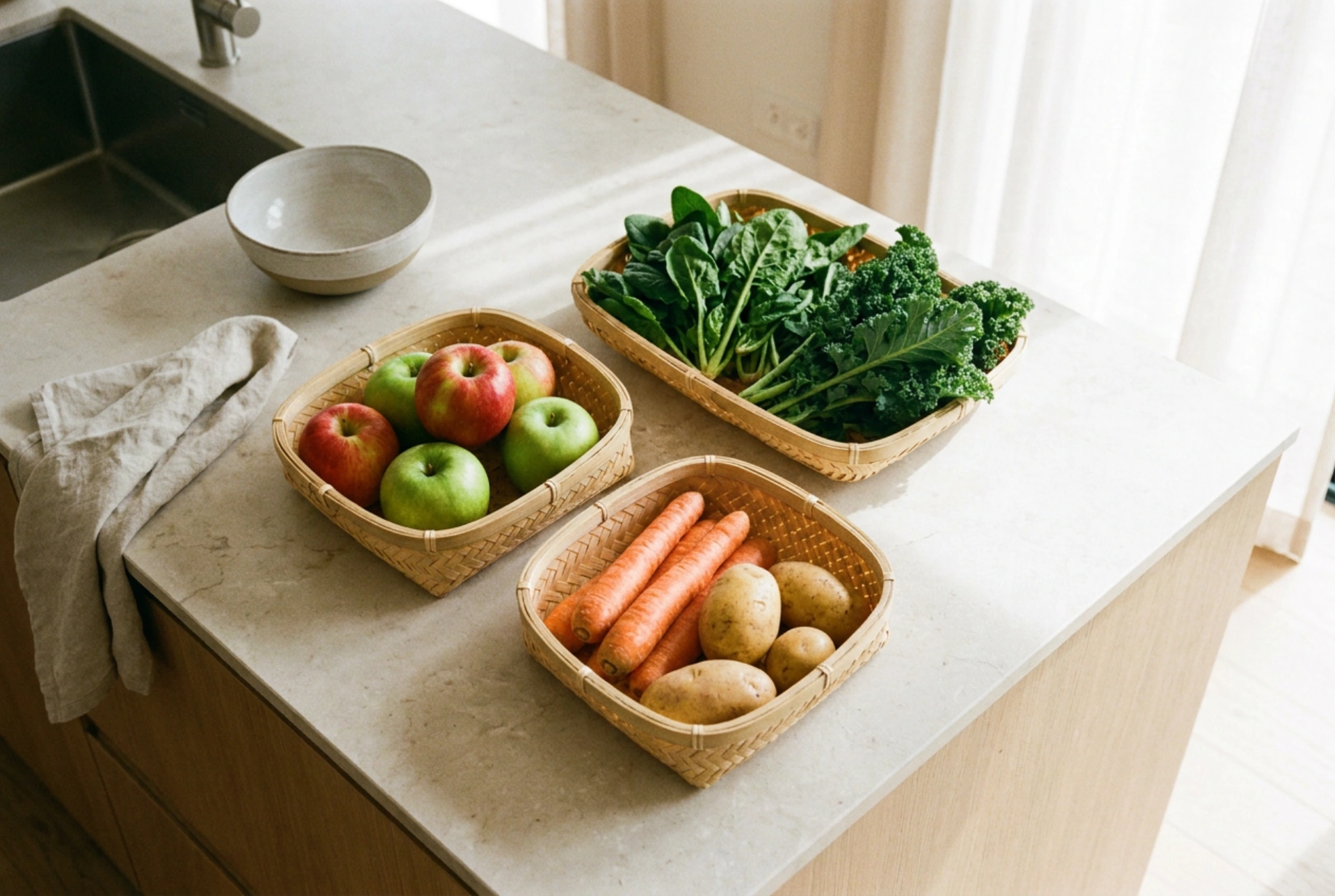
When high-respiration and low-respiration items are crowded into a single, unventilated container, a microclimate of high relative humidity forms. This trapped moisture condenses on the surfaces of the produce, creating an ideal breeding ground for fungal spores and bacteria. To prevent this, arrange your storage containers using materials that naturally regulate humidity. Woven bamboo, willow, or wire mesh baskets provide optimal air circulation, allowing moisture and respiratory gases to escape, while preventing the physical pressure points that cause bruising.
The Practical Sorting Blueprint
To organise your kitchen counter baskets efficiently, categorise your produce into three distinct physical zones based on their chemical compatibility and environmental needs:
- Zone 1: The Ethylene Producers (Isolated Basket): This basket should hold apples, pears, bananas, and stone fruits. Use a wide, open-mouthed basket made of breathable material like woven bamboo to allow maximum gas dispersion.
- Zone 2: The Ethylene-Sensitive Greens and Brassicas (Protected Zone): Keep leafy greens, cucumbers, broccoli, and Brussels sprouts in a separate location. If kept on the counter, ensure they are placed away from Zone 1 and protected from direct sunlight, which accelerates water loss.
- Zone 3: Root Vegetables and Alliums (Dark, Dry Storage): Potatoes, onions, garlic, and shallots require dark, cool, and dry conditions. However, never store potatoes and onions together. Onions emit gases and moisture that cause potatoes to sprout and rot much faster. Use separate, breathable jute bags or wooden crates for each.
Physical Techniques to Prevent Cross-Contamination
When organizing a multi-tiered basket system, gravity and physical contact play a crucial role. Mould spores travel easily through physical contact and air currents. If a single berry or grape begins to decay, the fungal hyphae will quickly penetrate adjacent fruits. To mitigate this risk, practice the "single-layer rule" for soft-skinned fruits. Heavy, durable items should always sit at the bottom of a basket, while delicate, high-moisture items should rest on top to avoid crushing cell structures.
Furthermore, never wash fruits or vegetables before placing them in their respective baskets. Introducing external water to the surface of the produce dissolves the natural protective waxy cuticle and provides the exact moisture level required for latent fungal spores to germinate. Only wash your produce immediately before consumption.