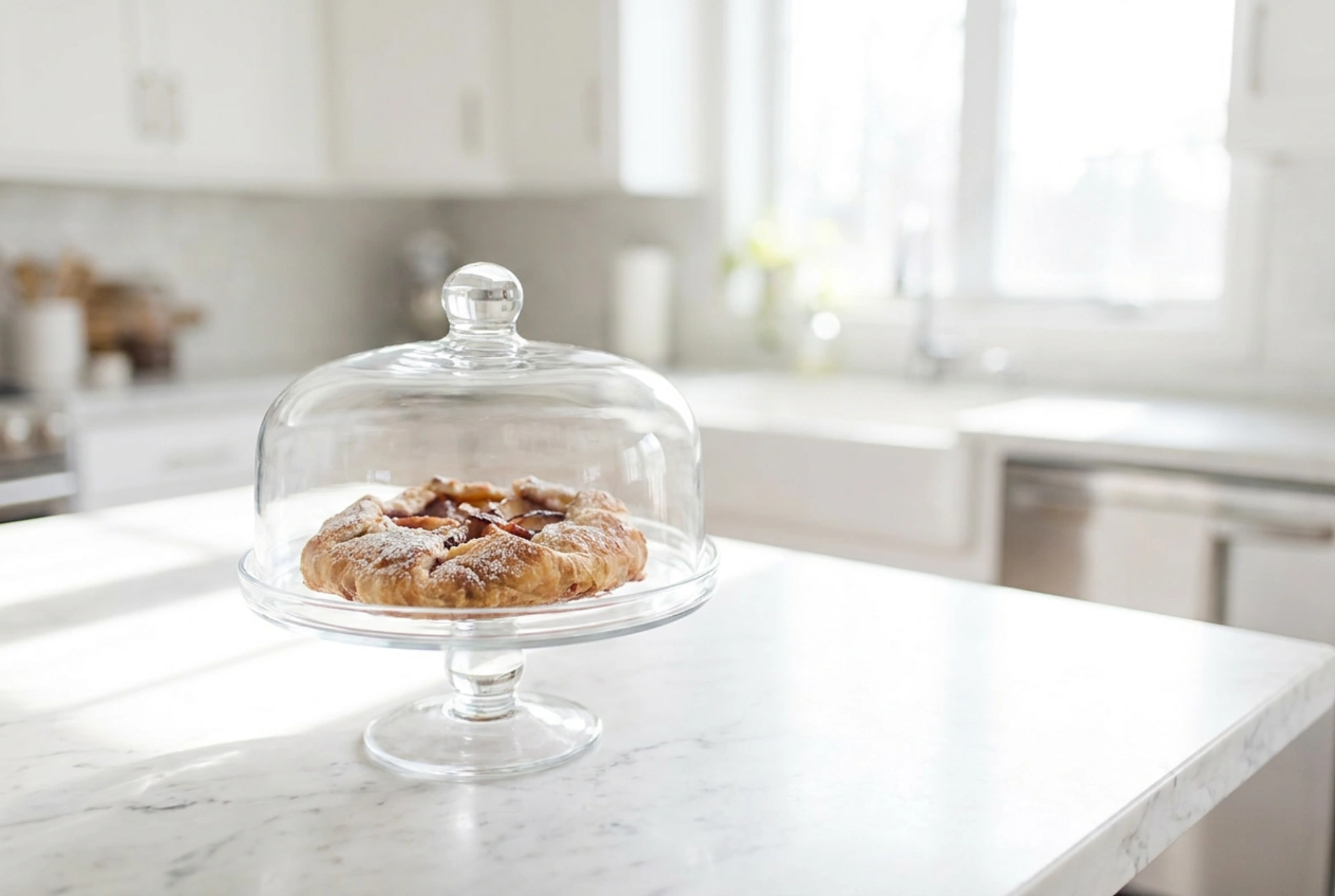


A domed cake stand is more than a beautiful kitchen centrepiece; it is a highly functional tool for preserving the fresh texture of your home-baked creations. By mastering the microclimate under the glass, you can significantly extend the shelf life of your pastries without relying on chemical preservatives.
The Physics of Staling and Moisture Control
When baked goods leave the oven, they undergo rapid physical and chemical changes. The primary driver of staling is not merely water loss, but a process called starch retrogradation. As baked goods cool, the gelatinised starches begin to recrystallise, releasing bound water and hardening the crumb. A cake stand with a dome lid acts as a physical barrier that restricts ambient airflow. By limiting air movement, you drastically reduce the rate of evaporation. However, this creates a closed microclimate. If the relative humidity inside the dome reaches 100%, the crust of your pastries will absorb this moisture, turning soft and losing its crispness. Striking the right balance involves managing this internal atmosphere through temperature control and venting.
The Crucial Step of Thermal Equilibrium
The most common mistake when using a domed cake stand is placing baked goods inside while they are still warm. When a warm pastry is enclosed, the remaining heat drives water outward in the form of steam. As this warm, moist air hits the cooler glass or acrylic dome, it undergoes condensation. Water droplets form on the inner surface and eventually drip back onto the food, creating soggy patches and accelerating mold growth. To prevent this, always let your bakes reach thermal equilibrium—complete room temperature—on a wire cooling rack before transferring them to the stand. This ensures that the moisture distribution within the crumb has stabilised, preventing unnecessary condensation from forming on the dome walls.
Tailoring the Environment to Different Pastry Types
Not all baked goods react the same way to a closed dome. To maintain optimal texture, you must adapt your storage technique to the specific chemistry of your bake:
- Cakes and Sponge Bakes: These benefit immensely from a fully sealed dome. Their high moisture content and sugar density keep them tender, and the closed environment prevents the outer sponge from drying out into a hard, crumbly crust.
- Crisp Pastries and Puff Doughs: These require low humidity to maintain their flaky, laminated structure. Placing them under a completely sealed dome can ruin their crispness within hours. To mitigate this, slightly prop open the lid using a small spacer to allow minimal air exchange.
- Frosted and Cream-Filled Items: Whipped cream, custard, and cream cheese frostings are highly perishable. While the dome protects them from dust, they should not remain at room temperature for more than two hours. Keep them domed in the refrigerator, and bring them to room temperature shortly before serving.
Pro-Tips for Managing the Dome Microclimate
To turn your cake stand into an active preservation chamber, you can use simple material science tricks. Placing a single sugar cube under the dome acts as a natural, food-safe desiccant. Sugar is highly hygroscopic; it will absorb excess ambient moisture from the air before it can ruin the crust of your bakes. Additionally, always line the base of your cake stand with a sheet of parchment paper rather than placing the cake directly on the glass or ceramic. This prevents condensation from pooling at the base and keeps the bottom of your pastries dry and intact. Finally, clean the inside of your dome with a lint-free cloth and white vinegar to eliminate any latent mold spores before sealing your fresh bakes inside.