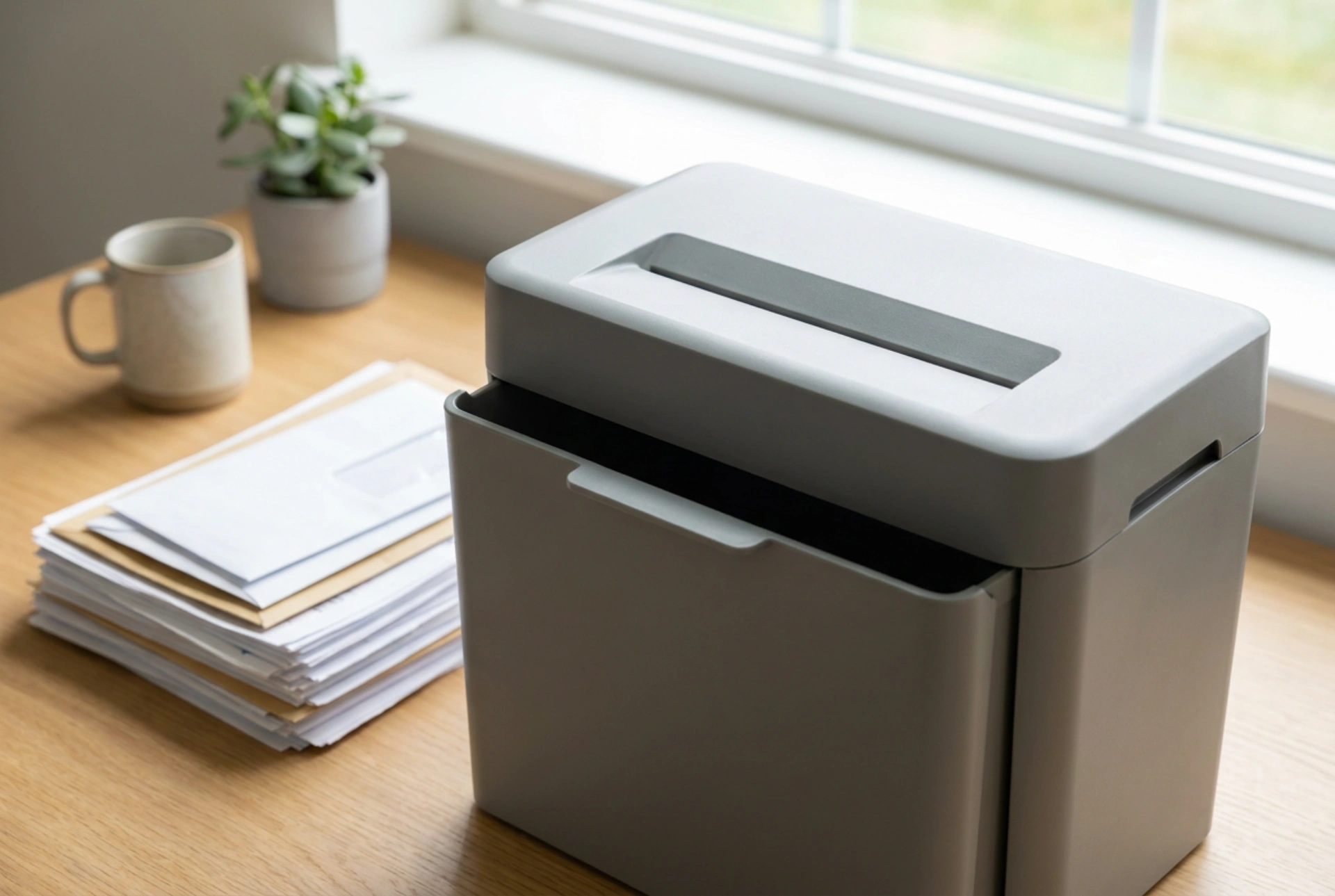


Operating a home paper shredder efficiently requires a basic understanding of mechanical torque, thermal limits, and blade lubrication. Managing these physical factors prevents motor burnout, paper jams, and premature wear of the cutting cylinders.
The Mechanics of Cutting and Preventing Jams
A paper shredder operates on the principle of shear stress. Two interlocking steel cutting cylinders rotate inward, drawing paper down and forcing it past opposing cutting edges. To cut successfully, the mechanical force exerted by the motor must exceed the tensile strength of the paper layers. When you exceed the recommended sheet capacity, the torque required to shear the paper exceeds the motor's capability, resulting in an immediate stall.
To avoid jams, always feed sheets below the maximum rated capacity. For example, if a machine is rated for six sheets, feeding four or five ensures the motor runs at optimal rotational speed, reducing friction and heat. Always insert paper straight. Crooked insertion forces the paper to fold over itself as it enters the throat, effectively doubling or tripling the thickness and triggering a jam. Additionally, remove heavy metal staples and paperclips. While some modern shredders can cut through soft wire, doing so dulls the steel blades over time, requiring higher force for subsequent shredding cycles.
Strip-Cut versus Cross-Cut Dynamics
The internal mechanics differ significantly depending on the cut type. Strip-cut models use single parallel rollers that slice the paper into continuous ribbons. This process requires relatively low torque. In contrast, cross-cut (or micro-cut) shredders utilize complex, counter-rotating shafts with notched teeth that cut both vertically and horizontally. This dual-axis cutting requires substantially more mechanical work, translating into higher friction and heat. Consequently, cross-cut devices require more frequent lubrication and strict adherence to sheet capacity limits to prevent physical deformation of the gear assembly.
Understanding Duty Cycles and Thermal Limits
Home shredders are typically equipped with light-duty universal motors. Unlike industrial continuous-run induction motors, these smaller motors generate significant heat during operation. Manufacturers specify a "duty cycle"—often expressed as a ratio of run-time to cool-down time (for instance, 3 minutes of active shredding followed by 30 minutes of rest).
When the motor runs, electrical resistance in the windings generates thermal energy. If this heat cannot dissipate quickly enough, a thermal overload switch trips to cut off power and protect the motor windings from melting. To optimize your shredding workflow, avoid continuous, rapid-fire feeding. Allow a brief pause of two to three seconds between each pass. This small gap allows the motor to maintain its momentum and improves airflow through the internal fan, extending the continuous operating window before the thermal cut-off is triggered.
The Science of Blade Lubrication
As paper passes through the cutting cylinders, it leaves behind microscopic cellulose fibres and paper dust. This debris absorbs the residual lubricant on the blades, leading to increased friction, higher operating temperatures, and slow operation. Regular lubrication is essential to maintain low friction coefficients and ensure clean cuts rather than tearing.
When choosing a lubricant, use specialized shredder oil or a high-viscosity vegetable-based oil. Never use aerosol lubricants or standard household penetrating oils, as these often contain petroleum-based solvents with low flash points. The rapid heat generated by the friction of the blades can ignite these volatile organic compounds, creating a severe fire hazard inside the plastic housing. To apply lubricant correctly, use the "sandwich method": squeeze a thin zigzag pattern of oil across a sheet of paper, let it absorb slightly, and feed the sheet through the machine. Run the shredder in reverse for a few seconds afterward to distribute the oil evenly across the entire length of both cylinders.
Safe Clearance and Power Isolation Protocols
Because shredders rely on high-torque pull-in mechanisms, physical safety during operation is paramount. The sensors near the feed throat detect the presence of paper and automatically activate the motor. Because these sensors cannot differentiate between paper and other materials, loose objects such as ties, long hair, or jewelry must be secured away from the feed opening.
If a jam does occur, always isolate the power source by unplugging the device before attempting to clear the obstruction. Do not rely solely on the "off" switch, as electronic components can fail or be accidentally bypassed. Avoid using metal tools like screwdrivers or scissors to pry out stuck paper, as these can easily chip the hardened steel teeth of the cutting blades or puncture the internal plastic gears, permanently misaligning the shredding mechanism.