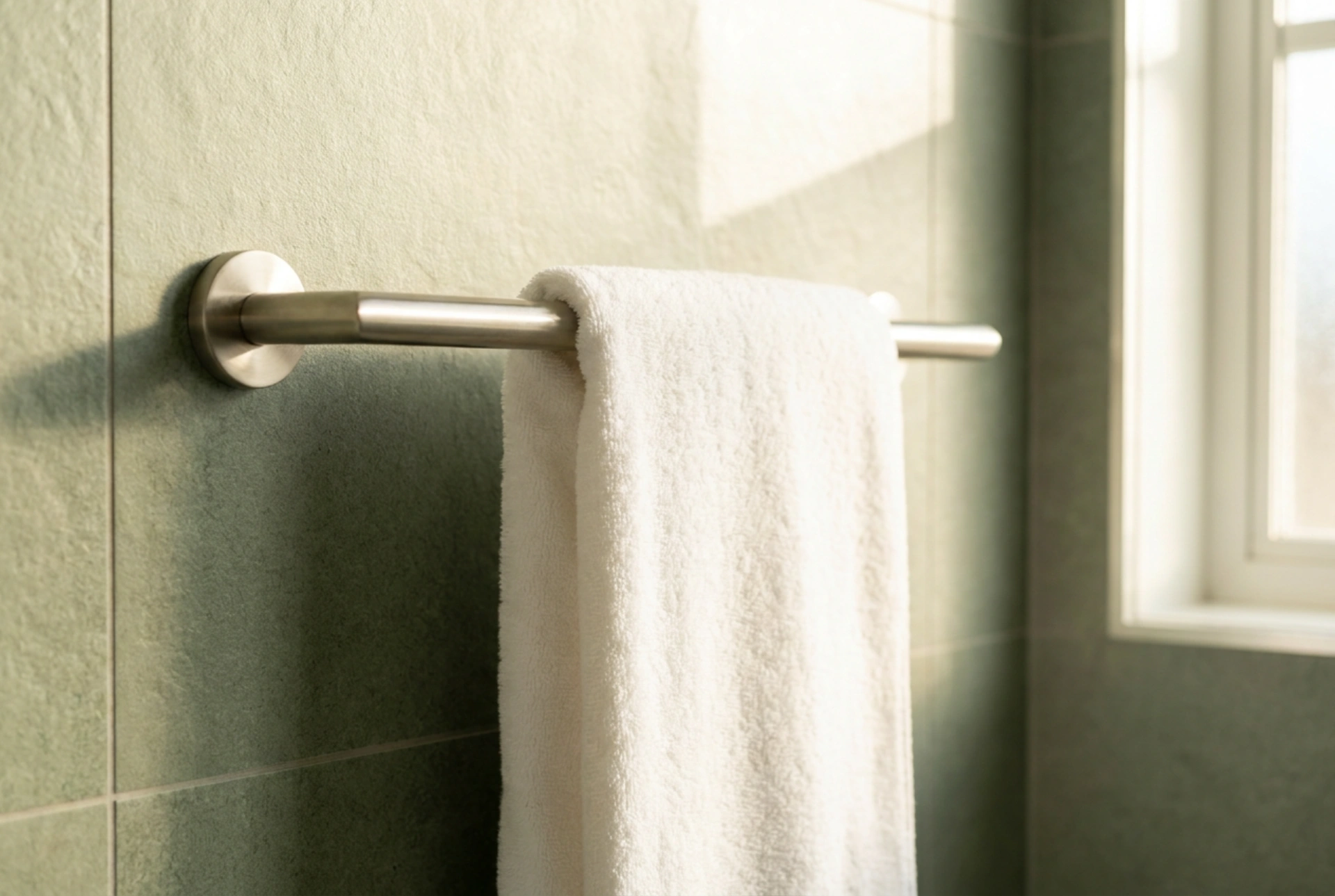


Ergonomic placement of bathroom towel rails is essential for daily convenience, safety, and efficient moisture evaporation. Properly calculating installation heights, spacing, and wall clearances based on physics and ergonomics prevents damp odours and extends the lifespan of your textiles.
The Physics of Drying: Airflow and Surface Area
To understand where and how to mount towel rails, one must consider the thermodynamics of evaporation. When a wet towel hangs, moisture must transition from liquid to vapour. This process requires thermal energy and active air circulation. If a towel remains damp for more than a few hours, the warm, dark folds become a breeding ground for bacteria and mildew, resulting in unpleasant musty smells.
The choice between hooks and horizontal rails directly impacts this drying rate. Hanging a towel on a single hook bunches the fabric, trapping moisture in dense layers where airflow cannot penetrate. Conversely, a horizontal towel rail spreads the fabric flat, maximising the surface area exposed to ambient air. For optimal drying, towels should be hung fully extended. Ensure the rail stands at least 50 to 80 mm away from the wall surface; this gap creates a convection channel, allowing rising air currents to flow behind the textile, accelerating evaporation.
Ergonomic Heights and Spatial Clearance
Positioning towel rails requires a balance between human anatomy and bathroom layout. The standard mounting height for an adult bath towel rail is between 1100 mm and 1200 mm from the finished floor level. This height allows a standard-sized bath towel to hang freely without touching the floor, while remaining within a comfortable reach for most adults.
- For children: Mount dedicated rails or hooks at a height of 800 mm to 900 mm to encourage independence and keep towels off the floor.
- For hand towels: Position these rails 900 mm to 1000 mm high, ideally located 150 mm to 200 mm away from the edge of the washbasin for immediate access, preventing water from dripping onto the floor.
- Shower exit access: Ensure the primary bath sheet rail is mounted within a 500 mm to 700 mm reach from the shower enclosure or bathtub edge. This minimises heat loss and water dripping when stepping out.
Material Selection and Corrosion Resistance
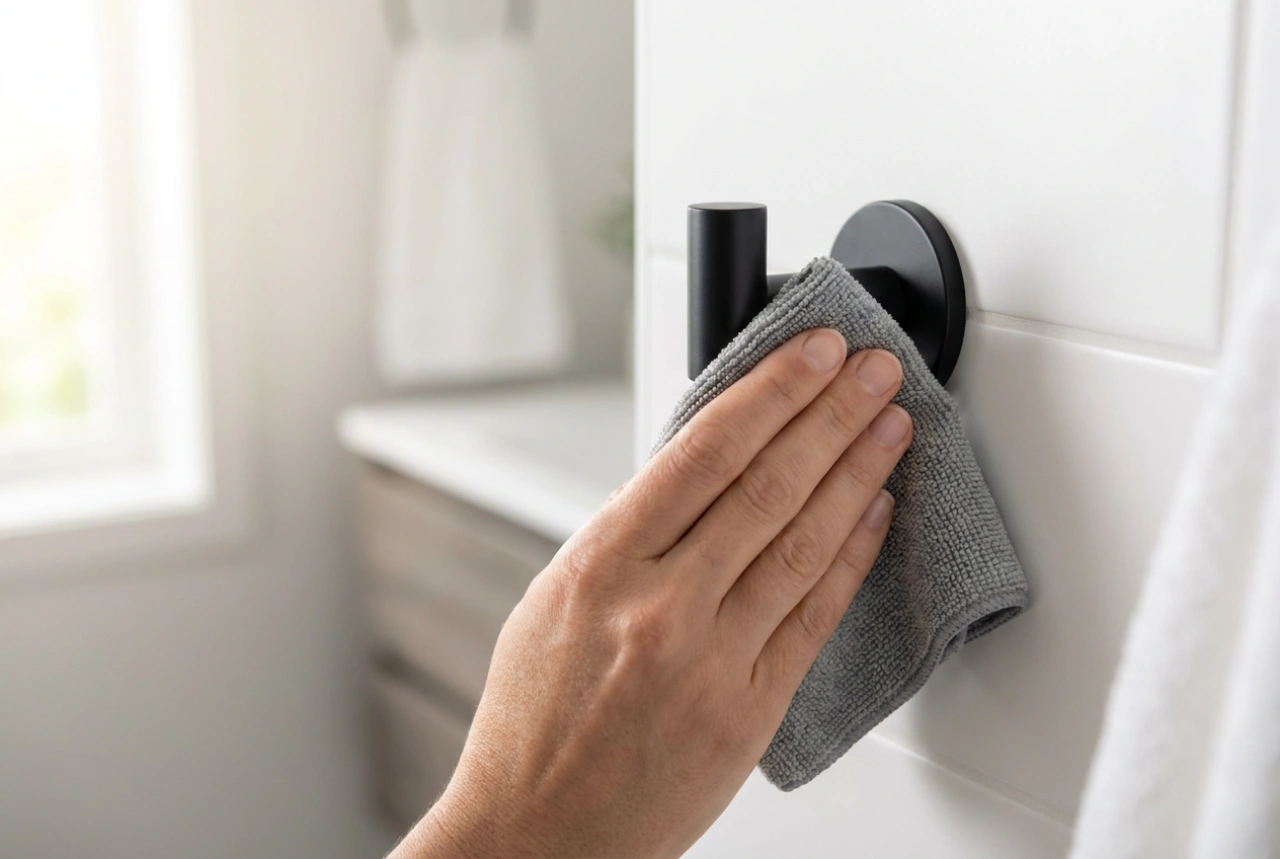
The high-humidity environment of a bathroom accelerates material degradation. When choosing towel rails, material science dictates durability. Brass and marine-grade stainless steel (specifically grade 304) offer the highest resistance to rust and oxidation. Chrome-plated steel is common but can peel if the outer plating is scratched, exposing the underlying ferrous metal to moisture.
Furthermore, avoid mixing incompatible metals during installation. Using brass screws to secure an aluminium bracket can lead to galvanic corrosion—a process where one metal corrodes preferentially when in electrical contact with another in the presence of an electrolyte (humidity). Always use the stainless steel fasteners provided by the manufacturer or match the metal types exactly.
Strategic Planning for Multi-Member Households
In shared family bathrooms, a single rail is rarely sufficient. To plan space efficiently, allocate at least 600 mm of horizontal rail space per family member. If wall space is constrained, vertical towel ladders or multi-tiered swing rails can optimise vertical space without compromising airflow.
When installing rails onto tiled walls, use specialised carbide or diamond-tipped drill bits. Drill slowly without the hammer action enabled on your drill to prevent micro-fracturing the glaze of the tile. Insert expansion wall plugs completely past the tile layer into the substrate behind to ensure the structural weight of wet towels does not pull the fixture out of the wall.