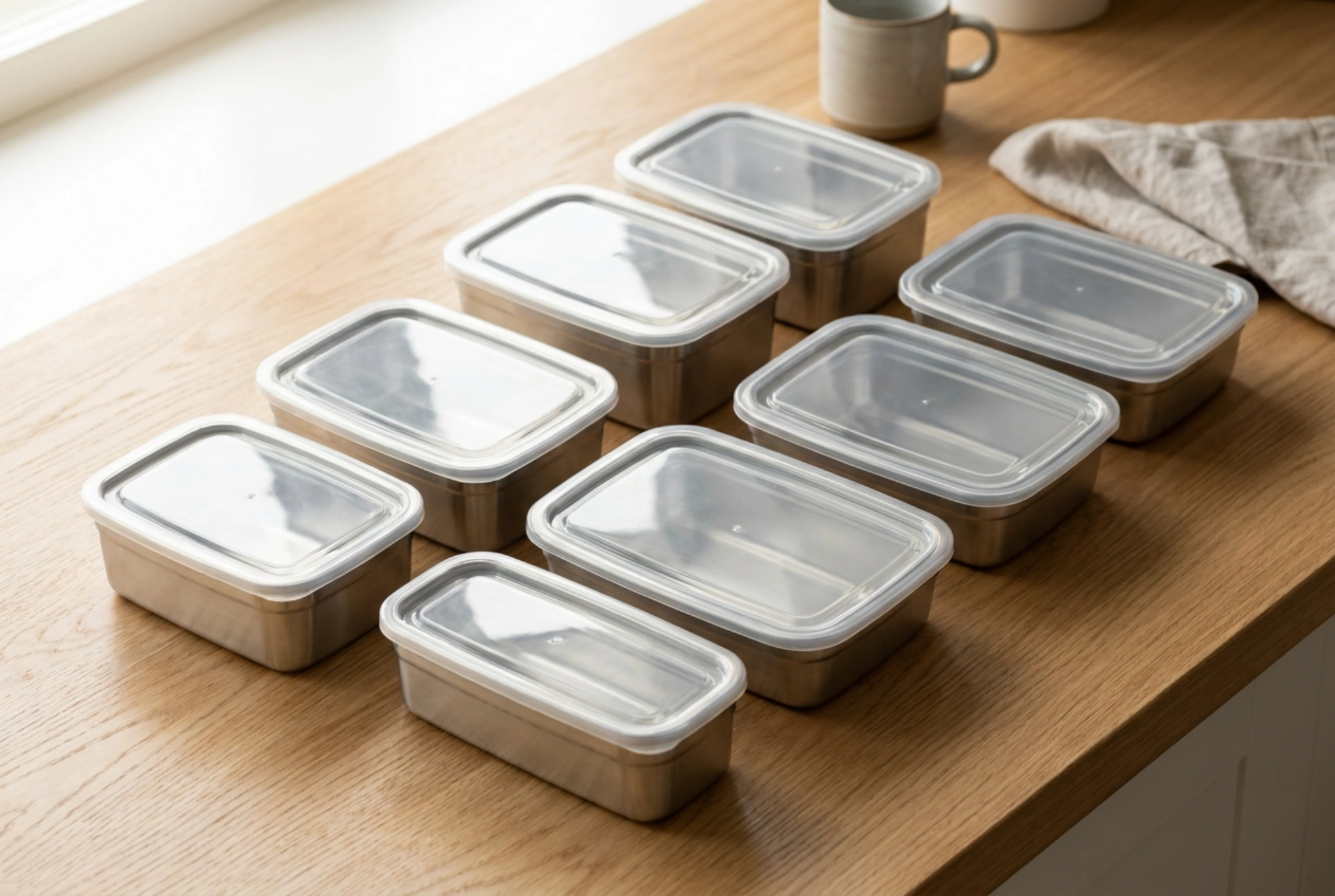


Stainless steel and other food-grade metal containers offer distinct thermodynamic and hygienic advantages that make them superior to plastic or glass in specific culinary scenarios. Understanding the material science behind these vessels helps you optimise food preservation, temperature control, and kitchen organisation.
The Physics of Thermal Conductivity and Rapid Cooling
The primary advantage of metal containers lies in their high thermal conductivity. Austenitic stainless steel (typically 304 grade, often referred to as 18/8 or 18/10) conducts heat at approximately 15 Watts per metre-kelvin (W/m·K). In comparison, glass conducts heat at around 1 W/m·K, and common food-grade plastics conduct heat at a mere 0.1 to 0.2 W/m·K. This massive physical difference directly impacts food safety.
When you place warm leftovers into a container to cool, the goal is to pass through the bacterial "danger zone" (between 4°C and 60°C) as rapidly as possible to prevent the exponential growth of pathogens. Because metal transfers heat away from the food and into the surrounding environment at a highly accelerated rate, food stored in metal chills significantly faster than food stored in plastic or glass. To exploit this thermodynamic property, place your metal container in an ice water bath immediately after filling it with hot soup or stew; the temperature drop is nearly instantaneous, preserving freshness and stopping microbial activity.
Non-Porous Surfaces and Chemical Inertness
Unlike polymers, which have a relatively loose molecular structure with microscopic voids, food-grade stainless steel is dense and non-porous. This molecular density prevents hydrophobic organic compounds—such as the lycopene found in tomatoes or the curcumin in turmeric—from penetrating the surface. This is why metal containers never stain, retain odours, or harbour microscopic food residues that can spoil subsequent meals.
Furthermore, high-quality stainless steel possesses a self-healing passive layer of chromium oxide (Cr2O3) on its surface. When exposed to oxygen, this microscopically thin layer prevents the iron underneath from oxidising (rusting) and chemically reacting with acidic foods, such as citrus marinades or vinegar-based dressings. This ensures that the organoleptic properties (taste, smell, and texture) of your food remain entirely unaffected by the container itself.
Durability under Extreme Temperature Fluctuations
Glass is highly susceptible to thermal shock; sudden shifts from a hot oven to a cold countertop can cause catastrophic structural failure due to uneven thermal expansion. Plastics, on the other hand, can warp, degrade, or leach plasticising chemicals when subjected to heat, and become extremely brittle and prone to cracking when frozen.
Metal containers exhibit excellent dimensional stability across a vast thermal spectrum. They can safely transition from the deep freeze (down to -40°C) directly to a steam steriliser or a conventional oven (without their silicone seals or lids), without any risk of warping, cracking, or chemical breakdown. This physical resilience makes them ideal for bulk food prep that requires rapid freezing and subsequent reheating.
When to Choose Metal Over Glass or Plastic
- Dry Pantry Storage for Light-Sensitive Goods: Solid metal containers block 100% of ultraviolet (UV) and visible light. Light exposure acts as a catalyst for lipid oxidation (rancidity) in nuts, seeds, whole grains, and coffee beans. Storing these items in sealed metal canisters preserves their delicate oils far longer than transparent containers.
- Aromatic and Oily Foods: Highly seasoned curries, pestos, garlic-infused oils, and marinades should always be stored in metal. Since the metal surface cannot absorb essential oils or lipids, a simple wash entirely removes all scent and grease.
- On-the-Go Meal Transport: For outdoor activities, lunches, or travel, the high strength-to-weight ratio of metal is unmatched. It provides the shatterproof safety of plastic but with the hygienic benefits of glass.
Cleaning and Maintaining the Passive Oxide Layer
To maintain the integrity of the protective chromium oxide layer, avoid using abrasive cleaning tools such as steel wool, which can mechanically scratch the surface and create micro-crevices where bacteria can hide. Instead, use a soft sponge or microfiber cloth. For stubborn, burnt-on food residues or mineral scale from hard water, utilise mild household chemistry: apply a paste of sodium bicarbonate (baking soda) and water. The mild alkalinity of sodium bicarbonate softens organic matter without etching the steel, allowing you to wipe the surface clean while preserving the metal’s passive barrier.