

Integrating therapeutic regimens into a stylish living space requires balancing aesthetic choices with strict pharmacological safety rules. Choosing the right decorative organiser is not just about visual harmony; it is a matter of preserving active compounds and preventing dangerous dosing errors.
The Physics of Preservation: Preventing Chemical Degradation
Active pharmaceutical ingredients (APIs) are highly sensitive molecular structures designed to react under specific physiological conditions. When stored incorrectly, these compounds undergo degradation pathways such as hydrolysis (breakdown via moisture), oxidation (reaction with oxygen), or photolysis (decomposition triggered by ultraviolet light). For instance, aspirin degrades into salicylic acid and acetic acid when exposed to water molecules in high-humidity environments.
Standard household environments like bathrooms and kitchens frequently experience high relative humidity (often exceeding 70%) and fluctuating temperatures. This accelerates chemical reactions, rendering medications less potent or potentially toxic. A secure decorative container must serve as a barrier. If you opt for an aesthetic storage box, it must offer a microclimate that maintains a stable relative humidity below 60% and temperatures between 15°C and 25°C.
Material Science: Selecting the Right Container Substrate
Not all decorative materials are suitable for storing sensitive medical tablets or capsules. Porous materials like untreated wood, natural terracotta, or low-fired ceramics absorb ambient moisture and can harbor fungal spores or bacteria. These materials can transfer humidity directly to blister packs or loose pills.
To ensure chemical inertness and structural protection, opt for containers made from non-porous, high-density materials:
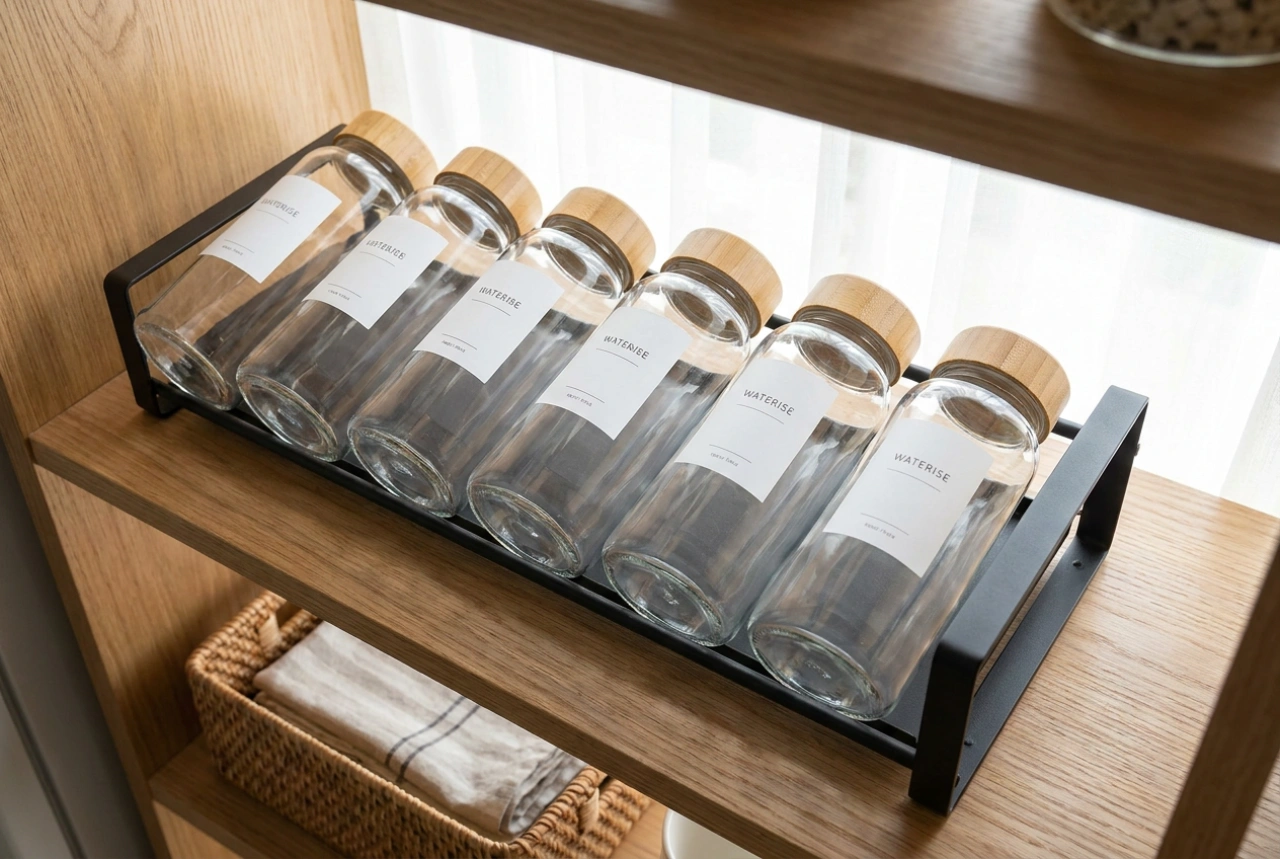
- Borosilicate glass: Extremely chemically inert and impervious to moisture. Dark amber or cobalt blue variations are highly effective at filtering out harmful UV radiation, protecting photosensitive compounds.
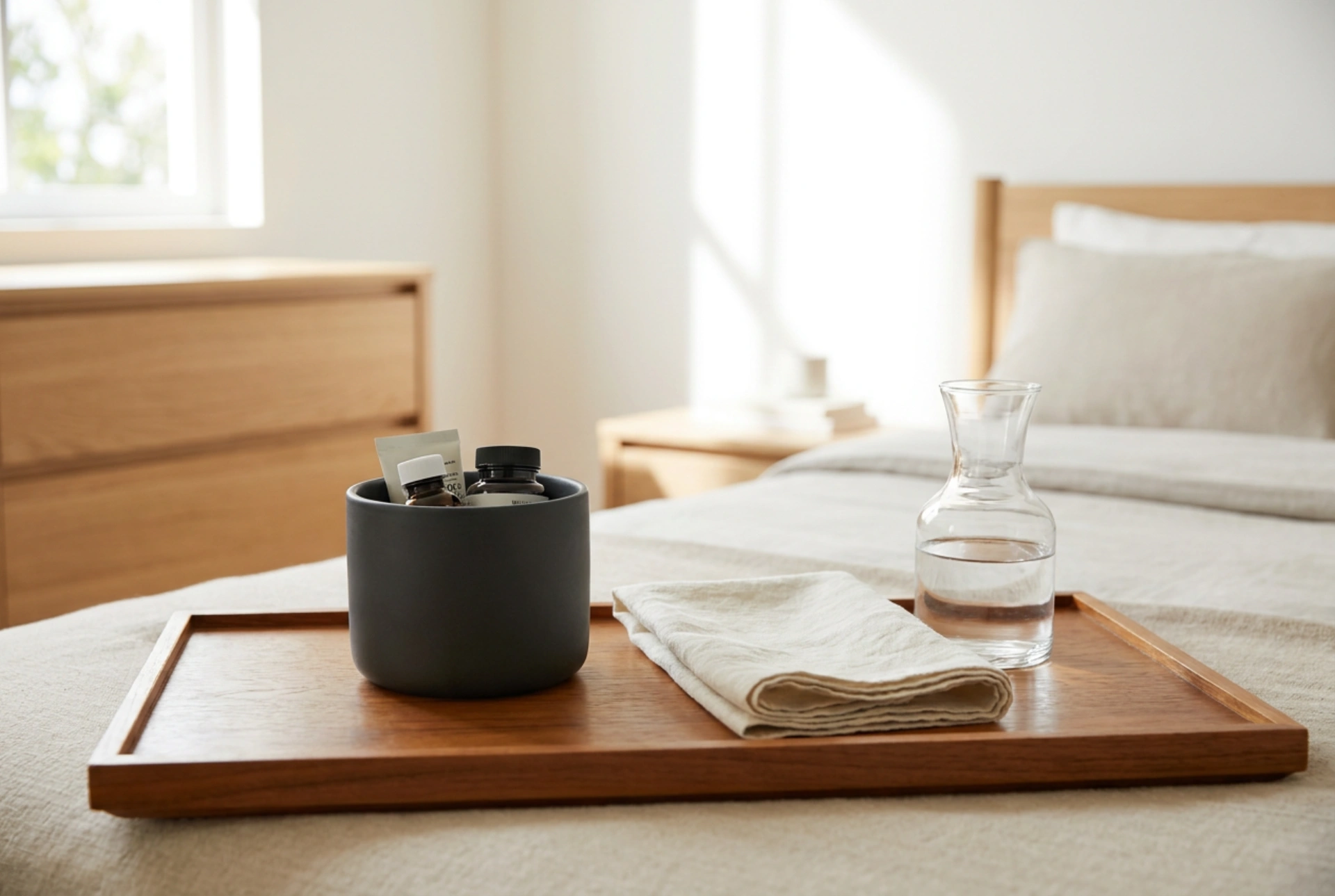
- Glazed stoneware or porcelain: Highly vitrified ceramics with a non-porous glaze provide excellent thermal mass, buffer ambient temperature spikes, and completely block light.
- Anodised aluminium: Lightweight, light-impermeable, and physically durable. However, to avoid galvanic corrosion or unwanted chemical interactions, medications should remain in their original primary packaging (blister packs) rather than touching bare metal.
Systemic Organisation: Preventing Dosing and Identification Errors
The primary risk of transferring medicines into decorative boxes is the loss of critical identifier details: expiry dates, batch numbers, and dosage instructions. Removing tablets from their original foil blister packs to place them in a loose, undivided decorative dish is highly dangerous. It exposes the tablets to oxygen and increases the risk of confusing different pills of similar shapes and colours.
To eliminate this risk, adopt a strict structural system within your decorative organiser. Utilize an internal compartment system that accommodates the original blister packs. Cut blister packs carefully along the perforated lines to fit smaller compartments, ensuring that the printed name of the drug, the dosage (e.g., mg), and the expiry date remain fully intact on each segment.
For daily or weekly routines, implement a dual-containment method. Use a discrete, medically approved plastic organiser (such as a multi-compartment pillbox) to organise your weekly doses, and place this entire unit inside your chosen decorative ceramic or wooden box. This retains the ease of structured sorting while concealing the clinical aesthetic behind a beautiful exterior.
Optimal Placement: Finding the Right Spot in Your Home
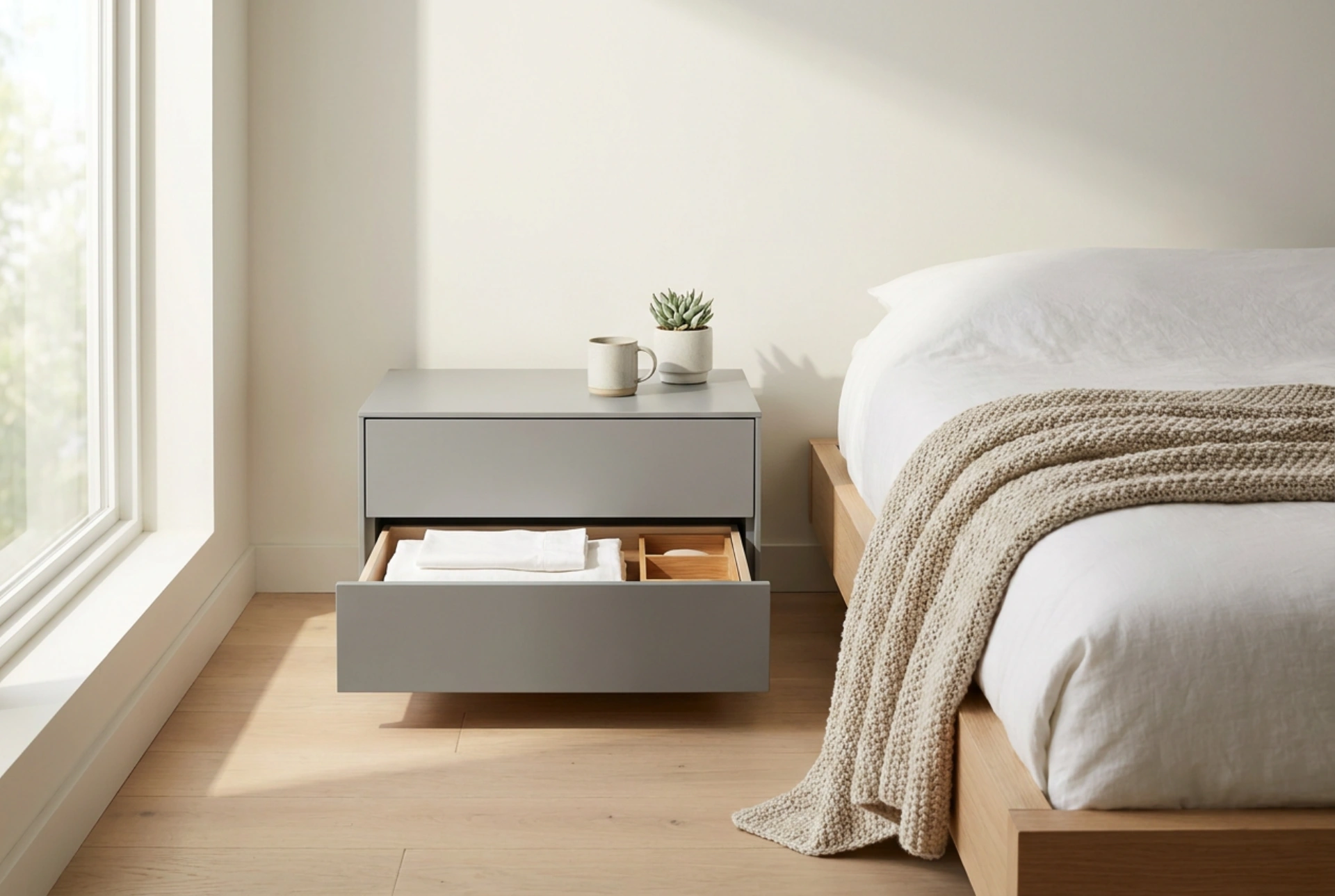
Even the most secure decorative box cannot protect against extreme external heat sources. Avoid placing your organiser on windowsills exposed to direct sunlight, near radiators, or on top of electronic appliances that generate heat. A shaded bedside table, a dedicated hallway console drawer, or a living room sideboard are ideal locations because they offer a stable thermal profile.
Always consider accessibility versus safety. If your household includes children, elderly individuals with cognitive decline, or pets, a decorative box without a childproof lock should never be placed in easily accessible areas. In these environments, the decorative container should act as a secondary organiser stored inside a high, locked cabinet, blending aesthetic order with absolute safety.