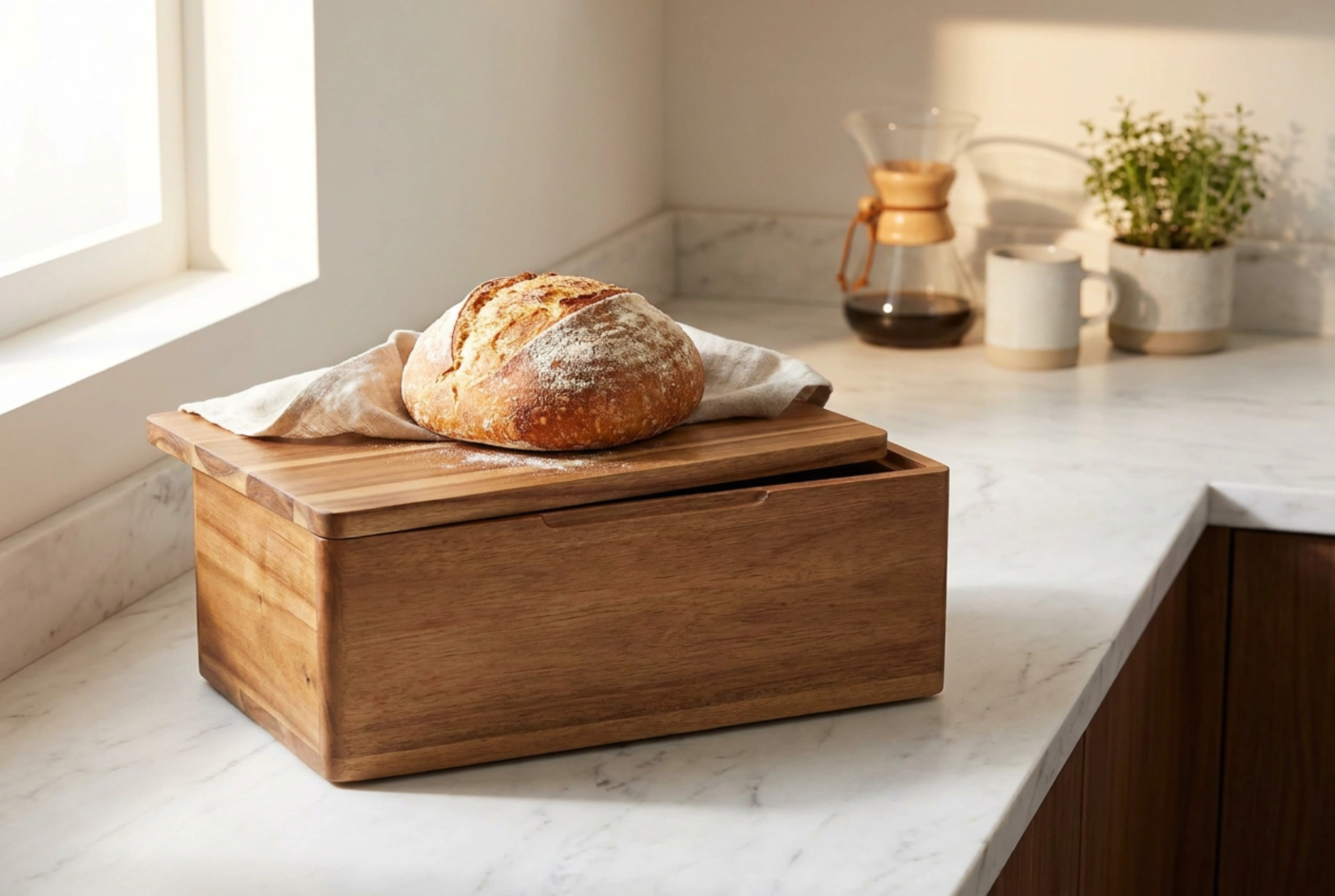


Integrating a bread bin with a built-in cutting board lid transforms a simple storage corner into an efficient, hygienic preparation station. Understanding the physical properties of bread staling and material science allows you to maintain crumb texture while maintaining an ergonomic kitchen workflow.
The Physics of Bread Preservation: Humidity and Retrogradation
To understand why a dedicated bread bin is essential, one must look at what happens to bread after baking. Bread staling is not merely a process of drying out; it is a chemical reaction known as starch retrogradation. During baking, starch gelatinises. As the loaf cools and ages, the amylose and amylopectin molecules realign into a crystalline structure, which expels water and causes the crumb to harden. If bread is stored in an airtight plastic container, the moisture evaporating from the crumb becomes trapped, creating a high-humidity microclimate that softens the crust and fosters mould growth within days. Conversely, leaving bread exposed to open air accelerates moisture loss, drying it out prematurely.
A wooden or bamboo bread bin with a fitted, non-airtight lid acts as a natural humidity regulator. The fibrous, porous nature of wood allows for a slow, controlled exchange of air and moisture. It retains enough ambient moisture to prevent the crumb from drying out, while allowing excess moisture to escape, preserving the crisp texture of the crust and delaying mould development without the use of chemical preservatives.
The Ergonomic Workflow: Reducing Contamination and Footprint
Combining a bread bin with a cutting board lid solves two practical kitchen challenges: space optimisation and cross-contamination. In a busy kitchen, using a single cutting board for raw meat, vegetables, and bread poses a significant hygiene risk. Raw vegetables and proteins carry moisture and bacteria that can easily transfer to bread, which is consumed raw. Even with thorough washing, wooden boards can retain microscopic food particles or strong aromatic compounds from garlic and onions, altering the delicate flavour profile of your bread.
A dual-purpose bread bin ensures that the cutting board remains dedicated solely to baked goods. When the lid is lifted and flipped, it immediately provides a clean, dry surface for slicing. This direct transition minimises the time the bread is exposed to room-temperature air and prevents crumb dispersion across countertops, as many integrated lids feature routed groove channels designed to trap stray crumbs.
Material Science: Selecting Wood or Bamboo
The performance of your bread bin lid depends heavily on its material structure. Hardwoods, such as beech, oak, or maple, possess natural capillary action that draws moisture away from the surface, creating an inhospitable environment for bacteria. These woods are dense enough to resist deep knife scarring while remaining soft enough to preserve the sharpness of your bread knife's serrated edge.
Bamboo, technically a grass, is an alternative characterized by high silica content, making it exceptionally hard and resistant to moisture absorption. It is highly durable and less prone to warping under variable kitchen temperatures. However, its hardness can dull knife blades faster than traditional hardwoods. Whichever material is chosen, ensure it is raw or treated only with food-grade oils, avoiding synthetic lacquers that can chip off over time and compromise food safety.
Maintenance and Care for Longevity
Maintaining the structural integrity of a wood-lidded bread bin requires specific cleaning techniques to prevent warping and cracking. Never submerge the wooden lid in water or wash it in a dishwasher; the rapid absorption of water followed by intense heat drying will cause the wood fibres to swell and contract unevenly, leading to warping or splitting. Instead, wipe the surface with a damp cloth and mild dish soap, then dry it immediately in an upright position to allow even air circulation on both sides.
To keep the cutting surface hydrophobic and resistant to stains, treat it periodically with food-grade mineral oil or beeswax. Avoid vegetable oils like olive or canola oil, as these contain unsaturated fats that oxidise over time, turning rancid and imparting unpleasant odours to your fresh bread.