

Preserving the complex flavor profile of loose-leaf tea requires controlling four environmental catalysts: oxygen, moisture, light, and heat. While high-quality metal canisters offer an exceptional physical barrier against these elements, improper storage techniques can still lead to the rapid degradation of essential oils and polyphenols.
The Science of Tea Degradation
Tea leaves are hygroscopic, meaning they readily absorb moisture from the surrounding air. When loose-leaf tea is exposed to oxygen and humidity, a process called oxidation begins. The volatile organic compounds—principally monoterpenes and sesquiterpenes, which give tea its distinctive aroma—begin to evaporate or break down. At the same time, catechins (antioxidants present in tea) oxidize into thearubigins and theaflavins, altering the flavor profile from fresh and vibrant to flat and astringent. Minimising oxygen exposure is the single most critical factor in halting this chemical decline.
Why Metal Canisters excel as Barriers
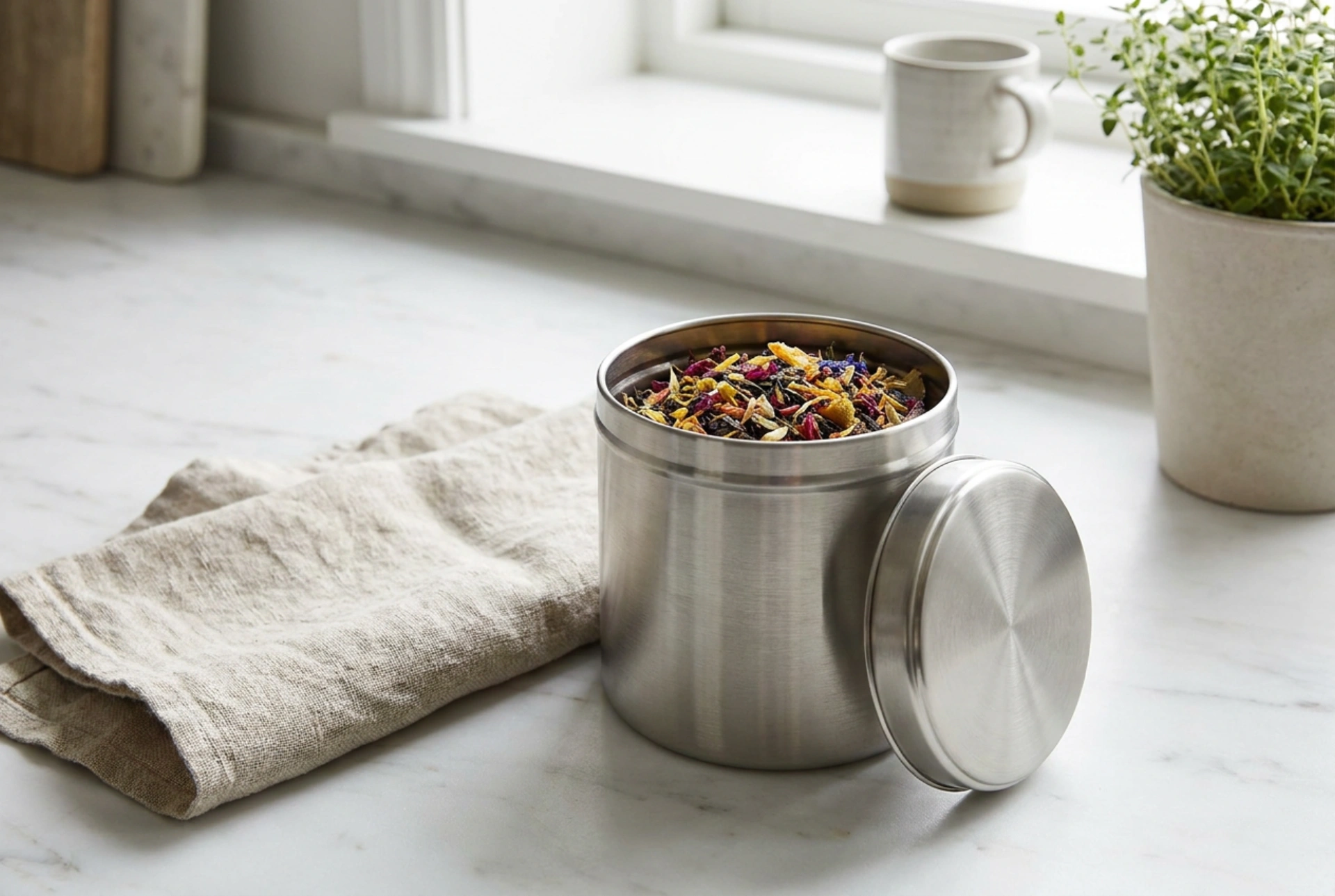
Unlike glass, which allows ultraviolet (UV) light to penetrate and catalyze photochemical reactions, opaque metal canisters provide absolute light protection. UV radiation accelerates the breakdown of chlorophyll and organic molecules, leading to a stale, grassy taste. Furthermore, high-quality metals such as food-grade stainless steel or tin-plated iron do not off-gas volatile organic compounds, ensuring the tea does not absorb foreign chemical odours. However, the metal itself is only half the solution; the container must possess a hermetic seal. Canisters utilizing a double-lid system or those fitted with a food-safe silicone gasket are essential to prevent the continuous exchange of ambient air.
Managing the Headspace Phenomenon
A common mistake when storing tea in metal tins is ignoring the "headspace"—the volume of air trapped inside the container above the tea. Even if a tin is perfectly sealed, the oxygen trapped inside a half-empty canister will continue to react with the leaves. To mitigate this, consider these techniques:
- Keep tea in its original barrier bag: Place the sealed foil bag directly inside the metal tin. This provides a secondary layer of protection and reduces the volume of air directly in contact with the leaves.
- Use appropriately sized containers: Do not store small quantities of tea in large tins. Transfer descending quantities of tea to smaller metal canisters to minimize the internal air volume.
- Utilize food-grade oxygen absorbers: For long-term storage of delicate green or white teas, inserting a small silica gel packet (for moisture) or an oxygen-scavenging sachet can dramatically prolong shelf life.
Thermal Stability and Moisture Control
The physics of condensation pose a major threat when metal containers are stored incorrectly. Metals are highly conductive materials, meaning they rapidly adjust to ambient temperature changes. If a metal tin is stored near a heat source, such as an oven, stovetop, or in direct sunlight, the internal temperature rises. When the temperature drops, any ambient moisture trapped inside the tin can condense on the inner metal walls, introducing liquid water to the dry leaves and triggering rapid mold growth or souring. Always store metal canisters in a cool, dark pantry where the temperature remains stable, ideally between 15°C and 20°C. Never store tea canisters in the refrigerator, as the extreme temperature differential upon opening causes instant condensation on the cold metal and tea surfaces.
Step-by-Step Packing and Maintenance
To ensure optimal flavor retention, follow this precise sequence when preparing a metal tin for storage:
- Clean and dry: Wash the canister thoroughly with hot water and a fragrance-free detergent. Allow it to air-dry completely for at least 24 hours to ensure no residual moisture remains in the seams or gasket.
- Scent neutralisation: If the tin previously held a highly aromatic tea, such as Earl Grey or Lapsang Souchong, wipe the interior with a dilute solution of sodium bicarbonate (baking soda) to neutralize remaining volatile oils before drying.
- Gentle transferring: Pour the tea slowly to avoid crushing the delicate leaves, which increases the surface area exposed to oxygen.
- Firm sealing: Ensure the gasket is seated correctly and press the lid down firmly to engage the airtight seal.