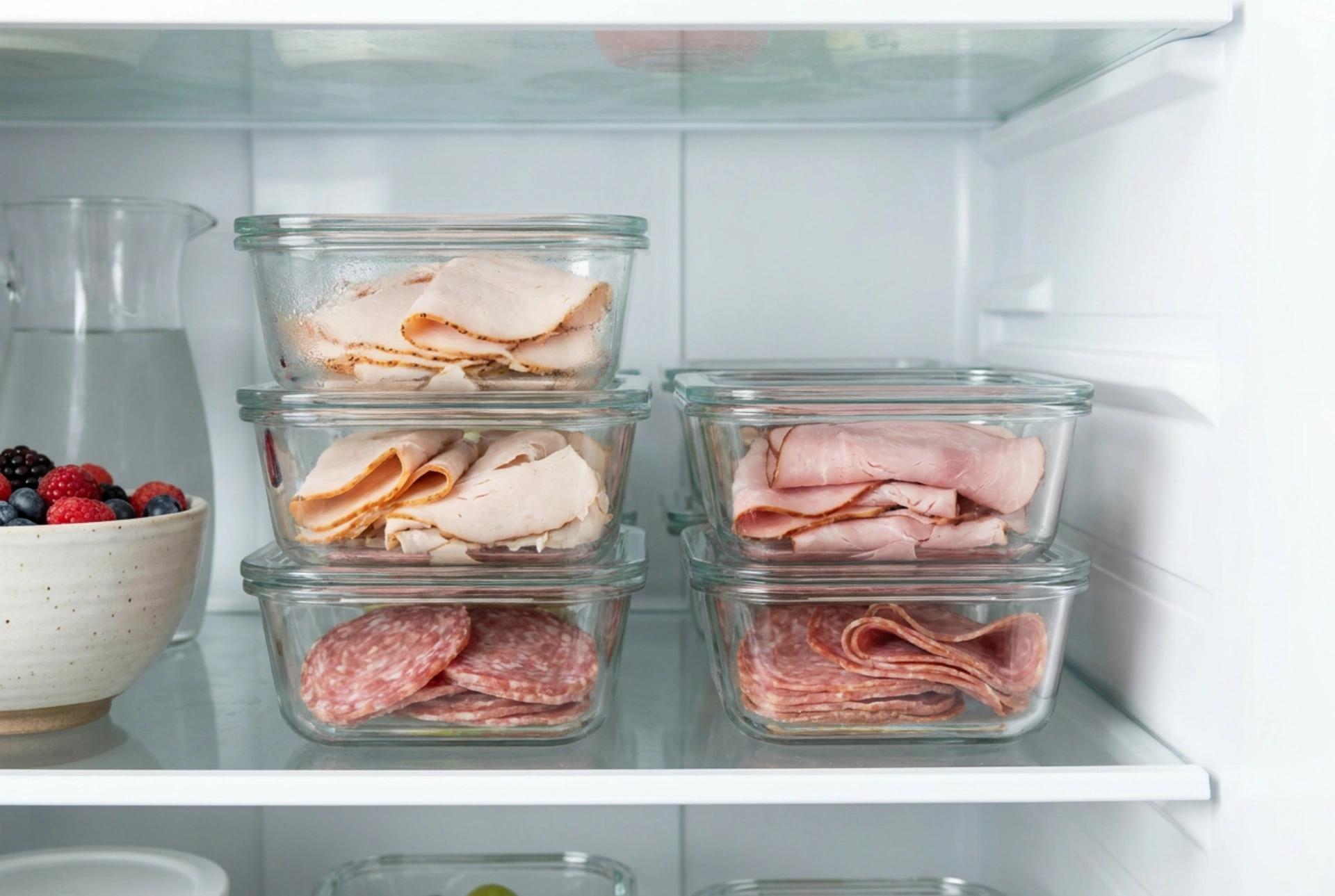


Storing sliced deli meats correctly is essential to prevent rapid spoilage, slime formation, and off-odors caused by moisture buildup and bacterial proliferation. Utilizing separate, dedicated containers for different types of cold cuts controls the microenvironment around the meat, significantly extending its shelf life and preserving its original sensory qualities.
The Science of Deli Meat Spoilage
Cold cuts are highly perishable due to their high water activity and nutrient-rich composition, which provide an ideal breeding ground for microbial pathogens such as Listeria monocytogenes and lactic acid bacteria. When deli meats are exposed to air, two main processes occur: oxidation and dehydration. Oxygen accelerates lipid oxidation, leading to rancidity and discoloration, while dry refrigerator air robs the meat of its natural moisture, altering its texture.
Conversely, excessive moisture is equally damaging. When condensation pools on the surface of the meat inside a sealed environment, it creates a high-moisture micro-climate that accelerates bacterial multiplication and enzymatic breakdown, resulting in a slippery, slimy coating. Maintaining a precise balance of humidity while excluding oxygen is the fundamental key to keeping meats fresh.
Selecting the Right Container Material
The choice of storage vessel directly influences the rate of spoilage. Glass and high-density, food-grade plastics are the two primary materials used for food preservation, each behaving differently at a molecular level.
- Borosilicate Glass: Glass is completely non-porous and chemically inert. It does not absorb fats, pigments, or volatile organic compounds from the food, nor does it leach chemicals. From a thermal standpoint, glass has a high thermal mass, meaning it retains cold temperatures better than plastic when the refrigerator door is opened, minimizing temperature fluctuations that trigger condensation.
- Food-Grade Polypropylene: High-quality, BPA-free plastic containers are lightweight and durable. However, plastics are semi-porous over time and can absorb microscopic grease films, which can harbor bacterial biofilms if not cleaned meticulously. If using plastic, ensure the containers have a high-quality silicone gasket seal to prevent gas exchange.
Regardless of the material, airtight seals are mandatory. A tight seal prevents volatile aromas from escaping and blocks ambient oxygen from entering, slowing down oxidative degradation.
The Separation Strategy: Water Activity and Cross-Contamination
Storing different types of deli meats together in a single container is a common mistake that dramatically shortens their lifespan. Different meats have varying physical properties, specifically water activity and pH levels.
Dry-cured meats (such as salami, prosciutto, or chorizo) have undergone dehydration and fermentation, leaving them with low water activity. Cooked, high-moisture meats (such as boiled ham, turkey breast, or chicken roll) have a high water content. If stored in the same container, moisture will naturally migrate from the wet meat to the dry cured meat via capillary action and vapor pressure equilibrium. This ruins the texture of the cured meat, making it soggy, while raising its moisture levels to a point where mold can rapidly develop.
Furthermore, separate containers prevent cross-contamination of microflora. Each type of meat carries distinct background microflora from its processing environment. Combining them allows bacteria from one batch to colonize another, accelerating overall spoilage.
Step-by-Step Protocol for Storing Cold Cuts
To maximize the preservation of your deli meats, follow this scientific and methodical storage routine:
1. Temperature Control and Location
Place your storage containers in the coldest part of the refrigerator, which is typically the lowest shelf just above the vegetable drawers. Avoid storing deli meats in the refrigerator door, as this zone experiences the most severe temperature fluctuations, leading to condensation cycles inside the containers.
2. Moisture Management with Parchment
When packing deli meats into a container, line the bottom with a sheet of food-grade parchment paper or a clean, dry paper towel. This acts as a moisture regulator, absorbing any condensed water vapor before it can pool on the meat. If storing multiple layers, place a sheet of parchment paper between each layer to prevent the slices from sticking together and to minimize surface contact where bacteria can thrive.
3. Minimizing Air Space
Choose a container size that matches the volume of the meat. A large container with a tiny amount of meat leaves a large volume of headspace filled with oxygen, which speeds up oxidation. Fill the container comfortably without compressing the meat excessively, which can squeeze out juices and ruin the texture.
4. Strict Hygiene Protocols
Always wash your hands thoroughly with soap and water before handling cold cuts, or use clean tongs. Introducing external bacteria from your hands directly transfers pathogens to the sterile environment of the container, negating all benefits of the storage system.