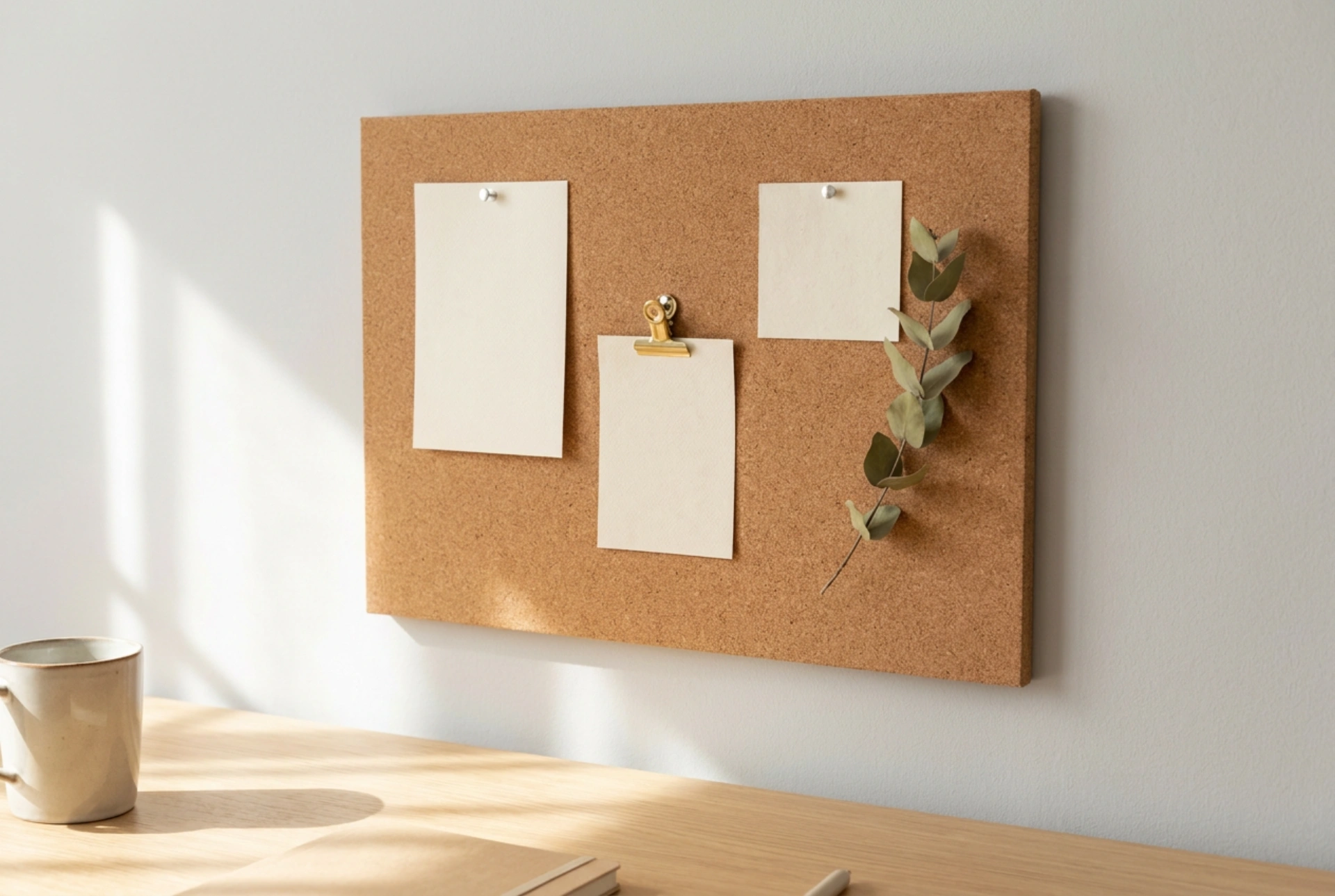


A well-structured corkboard serves as an external cognitive extension, reducing mental load by translating abstract schedules and urgent tasks into a spatial hierarchy. Optimising this vertical workspace requires understanding visual ergonomics, weight distribution, and functional zoning rather than merely pinning papers at random.
The Material Science of Cork and Pin Mechanics
Cork is harvested from the bark of the cork oak (Quercus suber), characterized by a unique honeycomb cell structure filled with an air-like gas. This composition makes the material highly compressible, elastic, and lightweight. When you insert a pin, the cell walls compress, exerting a constant counter-pressure against the pin shaft. This friction is what holds the pin in place.
To maximise the lifespan of your corkboard and ensure secure holding power, understand the mechanics of shear stress. For heavier items like small booklets or keys, insert pins at a slight downward angle of approximately 45 degrees. This angled insertion shifts the load from pure tension—which pulls the pin straight out—to a combination of shear and compression, leveraging the cork's natural elasticity to grip the pin more tightly. Avoid overloading a single point; instead, distribute weight by using double-pin configurations with a tension wire or a brass clip to suspend thicker documents without tearing the paper or crumbling the cork fibers.
The Cognitive Ergonomics of Three-Zone Layouts
Human visual processing naturally follows specific pathways. For cultures reading from left to right, a corkboard layout should mirror this cognitive flow to minimize mental processing friction. Dividing your board into three distinct horizontal or vertical sectors establishes an intuitive pipeline for information.
- The Input Zone (Left): This area is dedicated to incoming, unsorted information. Use this sector for quick scribbles, phone messages, and immediate tasks. Because it is highly dynamic, keep it clear of permanent fixtures.
- The Focus Zone (Centre): Situated directly in your primary line of sight, this zone holds your current daily or weekly priorities. Limit this area to a maximum of three key documents to prevent cognitive overload. High-contrast visual elements here keep your immediate goals front of mind.
- The Reference Zone (Right): This sector is reserved for static, long-term information. Monthly calendars, key contact directories, or project roadmaps belong here. Since this information changes infrequently, placing it on the periphery keeps it accessible without distracting you from active tasks.
Optimising Height and Visual Angles
The physical placement of the corkboard relative to your desk directly impacts physical comfort and concentration. Mounting the board too high forces hyperextension of the neck, while mounting it too low clutters the immediate physical desktop area. The optimal height places the center of the board at your natural eye level when seated—typically 15 to 30 degrees below your horizontal line of sight.
To prevent visual fatigue, implement a strict colour-coding system for your pins and clips. Limit your palette to three distinct colours: one high-visibility shade (such as red or bright yellow) exclusively for urgent deadlines, a neutral tone (white or wood) for general tasks, and a cool tone (blue or green) for static references. An excess of randomly coloured pins creates visual noise, which stimulates the amygdala and reduces cognitive endurance over long working sessions.
Preventing Degradation and Maintaining Elasticity
As a natural organic material, cork is sensitive to environmental factors such as humidity and ultraviolet radiation. Low humidity dry-out causes the cellular structure to become brittle, leading to crumbling when pins are inserted or removed. Conversely, high humidity can cause the wood fibers to swell, potentially warping the backing board.
Maintain your corkboard by keeping it away from direct sunlight and heat sources like radiators. To recondition dry cork, lightly mist the surface with distilled water and wipe it down with a lint-free microfiber cloth. Never use harsh chemical solvents or detergents, as these break down the natural suberin binders that hold the cork granules together. For persistent dust, use the brush attachment of a vacuum cleaner on a low setting, moving in gentle circular motions to preserve the texture.