

Efficient food container storage relies on geometric principles and material characteristics, turning a chaotic cabinet into a highly functional, space-saving system. By understanding the physics of nesting, structural friction, and polymer flexibility, you can design an organised layout that prevents damage and maximises storage density.
The Geometry of Nesting versus Stacking
To optimise drawer and shelf volume, you must choose between nesting (placing smaller vessels inside larger ones) and stacking (layering closed containers vertically). Nesting offers the highest volumetric efficiency, as it eliminates the dead air space within empty containers. However, this method requires storing lids separately. Successful nesting depends on the draft angle—the slight slope of a container’s vertical walls. Containers with a 90-degree angle cannot nest and must be stacked, whereas a taper of even 2 to 5 degrees allows containers of different sizes to slide into one another easily.
Stacking is ideal for containers of identical sizes when vertical space is abundant. It relies on the structural integrity of the lids, which must feature a recessed top ridge to lock the base of the upper container into place. This structural interlocking prevents lateral shifting when drawers are opened, utilising gravity and friction to maintain stability.
Material Science: Glass vs. Polymers
How you organise your food containers depends heavily on what they are made of. Tempered glass and polymers (such as polypropylene) behave differently under mechanical stress, which affects how they should be handled and stored.
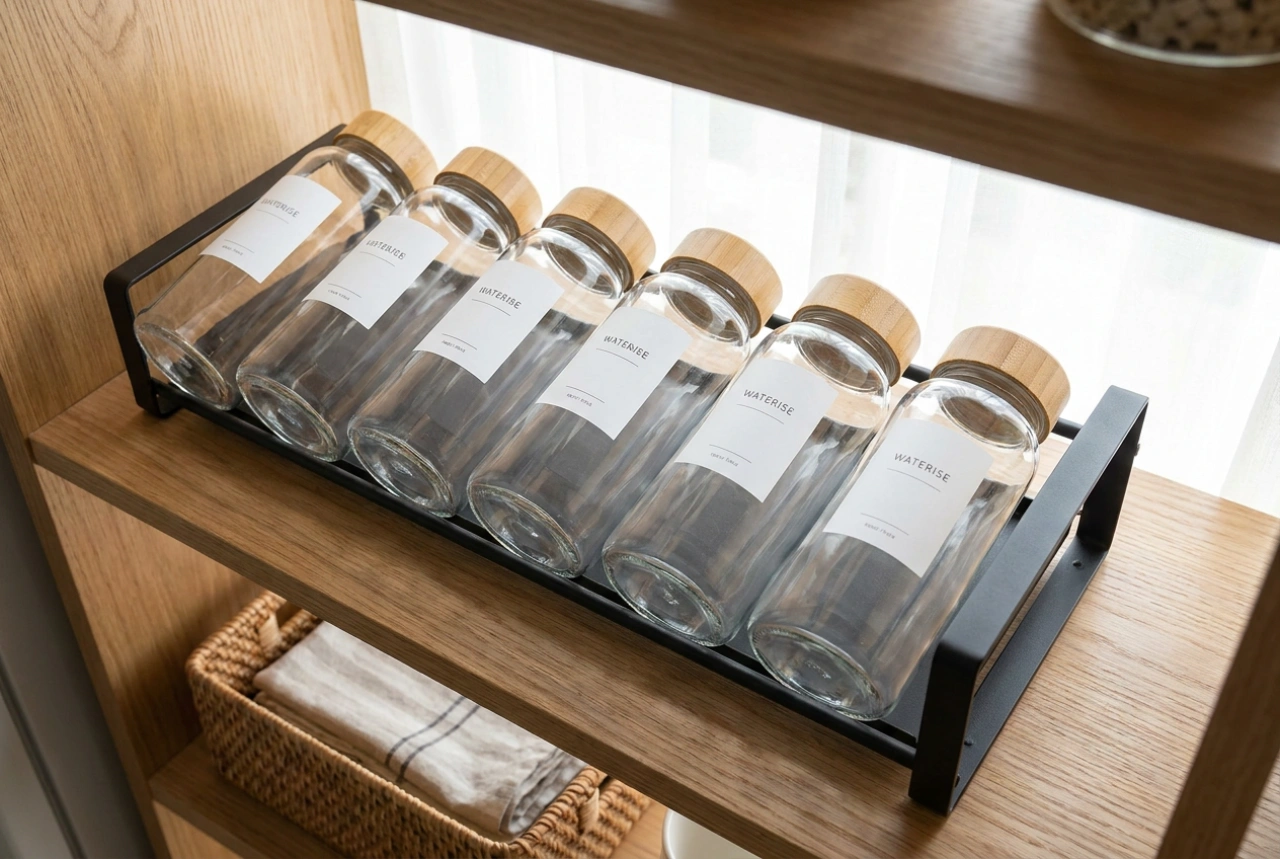
- Tempered Glass: Glass is highly rigid and chemically inert, but it is susceptible to mechanical shock. Nesting glass containers directly inside one another can cause glass-on-glass friction. This creates micro-scratches that compromise the structural integrity of the tempered glass over time, potentially leading to spontaneous shattering due to internal stress. To prevent this, place a thin felt protector, a silicone buffer, or a clean cloth between nested glass vessels.
- Polymers (Plastics): Polypropylene containers are flexible and highly resistant to impact, allowing them to tolerate tight nesting forces. However, polymers have a higher coefficient of friction than glass, meaning they can easily stick together when nested wet. Always ensure plastic containers are completely dry before nesting to prevent vacuum seals from forming between the smooth plastic surfaces.
Systematic Lid Management and Physics
Lids are often the main cause of kitchen drawer clutter due to their asymmetric shapes, flexible sealing rims, and varied locking mechanisms. Storing containers with their lids on protects the sealing gaskets but wastes up to 70% of potential storage volume. The most efficient approach is to separate lids from bases and organise them vertically.
Store lids on edge, like records in a rack, sorted by shape (circular, square, rectangular) and then by size. This arrangement makes it easy to find the right lid and prevents them from sliding around. Keeping the seals clean and uncompressed when not in use also helps the silicone gaskets last longer by preventing permanent deformation, which can lead to leaks.
A Step-by-Step Guide to Drawer Layout
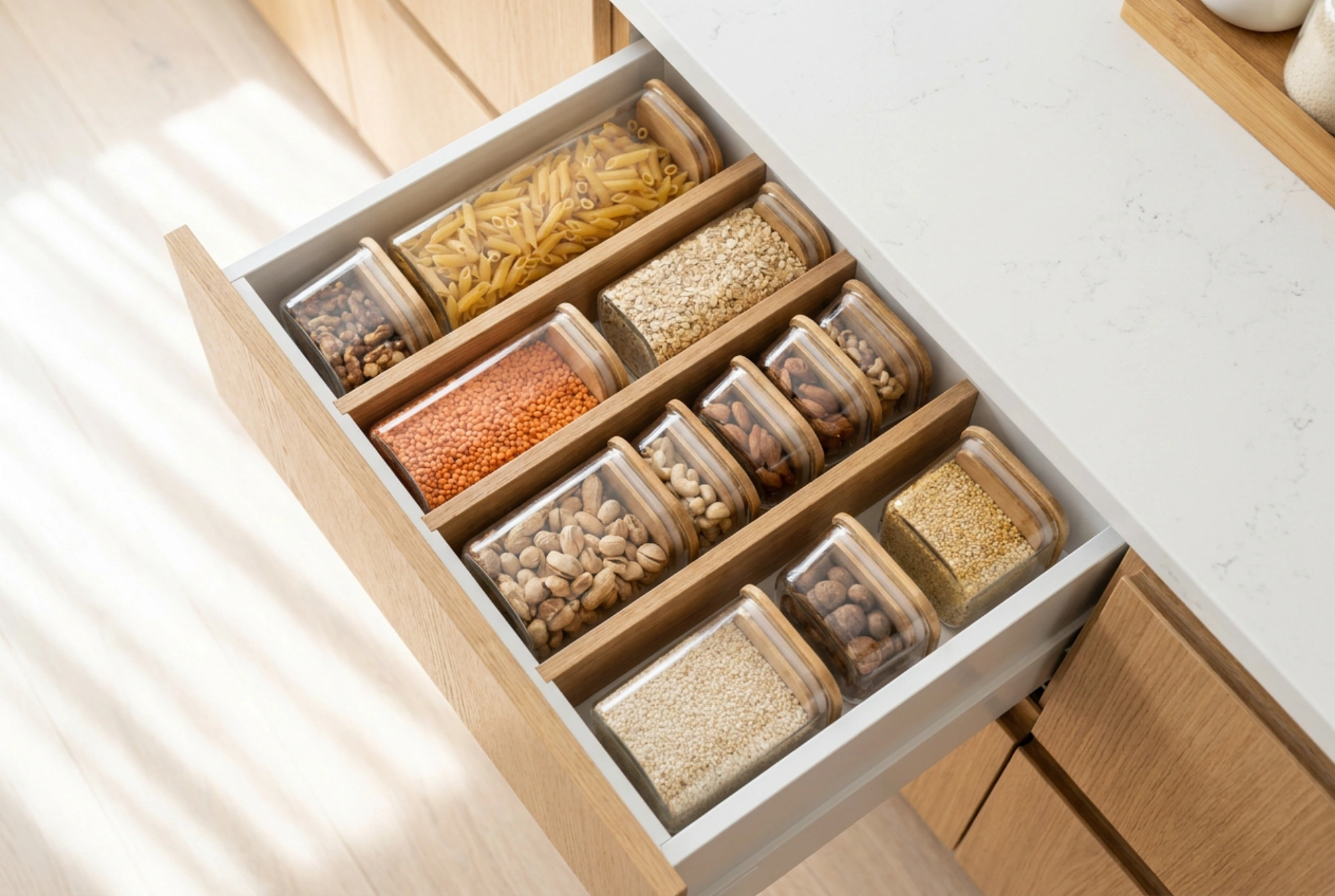
To build a highly efficient container drawer, use a logical, step-by-step process based on usage frequency and material type:
- Step 1: Group by Material. Keep glass and polymer containers in separate zones. This prevents heavier glass vessels from crushing or warping lighter plastic containers.
- Step 2: Segregate by Geometric Profile. Group circular containers together and rectangular containers together. Round containers leave unused triangular gaps in square drawers, so they should be grouped in their own section to minimise wasted space.
- Step 3: Nest by Volume. Place the largest container of a specific shape at the bottom, and nest progressively smaller containers inside it, using protective barriers for glass.
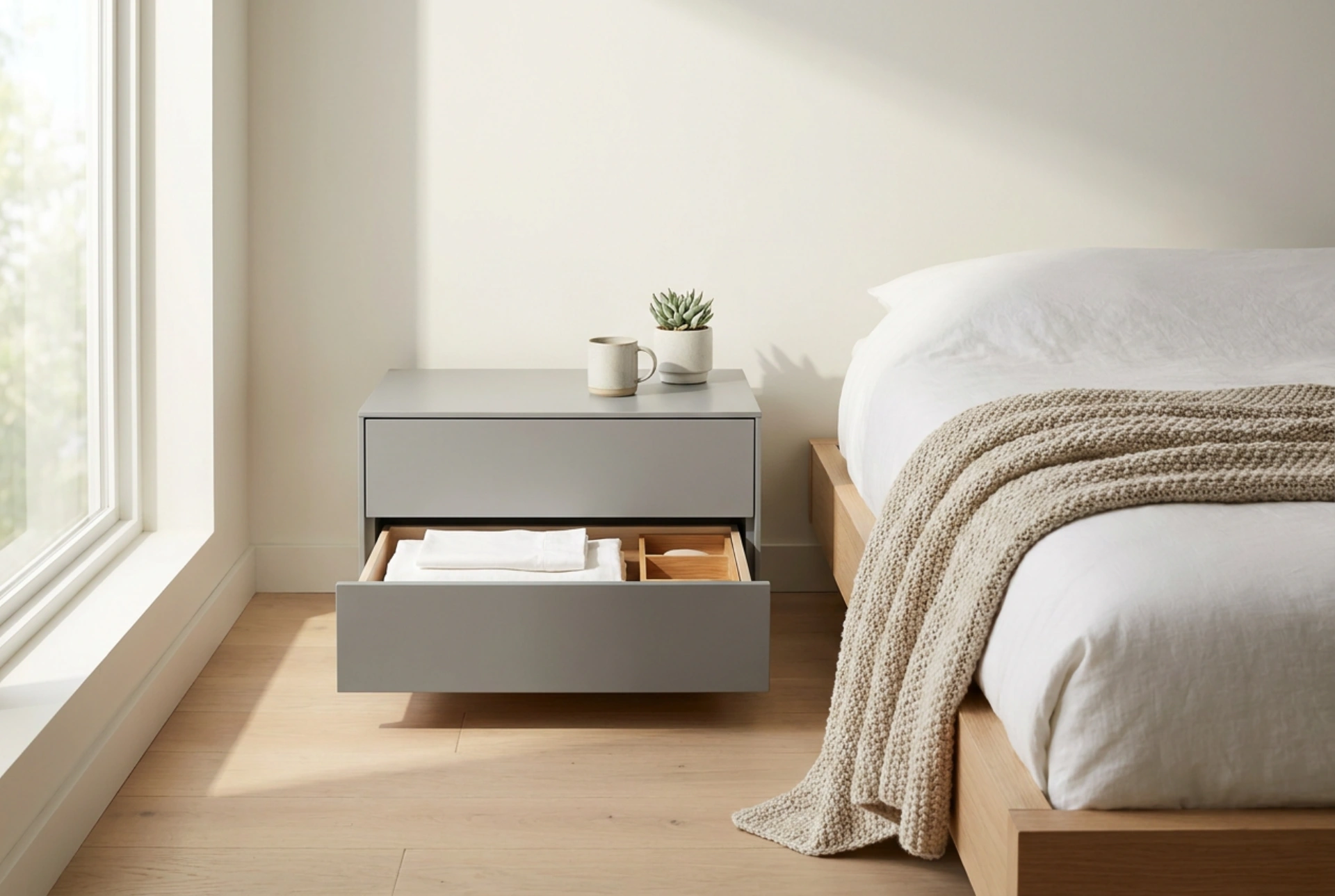
- Step 4: Secure against Inertia. Line your drawers with a high-friction, non-adhesive silicone mat. This absorbs the momentum of opening and closing the drawer, keeping your organised stacks from sliding and tipping over.