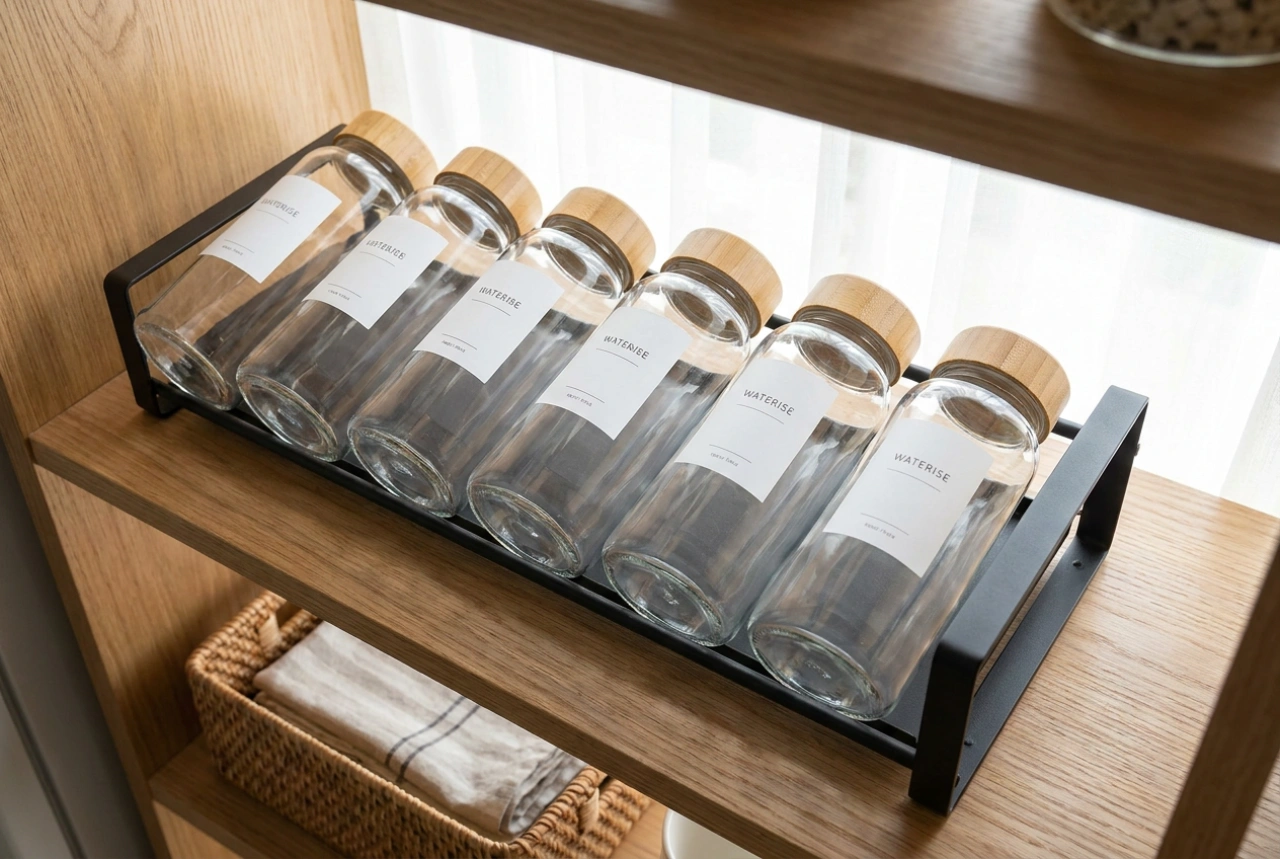


Effective pantry organisation relies on clear classification, but the longevity of your storage system depends heavily on how adhesive labels interact with container materials. Understanding the physical chemistry of adhesion and surface preparation ensures your custom printed labels remain pristine and firmly attached over years of daily handling.
Surface Energy and Substrate Compatibility
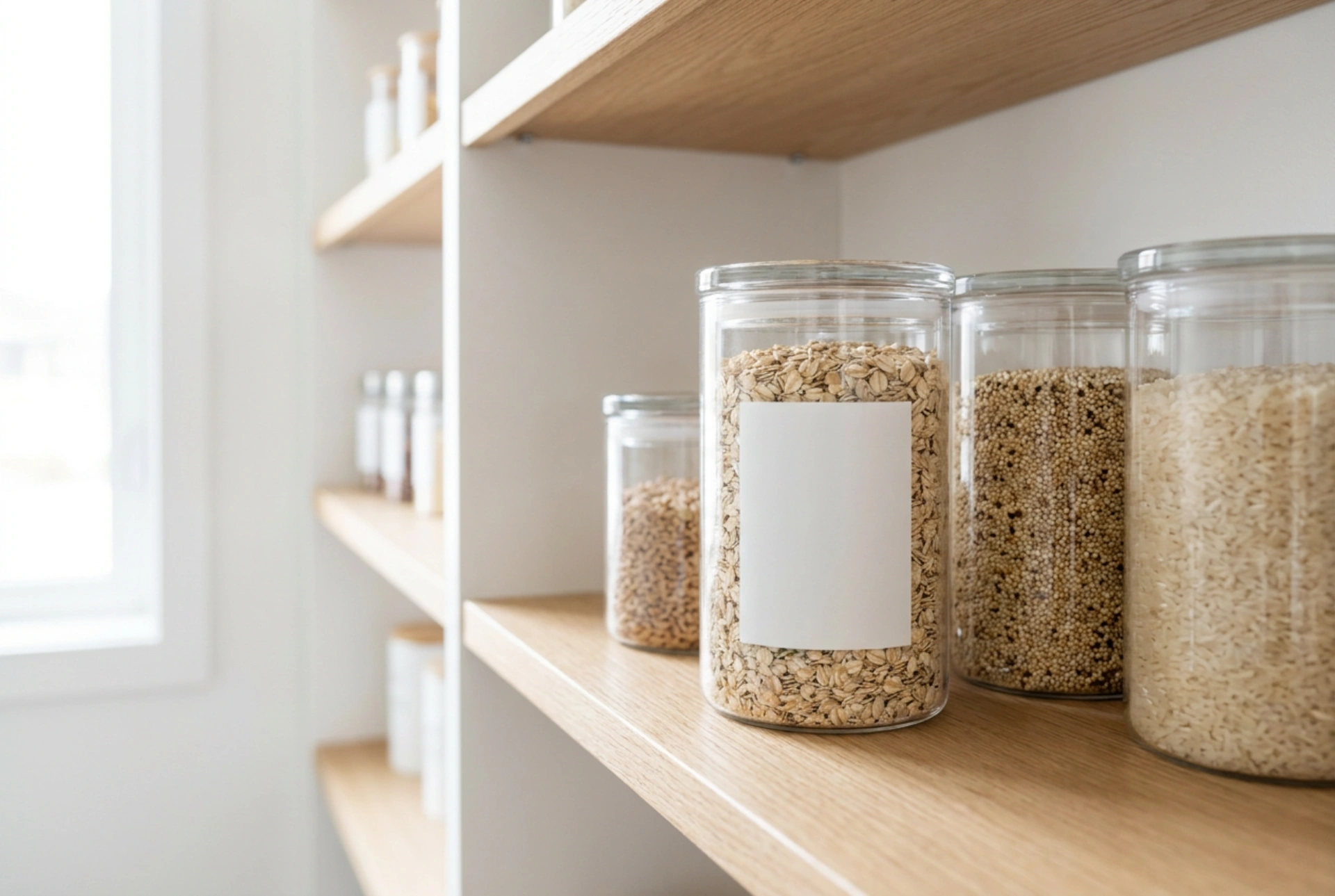
Glass and plastics behave differently under adhesives. Glass has high surface energy, allowing liquids and adhesives to spread evenly, creating a strong molecular bond. Conversely, many pantry plastics, such as polyethylene or polypropylene, have low surface energy. Adhesives on these surfaces tend to bead up, leading to premature peeling or edge lifting. When selecting containers, borosilicate glass provides the ideal high-energy surface for permanent or semi-permanent adhesive labels, while specialized high-tack adhesives are required if you opt for flexible plastic tubs.
The Chemistry of Surface Preparation
A common failure point in labeling is poor surface preparation. Dust, microscopic grease films from cooking, and finger oils prevent direct contact between the adhesive and the container substrate. Standard dish soaps often leave surfactant residues that act as a barrier. To achieve an optimal bond, clean the surface with a solution of 70% isopropyl alcohol and a lint-free microfibre cloth. Isopropyl alcohol dissolves lipids and evaporates rapidly without leaving a film. Allow the surface to dry completely for at least five minutes to ensure no moisture is trapped under the label, which could otherwise weaken water-based acrylic adhesives.
Choosing the Right Label Material
Pantry environments experience fluctuations in humidity and temperature, making material choice critical.
- Paper Labels: Best suited for low-moisture zones and dry goods. While aesthetically pleasing, paper absorbs ambient humidity, leading to fiber swelling, ink bleeding, and eventual degradation.
- Synthetic Polymer Labels: Highly recommended for jars containing liquids, oils, or items requiring occasional surface wiping. Polyester and polypropylene labels resist water, oils, and mild cleaning agents, maintaining their structural integrity and print clarity.
- Adhesive Types: Acrylic-based pressure-sensitive adhesives are preferred for pantry jars. They resist UV yellowing and thermal degradation better than rubber-based adhesives.
Precision Application and the Physics of Pressure
Applying a label without bubbles requires a systematic physical approach rather than freehand sticking. First, use the hinge method: peel back a small strip of the backing paper (about one centimetre) and align the exposed adhesive edge with your container’s vertical axis. Once aligned, press down this anchor point.
Using a soft squeegee, felt block, or the edge of a plastic card wrapped in a soft cloth, gradually smooth the label from the centre outwards while slowly pulling away the remaining backing paper. This directional movement pushes air pockets to the margins. Crucially, pressure-sensitive adhesives require mechanical force to activate. Rubbing the applied label firmly with your thumb generates localized friction and pressure, forcing the adhesive into the microscopic pores of the container material, securing a permanent mechanical bond.
Thermal Stability and Long-Term Maintenance
Once applied, most acrylic adhesives require 24 to 48 hours to reach full bond strength. Avoid exposing labeled jars to high heat or dishwashers during this curing phase. When washing labeled glass canisters, opt for hand washing in lukewarm water with mild detergent; avoid soaking, as prolonged immersion can cause water to migrate under the label edges, leading to delamination over time.