

Selecting the right laundry basket is not merely a matter of home aesthetics; it is a functional decision where material science, ventilation, and volume capacity must align with your household’s washing frequency to prevent bacterial growth and textile degradation.
The Physics of Ventilation: Managing Moisture and Microbes
Soiled textiles carry organic matter, skin flakes, sebum, and environmental moisture. When these elements are confined in an unventilated space, they create a high-humidity microclimate ideal for the proliferation of bacteria and fungi, such as mould and mildew. Fungal spores can begin to germinate on damp natural fibres, such as cotton or linen, within 24 to 48 hours.
To prevent this, the structural design of your laundry receptacle must facilitate continuous airflow. A solid plastic bin without perforations traps moisture, raising the relative humidity inside and accelerating the formation of musty odours (caused by volatile organic compounds released by bacteria). Conversely, baskets made from woven natural materials (like rattan, seagrass, or wicker) or perforated polymers allow air to circulate freely. This airflow aids in the evaporation of residual moisture from worn garments, keeping the internal environment dry and inhospitable to microbial growth.
Matching Volume to Drum Capacity: The Litre-to-Kilogram Calculation
A common mistake is choosing a laundry hamper that does not correspond to the physical capacity of your washing machine. To optimise energy and water consumption, washing machines should be run at their optimal load capacity—typically about 80% of the drum volume for standard cotton cycles.
As a rule of thumb, one kilogram of dry cotton laundry occupies approximately 10 litres of volume. Therefore, if you operate a standard 8 kg washing machine, one full load of laundry equates to roughly 80 litres of space. If your laundry basket holds 40 litres, you will find yourself running half-empty, inefficient cycles, or dealing with overflow. Conversely, a 120-litre hamper in a single-person household encourages clothes to sit for too long before a full load is accumulated, increasing the risk of set-in stains and deep-seated odours that are harder to remove at standard washing temperatures.
Pre-Sorting Ergonomics: Streamlining the Wash Cycle
The physical act of sorting laundry by colour and fabric sensitivity before washing is essential to prevent dye transfer and mechanical fibre damage. Implementing a multi-compartment hamper at the point of disposal eliminates the need for manual sorting on the utility room floor, saving time and keeping the space hygienic.
When selecting a multi-compartment system, assign sections based on your primary washing categories: lights, darks, and high-temperature items (such as bed linens and towels). A three-bin system ensures that once a single compartment is full, it matches the exact volume required for a single, optimised machine load. This system prevents delicate silks and wools from being crushed under heavy denim or damp towels, preserving the structural integrity of your wardrobe.
Material Science: Selecting and Maintaining Your Hamper
The choice of material dictates not only the aesthetic integration but also the ease of sanitisation. Every laundry container accumulates dust, skin cells, and bacteria over time, meaning the hamper itself requires periodic cleaning.
- Synthetic Polymers: High-density polyethylene (HDPE) hampers are highly durable, moisture-resistant, and easily sanitised with dilute chlorine-free disinfectants or simple oxygen bleach solutions. Ensure they feature ample ventilation slots.
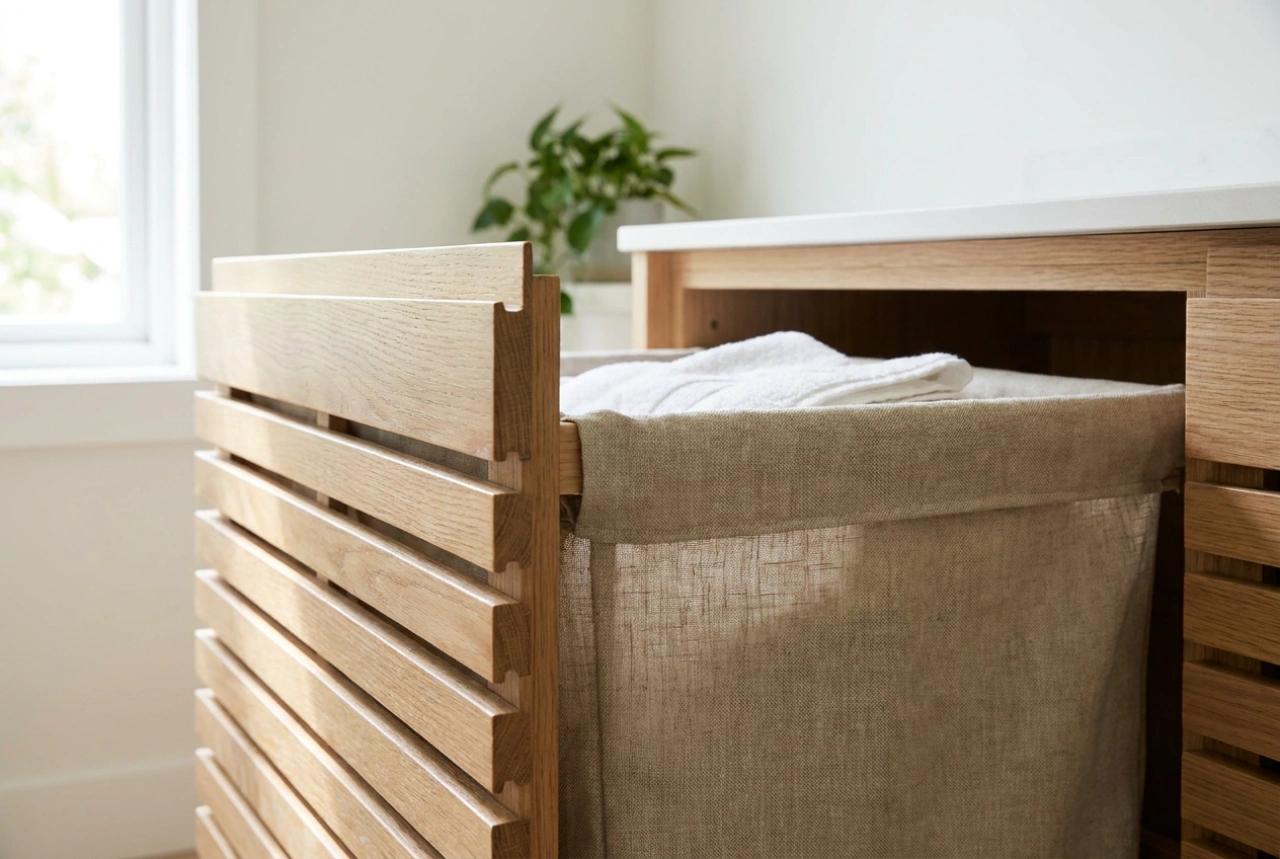
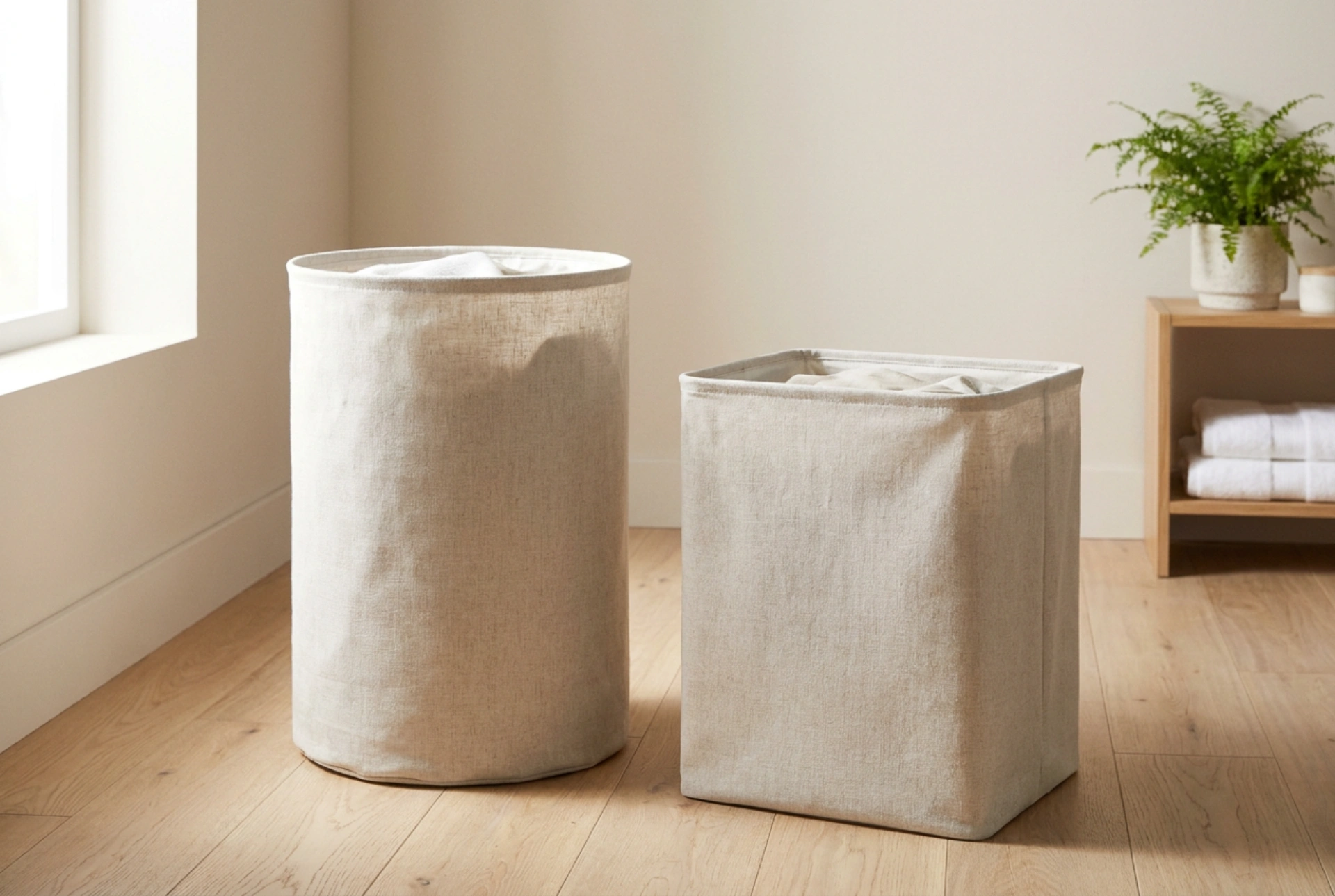
- Washable Fabric Liners: Canvas or linen bags suspended from wooden or metal frames are highly breathable. The primary advantage of a fabric liner is that it can be washed alongside your bed sheets or towels at high temperatures (60°C) to eliminate lingering bacteria and dust mites.
- Woven Natural Fibres: While visually appealing, materials like bamboo or rattan are porous and can absorb moisture. If used in high-humidity areas like bathrooms, they must be paired with a removable, washable fabric liner to prevent the wood fibres from developing mould.