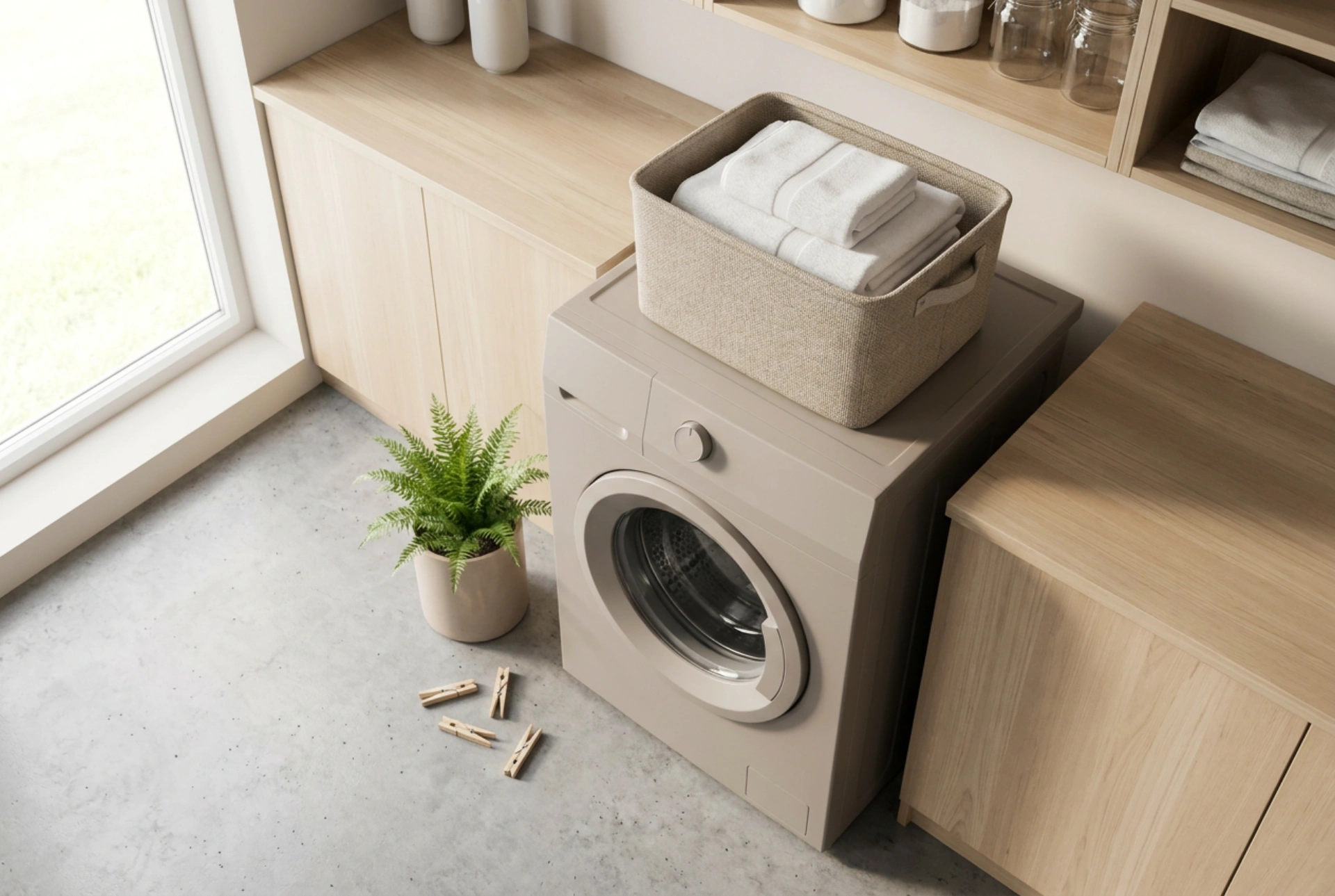


Placing a laundry basket on top of a front-loading washing machine is a practical space-saving solution, yet the intense kinetic energy generated during the spin cycle presents a constant risk of slippage. By applying basic principles of physics and material science, you can secure your basket safely without compromising the appliance's exterior or operational integrity.
The Physics of Washing Machine Vibrations
Washing machines rely on high-speed rotational force to extract water from fabrics, with spin cycles often reaching speeds of 1000 to 1400 revolutions per minute. As the drum spins, any slight imbalance in the wet laundry distribution creates a dynamic centrifugal force. This force translates into harmonic vibrations that travel through the machine's steel chassis.
When an object like a laundry basket sits on this vibrating surface, it experiences micro-bounces. These tiny vertical displacements momentarily reduce the contact pressure between the basket and the machine top. During these brief fractions of a second, gravity and lateral kinetic energy overcome static friction, causing the basket to drift. This phenomenon, known as stick-slip motion, is particularly pronounced when the machine reaches its resonance frequency—the point where the vibration amplitude is at its maximum.
Friction Coefficients and Material Selection
To prevent a laundry basket from migrating, you must maximize the coefficient of static friction between the bottom of the basket and the top surface of the washing machine. Most washing machines feature a top plate made of smooth, powder-coated steel, melamine, or laminated plastic. These surfaces have very low friction coefficients, especially when in contact with hard plastic laundry baskets.
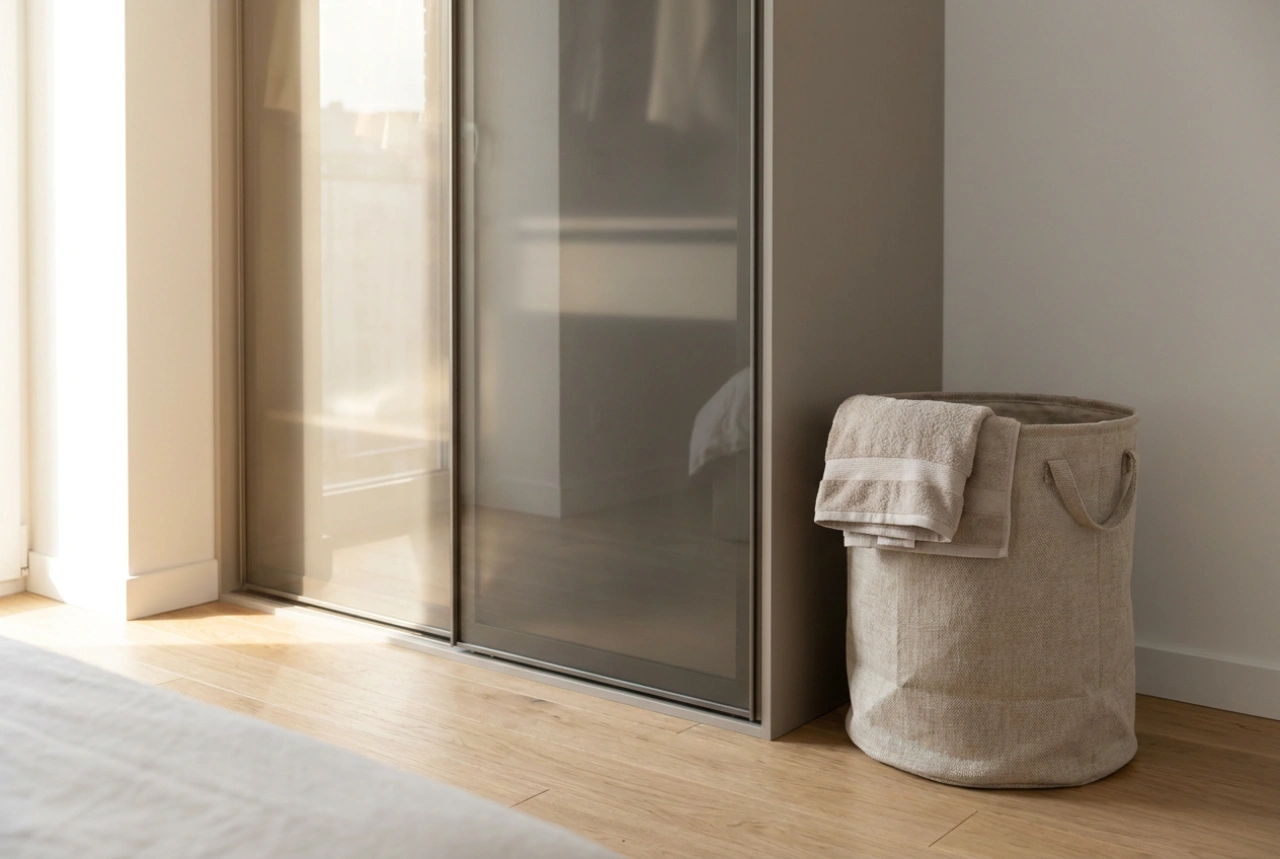
Wicker or woven baskets offer slightly more texture, but their contact area is highly concentrated on small, irregular points, reducing overall lateral stability. Introducing an elastomer—such as natural rubber, silicone, or polyurethane—between the two surfaces dramatically changes this dynamic. Elastomers possess high viscoelasticity, meaning they deform slightly under weight to conform to surface micro-roughnesses, creating a high-grip interface that absorbs vibrational energy rather than transferring it directly to the basket.
Practical Methods for Non-Slip Stabilization
There are several highly effective, non-invasive ways to increase friction and dampen vibrations without altering the structural components of your washing machine:
- Cohesive Silicone Mats: Placing a thin, food-grade silicone mat across the entire top surface of the washing machine creates a continuous, high-friction barrier. Silicone is highly resistant to heat, moisture, and UV light, and can be easily washed to maintain its gripping properties.
- Elastomeric Rubber Pads: Small, self-adhesive rubber feet or bumpers applied to the structural base contact points of your laundry basket can isolate the basket from high-frequency vibrations. Ensure these are made of non-marking rubber to avoid leaving dark streaks on the appliance cover.
- Open-Cell PVC Mesh: Commonly used as drawer liners, these lightweight mesh sheets provide excellent grip through mechanical interlocking and a high coefficient of friction. They also allow air to circulate, preventing any trapped moisture from damaging the machine’s finish.
The Influence of Mass and Weight Distribution
The stability of the basket is heavily influenced by its mass and the distribution of weight inside it. An empty plastic basket is highly susceptible to vibration-induced movement because it lacks the downward gravitational force required to maintain strong static friction. Conversely, a basket overloaded with damp linens has a high center of gravity, making it prone to tipping if the machine experiences a sudden, violent imbalance during the spin cycle.
For optimal safety, always position the basket centrally on the machine’s top surface to align with the appliance’s center of gravity. Avoid placing tall, top-heavy baskets on the machine; instead, opt for wider, low-profile designs that distribute the weight over a larger surface area, lowering the center of mass and significantly reducing the risk of tipping.