

Organising a metal filing cabinet is more than an aesthetic task; it is a mechanical and chemical process designed to preserve physical documents while maintaining structural safety. By understanding how weight distribution affects cabinet stability and how the closed microclimate of steel impacts paper preservation, you can build a highly functional archiving system.
The Physics of Cabinet Stability and Weight Distribution
Metal filing cabinets, especially tall multi-drawer units, are subject to physical laws of gravity and leverage. When a top drawer is fully extended, the centre of gravity shifts forward, creating a tipping hazard. To mitigate this risk, always load your cabinet from the bottom up. Place the heaviest, least-frequently accessed archives—such as tax records from previous decades—in the lowest drawer.
Furthermore, steel runners and ball-bearing slides operate best under balanced loads. Unevenly distributed paper causes lateral stress on the drawer tracks, leading to warping and misalignment over time. Aim to fill drawers to roughly eighty percent capacity; this provides enough physical support to keep folders upright while leaving sufficient clearance to glide smoothly without compressing the contents.
Microclimate Control and Material Preservation
Unlike wooden cabinets, metal is non-porous and highly conductive to temperature changes. This creates a specific microclimate inside the drawers. Rapid temperature fluctuations in a room can lead to condensation on the inner metal walls, introducing moisture that accelerates the growth of mould and degrades paper fibres. To prevent this, position the cabinet away from external walls, radiators, and direct sunlight.
When selecting filing materials, avoid cheap, highly acidic paper folders. Cellulose contains lignin, which breaks down over time into acids that turn paper yellow and brittle. Use acid-free, buffered folders with a pH value between 7.5 and 8.5. Additionally, steer clear of standard polyvinyl chloride (PVC) plastic sleeves. PVC releases volatile organic compounds and plasticisers that can chemically bond with printer ink, lifting the text off your documents. Opt instead for inert polyester, polypropylene, or polyethylene sleeves.
The Mechanics of Hanging Folders and Indexing
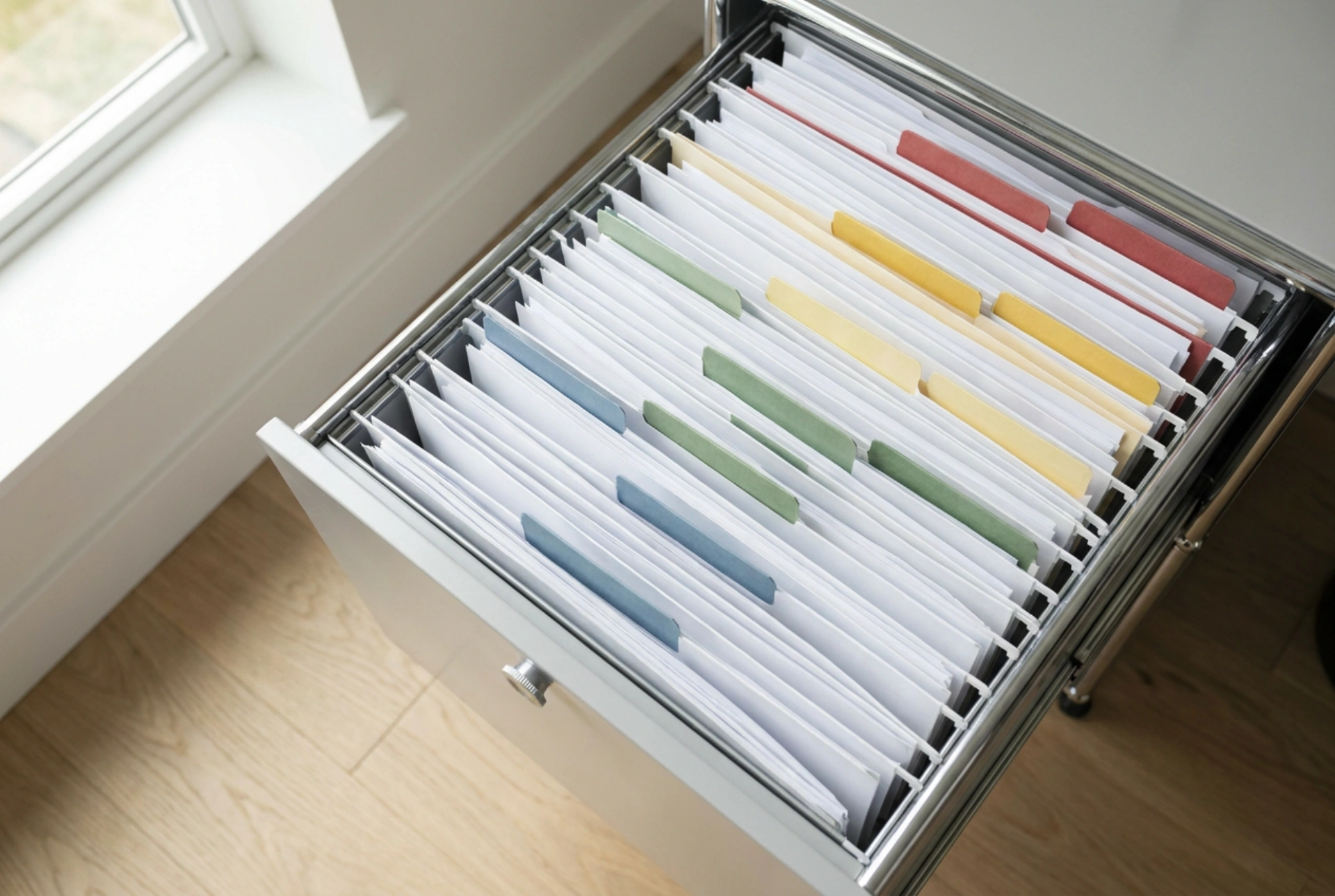
The physical arrangement of documents determines their lifespan. Vertical stacking of loose papers inside a drawer creates downward pressure on the bottom sheets, making retrieval difficult and causing physical damage to the edges. Suspension (hanging) folders resolve this by transferring the weight of the files to the metal rails of the drawer.
To maximise efficiency, implement a strict three-tier classification hierarchy:
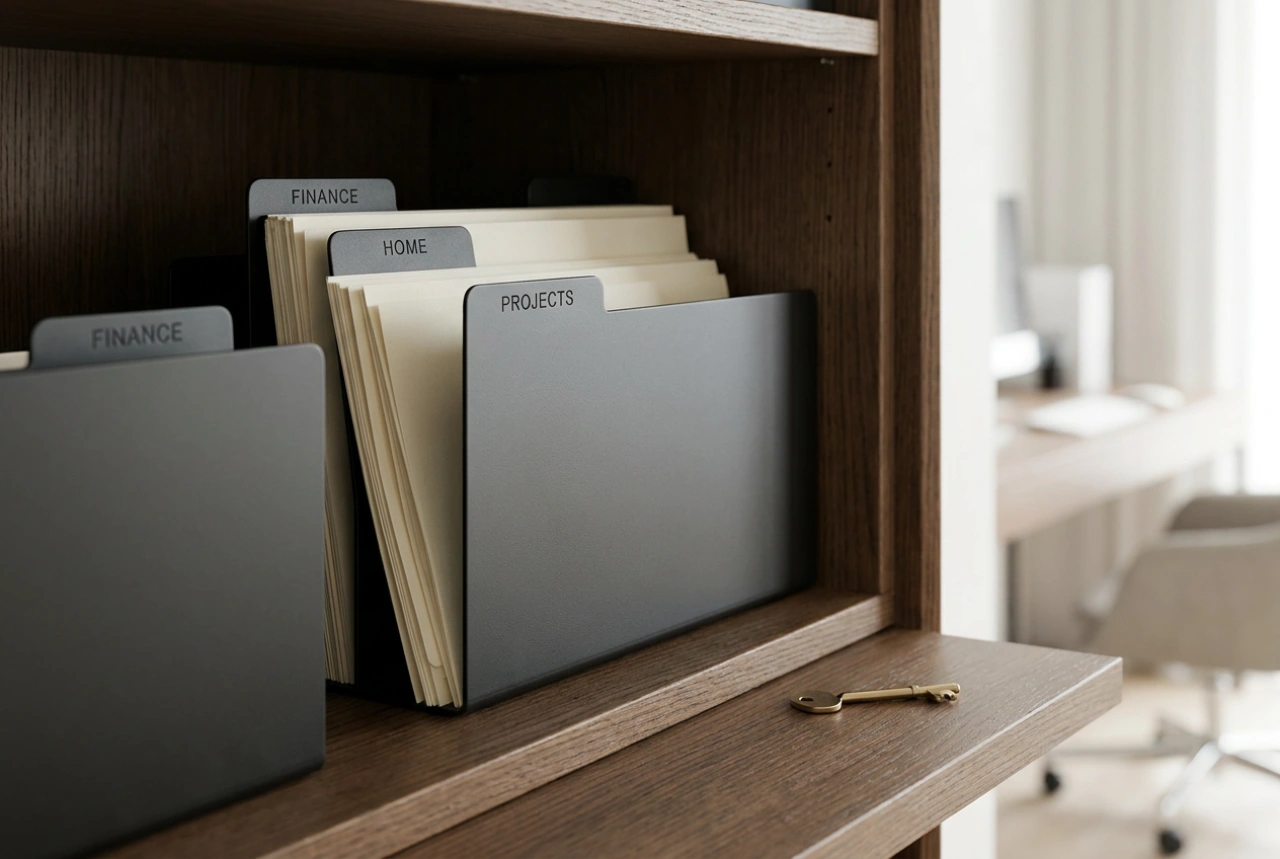
- Primary Categories: Broad structural divisions (e.g., Finance, Legal, Medical) assigned to specific drawers or major sections.
- Secondary Subcategories: Specific folders within those divisions, distinguished by colour-coded plastic tabs.
- Tertiary Sorting: Strict chronological or alphabetical ordering within each individual folder.
Position plastic tabs in a staggered, diagonal pattern from left to right across the drawer. This physical offset ensures that no label blocks the visibility of the one behind it, reducing search time and preventing physical wear from constant shuffling.
Order of Operations for Systematic Archiving
A chaotic pile of documents cannot be sorted directly into the cabinet without a structured workflow. Follow this precise sequence to establish order:
First, consolidate and purge. Gather all documents in an open workspace and remove temporary items like duplicate copies, drafts, and envelopes. Remove metal paperclips and staples; over time, steel fasteners oxidise and leave permanent rust stains on paper. Replace them with plastic-coated clips or acid-free paper bands if grouping is necessary.
Second, categorise by retention periods. Group documents into active files (utility bills, current projects) and inactive archives (birth certificates, property deeds). Active files should occupy the most accessible waist-height drawers, while inactive archives reside at the bottom.
Third, label immediately. Write clear, printed descriptions on tab inserts before placing them in the cabinet, ensuring the index system is complete before the first document is filed.