

Organising sensitive paperwork within lockable cabinets requires a systematic approach that balances high-security protocols with rapid, everyday accessibility. The key to successful cabinet management lies in selecting the correct labeling materials that preserve your furniture's surface while establishing an intuitive visual index.
Understanding Surface Materials and Adhesive Chemistry
Before applying any physical labels to lockable document cabinets, it is essential to consider the chemical interaction between the adhesive and the cabinet substrate. Office cabinets are typically constructed from powder-coated steel, high-pressure laminate (HPL), or veneered medium-density fibreboard (MDF). Each material reacts differently to adhesive backings.
- Powder-Coated Steel: This textured surface has low surface energy, which can cause cheap rubber-based adhesives to peel off over time. An acrylic-based adhesive is highly recommended here, as it flows into the microscopic texture of the powder coating to form a secure bond without curing into a permanent, destructive weld.
- Laminated and Veneered Wood: These surfaces are sensitive to moisture and strong chemical solvents. Avoid using water-based glues that can swell wood fibres, or highly acidic adhesives that can discolour real wood veneers.
When removing old labels to reorganise your system, avoid scraping with graphite or metallic tools, which micro-scratch the protective clear coat of steel or laminate. Instead, apply a small amount of non-polar solvent, such as isopropyl alcohol or a natural citrus-based d-limonene solution, directly to the adhesive residue. This breaks down the polymer chains of the adhesive, allowing you to wipe it clean with a microfibre cloth without damaging the underlying surface finishes.
Implementing a Secure Alphanumeric Index System
Directly labeling a lockable cabinet drawer with sensitive titles like "Tax Records" or "Confidential Files" poses a significant security risk by drawing unnecessary attention to high-value targets. A professional, secure method relies on an alphanumeric indexing protocol.
Assign a unique, neutral code to each lockable compartment (for example, SEC-01-A, where 'SEC' indicates the secure zone, '01' indicates the specific cabinet unit, and 'A' represents the top drawer). Keep the master key or index ledger—which links these codes to their actual contents—stored in a separate, encrypted digital file or a highly secure, fireproof safe. This decoupled system ensures that even if an unauthorised individual gains physical access to the room, they cannot instantly identify where specific sensitive files are located.
Selecting the Right Printing Technology and Label Materials
Handwritten labels can quickly look messy and degrade the aesthetic of a professional home workspace. For long-term durability and legibility, opt for thermal transfer printing. Thermal transfer printers use a heated printhead to melt a wax or resin-based ribbon onto polyester or polypropylene tape. This process produces sharp, high-contrast text that resists UV fading, moisture, and friction.
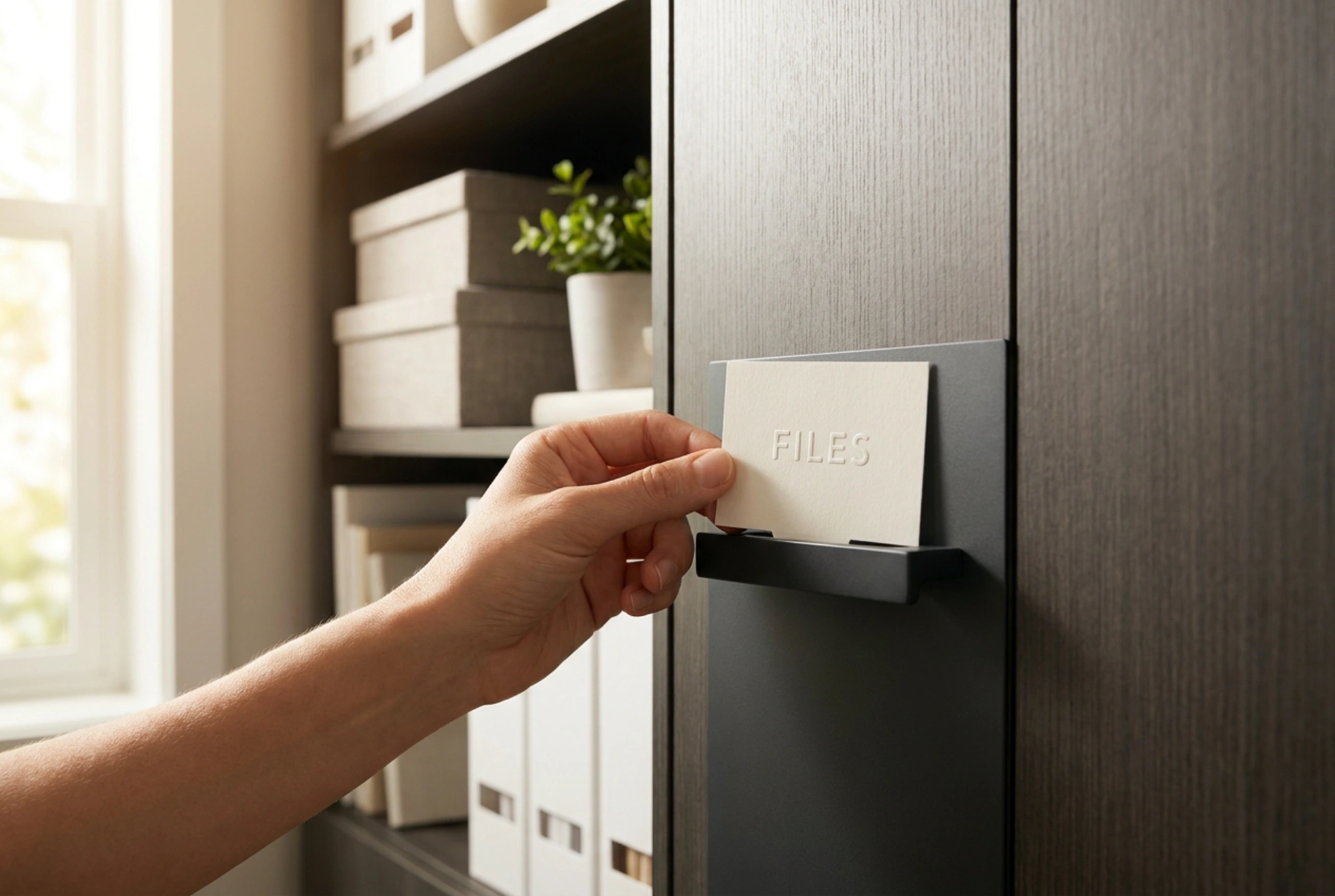
For high-end or minimalist home offices where plastic labels might look out of place, embossed metallic or matte-finished paper tapes offer a clean, tactile alternative. If using paper labels, ensure they feature a top-coated barrier to prevent oils from your hands from degrading the printed text over time.
Ergonomics, Placement, and Key Association
The positioning of your labels should align with natural human sightlines and physical interaction points. For under-desk or low-level file drawers, place labels on the top edge of the drawer front or integrated directly into the handle recess. This allows you to scan the contents from a standing position without bending down. For eye-level cabinets, place labels consistently on the upper-left corner of the cabinet face to align with natural left-to-right reading patterns.
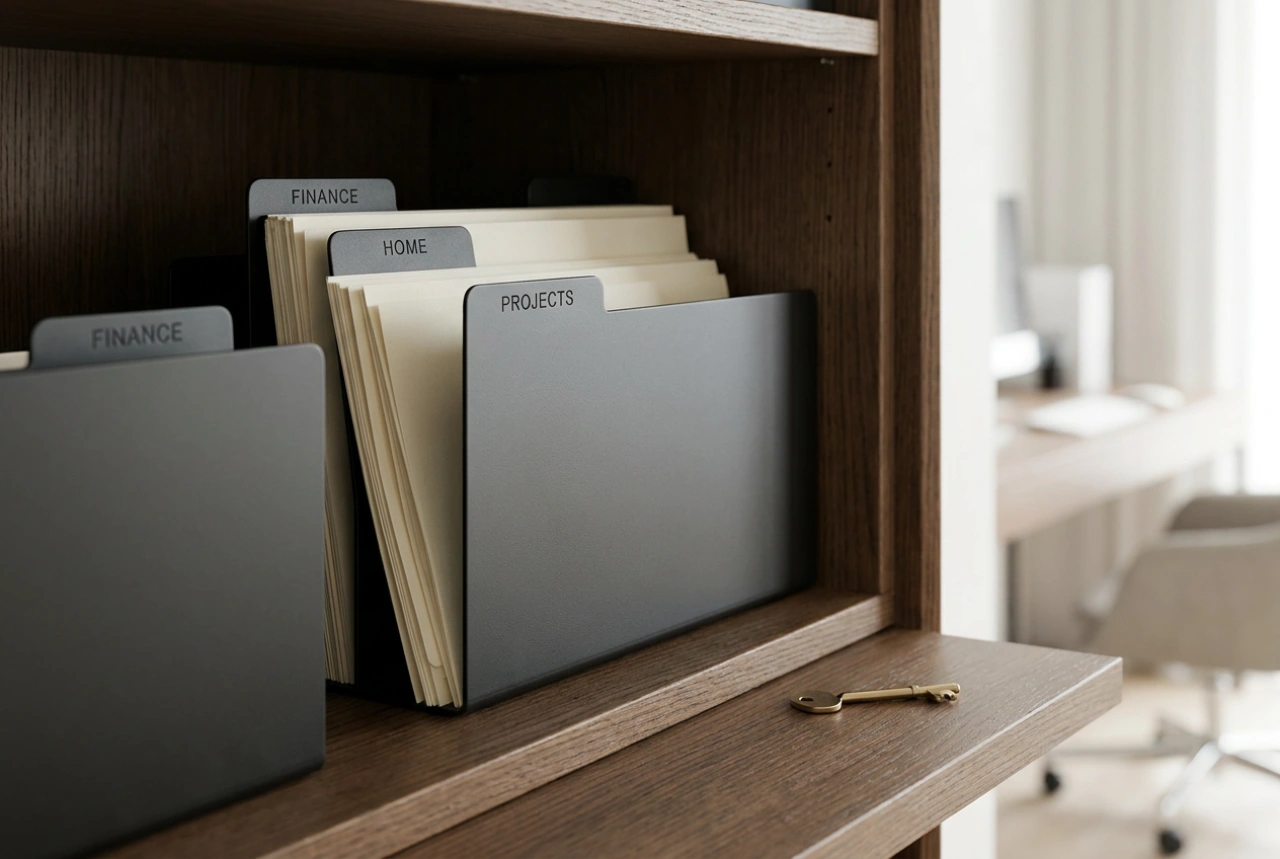
To streamline access, your key management must mirror your cabinet index. Avoid bulky, obvious key chains. Instead, stamp or engrave a tiny matching alphanumeric code directly onto the bow of the physical key, or use low-profile, non-destructive colour-coded rubber rings. This ensures you can instantly match the key to the correct lockable cabinet under low-light or high-pressure situations without compromising the overall security design of your workspace.