

Storing essential household contracts, receipts, and certificates in plastic sleeves seems like a foolproof way to organize your archive, yet chemical interactions can quietly destroy these documents over time. Understanding the material science behind paper, ink, and plastics is the key to preventing irreversible degradation, yellowing, and ink transfer.
The Polymer Problem: Why PVC Destroys Ink
Not all plastics are created equal when it comes to long-term storage. Polyvinyl Chloride (PVC) is a common material used in cheap binders and sleeves. To make rigid PVC flexible, manufacturers add chemical plasticizers, usually phthalates. Over time, these plasticizers migrate to the surface of the plastic in a process called off-gassing. When a laser-printed document or photocopy is held in tight contact with a PVC sleeve, these migrating plasticizers act as a solvent. Laser toner, which is itself a polymer-based powder fused to the paper using heat, dissolves in the presence of these plasticizers. This causes the printed letters to chemically bond to the plastic sleeve instead of the paper, leading to "ink lifting." When you try to remove the document, the text peels off with the plastic.
The Alternative: Archival-Safe Polypropylene
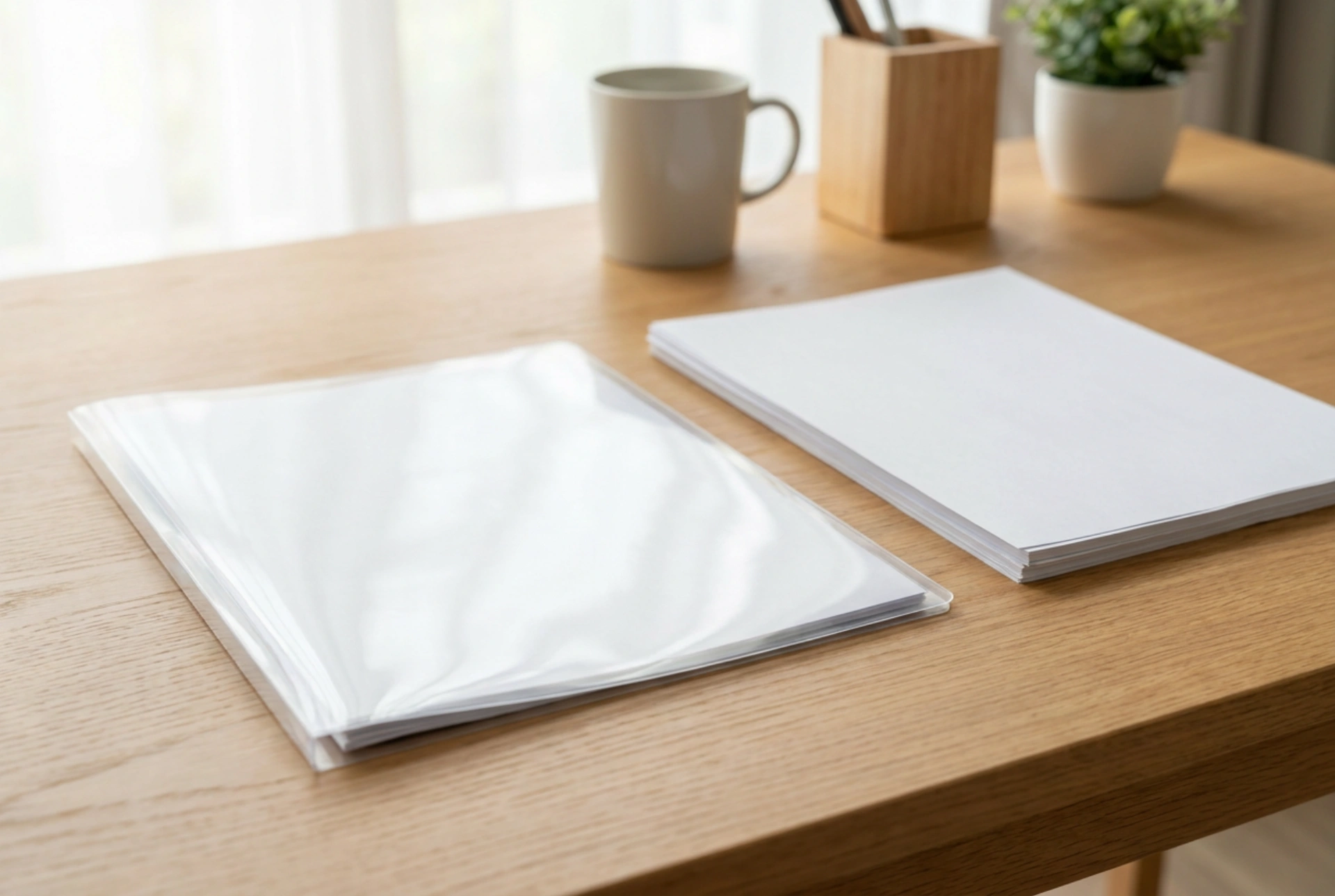
To secure your valuable contracts, always choose document sleeves made from polypropylene (PP) or polyethylene (PE). These polymers are naturally flexible and do not require plasticizers. They are chemically inert, acid-free, and copy-safe, meaning they will not react with toner or inkjet inks even under pressure. When purchasing storage solutions, look for terms like "acid-free" or "archival-safe." Polypropylene sleeves provide a neutral environment that preserves both the mechanical integrity of the paper fibers and the legibility of the print indefinitely.
The Chemistry of Fading Receipts
Most modern receipts are printed on thermal paper, which does not use liquid ink. Instead, the paper is coated with a mixture of acid-co-reactants and leuco dyes that turn dark when exposed to heat. This chemical bond is highly unstable. When thermal paper is placed inside a plastic sleeve, the trapped chemical vapours, combined with any residual plasticizers or ambient heat, trigger a reverse chemical reaction that returns the dyed molecules to their colorless state. To protect thermal receipts, never store them in direct contact with plastic. Instead, copy them onto standard alkaline paper using an inkjet or laser copier, or place them in acid-free paper envelopes before archiving.
Microclimates and Environmental Control
Placing documents inside sealed plastic folders creates a microclimate. If the paper is inserted while slightly damp from high indoor humidity, that moisture becomes trapped. Over time, water molecules react with the cellulose in the paper through hydrolysis, breaking down the fibers and causing the paper to become brittle and yellow. Trapped moisture also encourages the growth of microscopic mold spores. To prevent this, ensure your filing area maintains a relative humidity between 30% and 50% and a stable temperature around 18 to 22 degrees Celsius. Avoid storing plastic files in damp basements, uninsulated attics, or near heating vents.
Practical Steps for Long-Term Document Protection
- Select the right sleeve: Only use clear, heavy-duty polypropylene (PP) sleeves for contracts and certificates.
- Isolate thermal prints: Photocopy thermal receipts onto standard paper, or place them in alkaline paper folders rather than plastic.
- Ensure complete dryness: Let newly printed pages cool and dry completely before sliding them into plastic sleeves to prevent ink smudging and moisture entrapment.
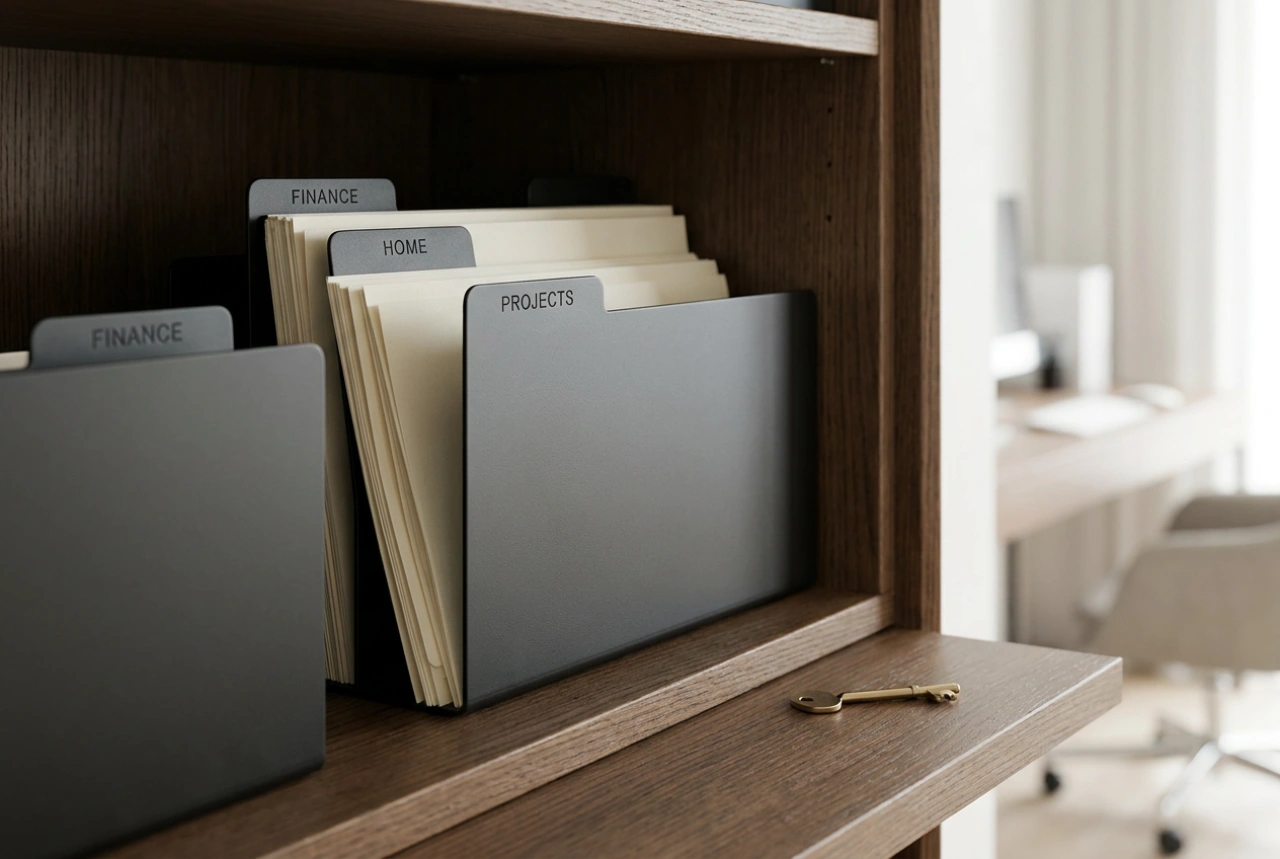
- Store upright: Keep binders and folders stored vertically rather than stacked flat to minimize physical pressure, which accelerates plasticizer migration.
- Keep away from UV light: Ultraviolet radiation degrades both paper and plastics, making sleeves brittle and yellowing paper fibers.