

Organising physical photographs in a slip-in album requires a systematic approach to curation, chronology, and material preservation. By understanding how paper, emulsion, and plastics interact over time, you can safeguard your visual history while creating a highly functional and coherent narrative flow.
The Material Science of Slip-In Pockets
The primary hazard to physical photographs in a slip-in album is chemical degradation caused by low-grade plastics. Standard PVC (polyvinyl chloride) pockets release volatile plasticisers and hydrochloric acid as they age. This process leads to the yellowing of paper substrates, the breakdown of photographic emulsions, and a phenomenon known as "blocking," where the image emulsion permanently fuses to the plastic sleeve. To prevent this, always select albums with sleeves made of chemically inert polymers, such as acid-free, lignin-free polypropylene or polyester.
Environmental factors also play a critical role in preservation. Photographic gelatin emulsions are highly hygroscopic, meaning they absorb moisture from the surrounding air. When relative humidity exceeds 60%, the emulsion softens, making it highly susceptible to sticking and mould growth. Conversely, humidity below 30% causes paper to become brittle. Aim for a stable storage environment with a temperature between 15°C and 20°C and a relative humidity of 30% to 50% to prevent the materials from expanding and contracting within their plastic enclosures.
Preparation and Tactile Handling Techniques
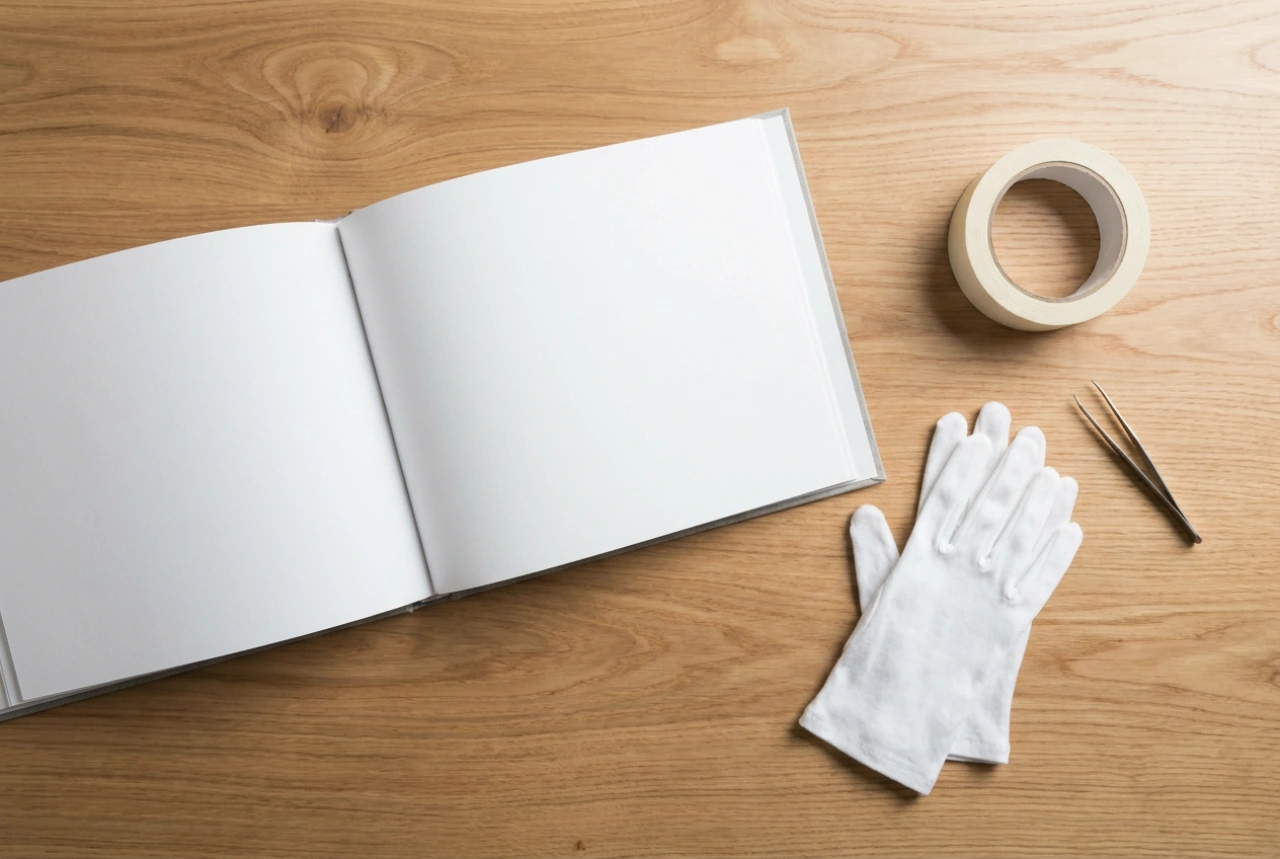
Before touching your prints, prepare a clean, flat working surface, preferably a hardwood or clean glass table. The natural oils on human skin, known as sebum, contain fatty acids and sodium chloride which transfer easily to photographic paper. Over time, these compounds react with the silver halides or organic dyes in the print, causing permanent fingerprints and silver mirroring. To mitigate this risk, wear clean, lint-free cotton or nitrile gloves during the sorting and insertion process.
- Dry-cleaning the prints: Use a soft-bristled, anti-static brush or a manual air blower to gently remove dust particles from both the photographs and the album pockets before assembly.
- Chronological categorization: Spread your images out and arrange them into decades, years, and specific events. Sorting them into physical piles before opening the album avoids unnecessary handling and sliding.
- Structural curation: Be selective. A highly impactful slip-in album relies on visual breathing room. Weed out repetitive frames, out-of-focus shots, and poorly exposed prints to ensure the narrative remains engaging.
Inserting and Positioning with Precision
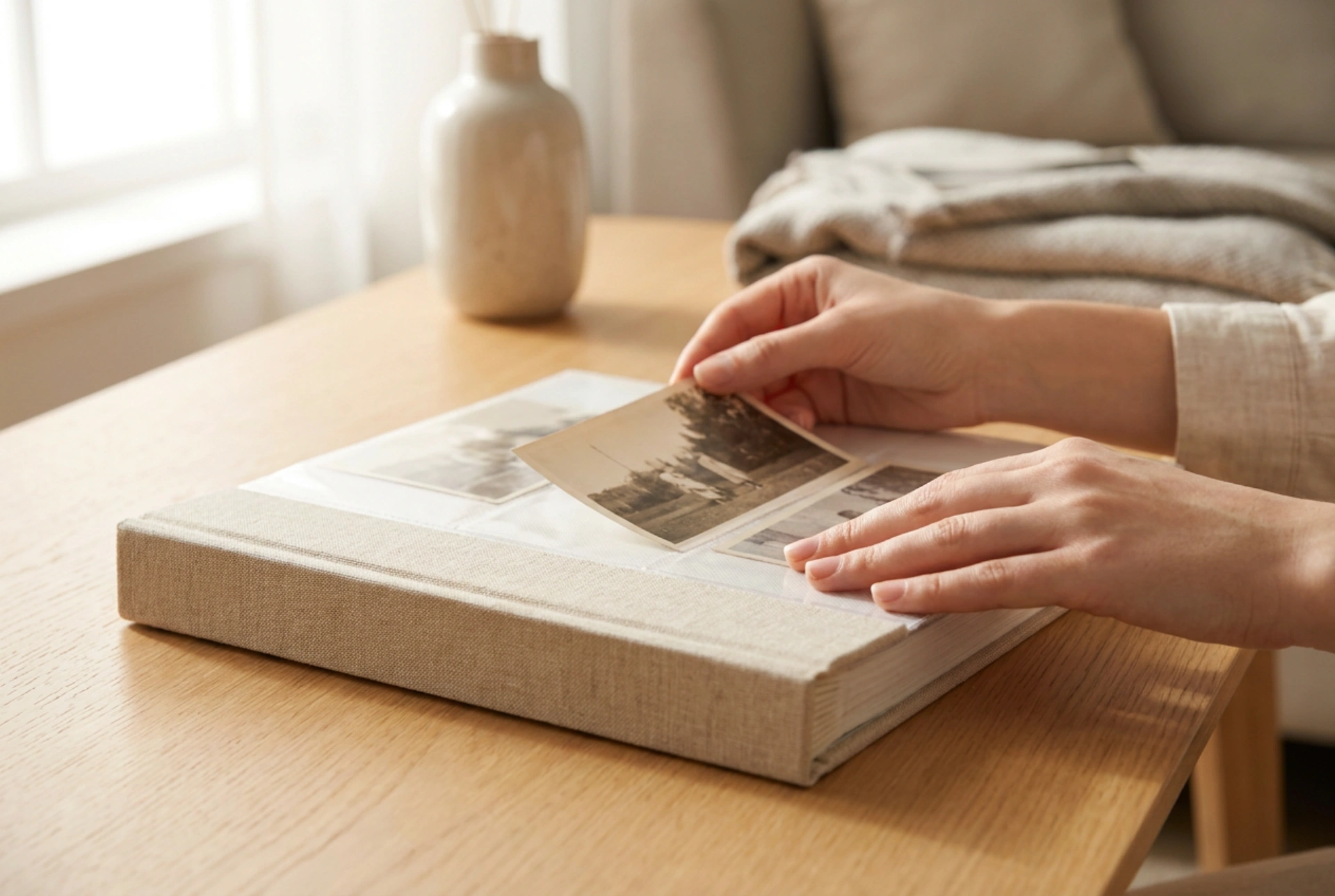
Placing photos into tight slip-in pockets requires delicate mechanical handling. Forcing a print can bend the corners of the cardstock or rupture the welded seams of the polypropylene pocket. If a pocket exhibits high static cling or friction, do not force the photograph. Instead, use a clean, thin Teflon or bone folder to gently separate the plastic layers before sliding the print inside.
Introduce the photograph at a shallow angle, aligning the bottom edge parallel to the pocket opening. Apply gentle, even pressure from the top edge of the photo, sliding it in one smooth motion. If the photo resists, check for trapped air or static charge. To dissipate static, you can use an anti-static cloth to wipe the exterior of the plastic page before insertion.
To enhance the narrative flow of a double-page spread, apply the rule of visual weight. Place darker, high-contrast images at the bottom of the page to anchor the layout, while lighter, airy images should occupy the top pockets. Ensure that subjects facing sideways look "into" the gutter of the book rather than off the edge of the page, as this guides the viewer's eye naturally across the spread.
Long-Term Storage and Pressure Management
How you store the completed album dictates its lifespan. Heavy albums stored flat can compress the lower pages, increasing the risk of pressure-induced adhesion between the photo emulsion and the plastic pocket. If you must store albums horizontally, do not stack them more than two high. Storing albums vertically, like books, is generally preferred, provided the spine is sturdy enough to support the pages without sagging, which can warp the plastic sleeves and bend the photos inside.