

Storing a leather photo album requires balancing humidity, temperature, and physical positioning to prevent the natural hide from warping, cracking, or losing its shape. Understanding the structural properties of leather and paper allows you to preserve these valuable keepsakes in pristine condition for decades.
The Physics of Leather Deformation
Leather is an organic, hygroscopic material, meaning it constantly absorbs and releases moisture from the surrounding atmosphere. When relative humidity levels fluctuate, the collagen fibres within the leather network expand and contract. If the album is stored under uneven pressure or in an unstable climate, this microscopic movement leads to permanent warping, bowing of the cover, or cracking of the spine. Furthermore, the internal paper pages react differently to moisture than the external leather, creating differential structural tension that can pull the cover inward if not stored in a stable environment.
Ideal Orientation: Horizontal vs. Vertical Storage
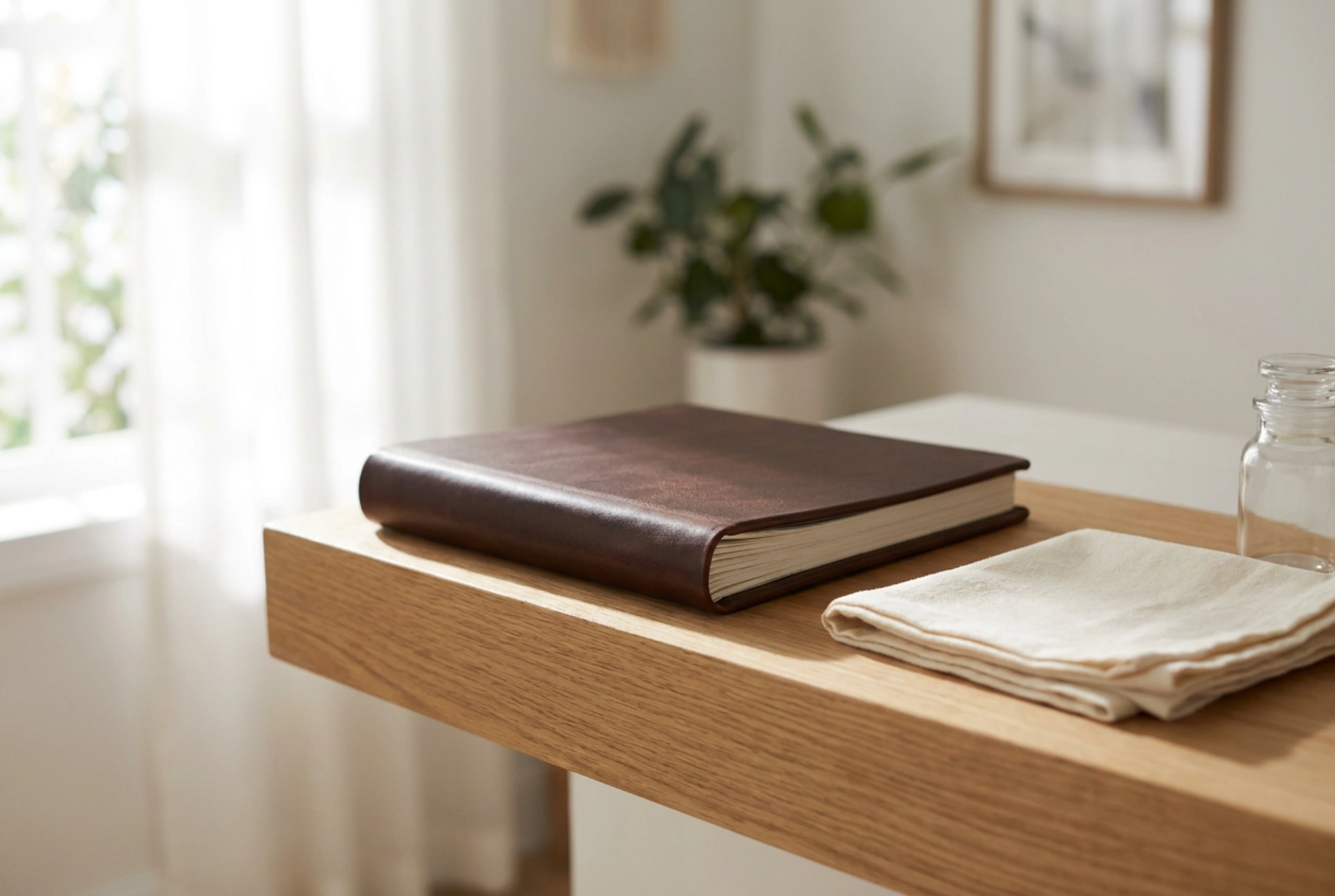
The physical position of your album determines how gravity acts on its structure over time. For heavy, thick leather albums, storing them flat is often the safest method. This distributes the weight of the heavy photo pages evenly, preventing the binding from pulling away from the cover. However, never stack more than two albums on top of each other, as excessive weight can compress the lower albums and cause permanent indentations in the soft leather. Always place a sheet of acid-free tissue paper between stacked albums to prevent the leather surfaces from sticking together.
If storing albums vertically like books, ensure they are supported tightly on both sides by other volumes or heavy bookends. If a leather album leans even slightly, gravity will gradually distort the spine and cause the cover to bow. The support must be perfectly vertical to keep the pages and cover aligned, preventing the weight of the heavy paper insert sheets from pulling down on the delicate binding stitching.
Microclimate Control: Humidity and Temperature
To prevent structural degradation, you must control the storage environment. The ideal humidity level for storing leather and paper is between 45% and 55%. If the air is too dry (below 40%), the natural lipids in the leather evaporate, causing the fibres to become brittle and crack. Conversely, if the humidity exceeds 60%, you risk mould growth and swelling of the collagen fibres. Store your albums at a stable room temperature, ideally between 15°C and 22°C. Avoid locations near heat sources, such as radiators, fireplaces, or heating vents, which cause localized rapid drying.
Never seal leather albums in airtight plastic tubs or bags. Leather needs to breathe to release excess moisture. Instead, use breathable archival boxes made from acid-free cardboard or wrap them in unbleached, lint-free cotton cloth to shield them from dust and ambient contaminants.
Protection Against Light and Chemical Hazards
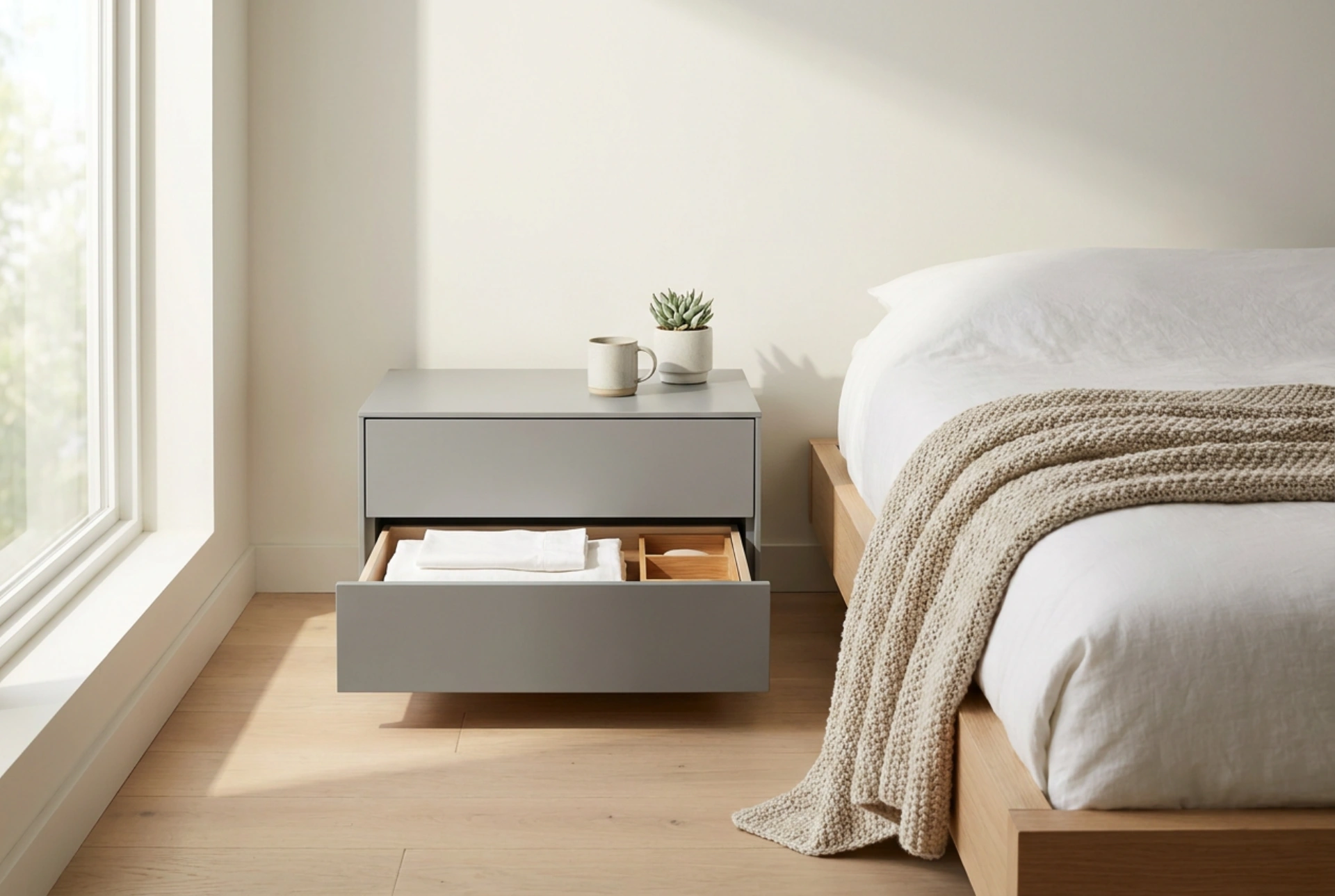
Direct sunlight contains ultraviolet (UV) radiation that breaks down the chemical bonds in leather dyes and natural oils, leading to fading and accelerated drying. Always store albums inside closed cabinets, drawers, or protective slipcases away from windows. Additionally, avoid storing albums on shelves made of untreated wood, which can release acidic vapours (such as acetic acid) that degrade both leather and paper over time. Opt for metal shelves or sealed, painted wooden surfaces that have fully cured.