

Using glass containers with lids is the most effective way to stabilize internal temperatures and extend food shelf-life inside your refrigerator. This approach leverages the unique material properties of glass to maintain optimal hygiene, prevent chemical leaching, and reduce thermal energy loss.
The Physics of Thermal Mass in Food Preservation
Glass is a dense, high-mass material compared to thin-walled plastic. In thermodynamics, this high density translates to a higher thermal mass. When you open your refrigerator door, warm ambient air rushes in, rapidly raising the air temperature inside. Plastic containers adjust to this temperature change almost instantly, transferring heat to the food inside.
In contrast, glass containers act as thermal ballast. Because glass retains cold energy far better, it resists sudden temperature fluctuations. The food stored inside glass remains at a consistent, safe temperature, which directly slows down microbial growth and enzymatic decay. By stabilizing the microclimate inside the fridge, you preserve the structural integrity and nutritional value of fresh ingredients for significantly longer periods.
Material Science: Chemical Inertness and Hygiene
From a chemical perspective, glass is highly inert. It is primarily composed of silica (silicon dioxide), which does not react with acidic, alkaline, or oily foods. Unlike plastics, which can degrade over time and leach synthetic compounds such as phthalates into your food, glass remains completely stable at all refrigeration temperatures.
Furthermore, glass is non-porous. Microscopic analysis of plastic surfaces reveals tiny fissures and pores where organic compounds, fats, and bacteria can lodge, even after thorough washing. Glass has a smooth, vitrified surface that prevents microscopic residue from bonding to it. This makes glass exceptionally easy to sanitize, ensuring that odors from previous meals—such as garlic or onions—do not transfer to freshly prepared ingredients.
Managing Humidity and the Condensation Cycle
Successful food storage relies heavily on controlling humidity. When warm, humid air is sealed inside a cold container, water vapor condenses on the cold surfaces. In a sealed environment, this excess liquid can accelerate mold growth and rot.
- Airtight Silicone Seals: Ideal for cooked meals, soups, and cut fruits. The hermetic seal prevents moisture loss, keeping cooked food from drying out, while isolating strong odors.
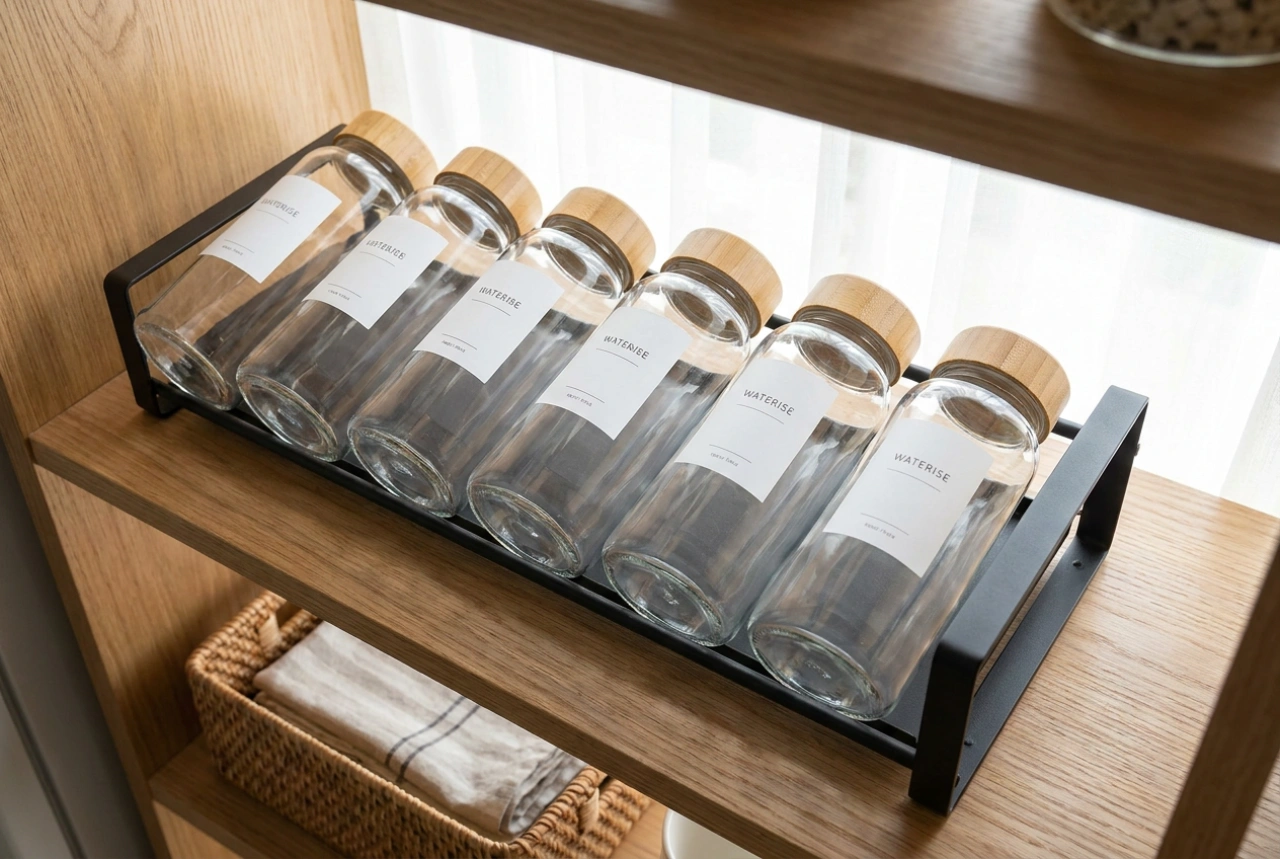
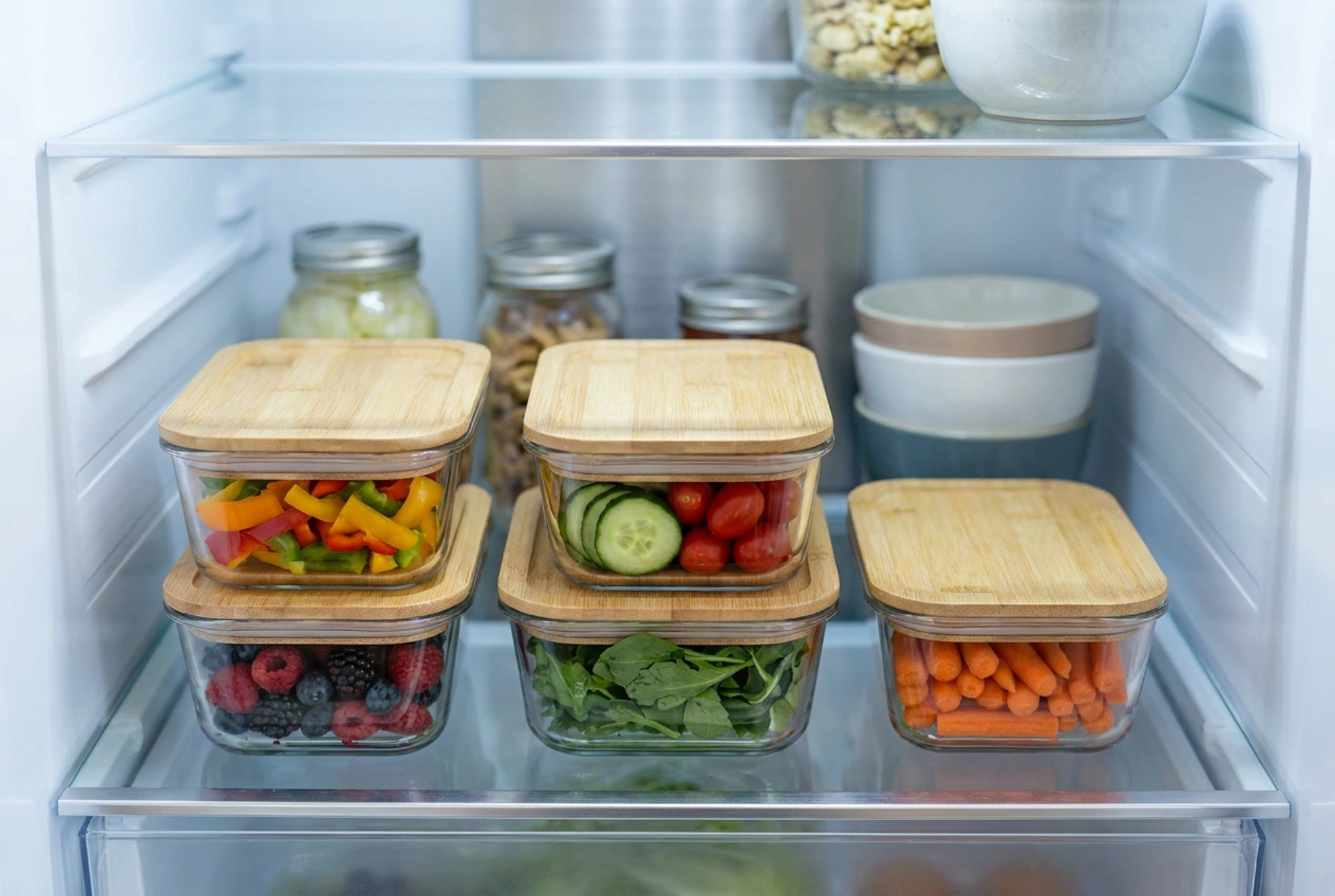
- Semi-Permeable Lids: Natural materials like bamboo or wood lids allow a microscopic level of gas exchange. This can be beneficial for certain root vegetables that require lower humidity, but these lids must be dried thoroughly to prevent fungal spores from establishing.
- Dry Prepping Technique: To optimize the system, always ensure vegetables are thoroughly dried with a clean cloth before placing them into glass containers. Adding a dry, clean paper towel at the bottom of the container can absorb excess condensation, maintaining the perfect humidity level.
Optimizing Your Fridge Layout with Glass
To maximize the efficiency of glass containers, you must align their placement with the natural temperature zones of your refrigerator. Because cold air sinks, the lowest shelves are the coldest, while the top shelves and door bins remain slightly warmer.
Place raw proteins and highly perishable items in glass containers on the bottom shelf where the temperature is lowest. Ready-to-eat meals, leftovers, and prepped vegetables should occupy the middle shelves. Since glass is transparent, it allows for instant visual scanning. This reduces the time the refrigerator door remains open, preventing the cooling system from working overtime and saving energy. For safety and ease of handling, stack containers of uniform sizes to prevent tipping, leaving slight gaps between stacks to allow cold air to circulate freely around the glass walls.