

Establishing a structured sorting process before textiles ever reach the washing machine drum is the most effective way to preserve garment longevity and maintain household order.
The Chemistry of Dye Transfer and Fibre Behaviour
To understand why sorting is essential, one must look at the physical and chemical behaviour of fabrics during the wet cleaning cycle. When immersed in water, particularly at elevated temperatures, textile fibres swell. This swelling relaxes the intermolecular bonds holding dyes within the amorphous regions of the fibres, allowing loose dye molecules to escape into the wash liquor. In a mixed load, these free-floating dyes redeposit onto lighter fabrics—especially synthetic materials like polyester and nylon, which exhibit a strong electrostatic affinity for disperse and direct dyes. A black laundry hamper serves as the dedicated terminal for highly pigmented garments, ensuring they are isolated from light-coloured items that act as dye magnets. Additionally, separating garments by fabric weight prevents mechanical abrasion. Heavy denim and canvas generate high friction against delicate silk or knitted wool fibres, leading to pilling and micro-tears.
Designing a Multi-Compartment Sorting System
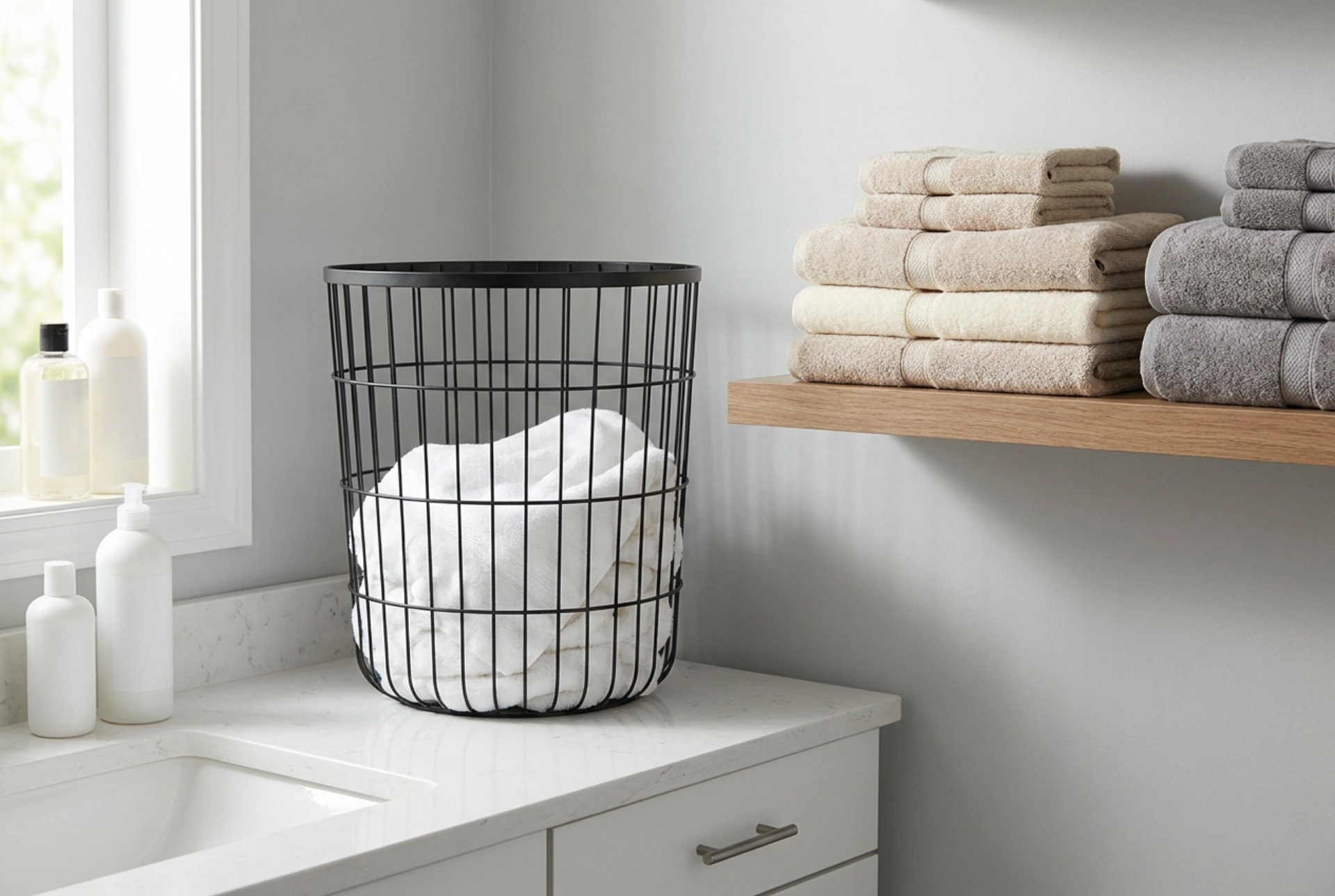
An organised laundry zone relies on immediate classification. Instead of a single, overflowing basket that requires sorting on the floor, a multi-unit setup utilising matte black hampers streamlines the workflow. Using black bins specifically for darks and deep colours provides an intuitive visual cue. The human brain responds rapidly to high-contrast sorting systems. Allocate one black hamper for dark workwear and activewear washed at 30°C to 40°C, and another for dark bedding or towels processed at 60°C. This pre-sorting prevents the common error of washing heat-sensitive elastane blends with heavy cottons. Keeping dark garments concealed inside a sleek, dark container also minimises visual clutter in modern utility spaces, maintaining a clean aesthetic while keeping dirty laundry out of sight.
Protecting Fibres through Correct Pre-Wash Mechanics
The sorting phase is also the ideal time to prepare garments for the mechanical action of the wash cycle. Before depositing clothes into the black hamper, certain mechanical interventions are necessary to protect the textiles. Fasten all zippers, snaps, and hooks. An open metal zipper acts like a saw inside the spinning drum, snagging delicate knits and scraping the protective finishes off other fabrics. Empty all pockets to prevent cellulose-based paper tissues or metallic objects from disintegrating or causing rust stains. Turn printed garments, denim, and dark t-shirts inside out. This simple action shifts the inevitable mechanical friction of the wash cycle from the visible outer face of the garment to the interior seams, preserving the rich, dark pigments from fading due to physical abrasion.
Material Science: Ventilation and Moisture Management
The physical design and material of your laundry hamper play a critical role in preserving soiled fabrics before they are washed. Soiled clothing, particularly athletic wear, often carries residual moisture, skin oils, and sebum. If stored in an airtight, non-porous plastic bin, this moisture creates a humid microclimate. Under these conditions, anaerobic bacteria and fungal spores (mildew) multiply rapidly, digesting natural fibres like cotton and linen and producing persistent sour odours. When selecting a black laundry hamper, prioritise designs with integrated ventilation—such as perforated walls, woven structures, or breathable canvas liners. These features allow continuous airflow, facilitating the evaporation of residual moisture and halting microbial growth. This is particularly vital for dark garments, as mildew can leave faint, light-coloured spots that are highly visible on dark dyes.