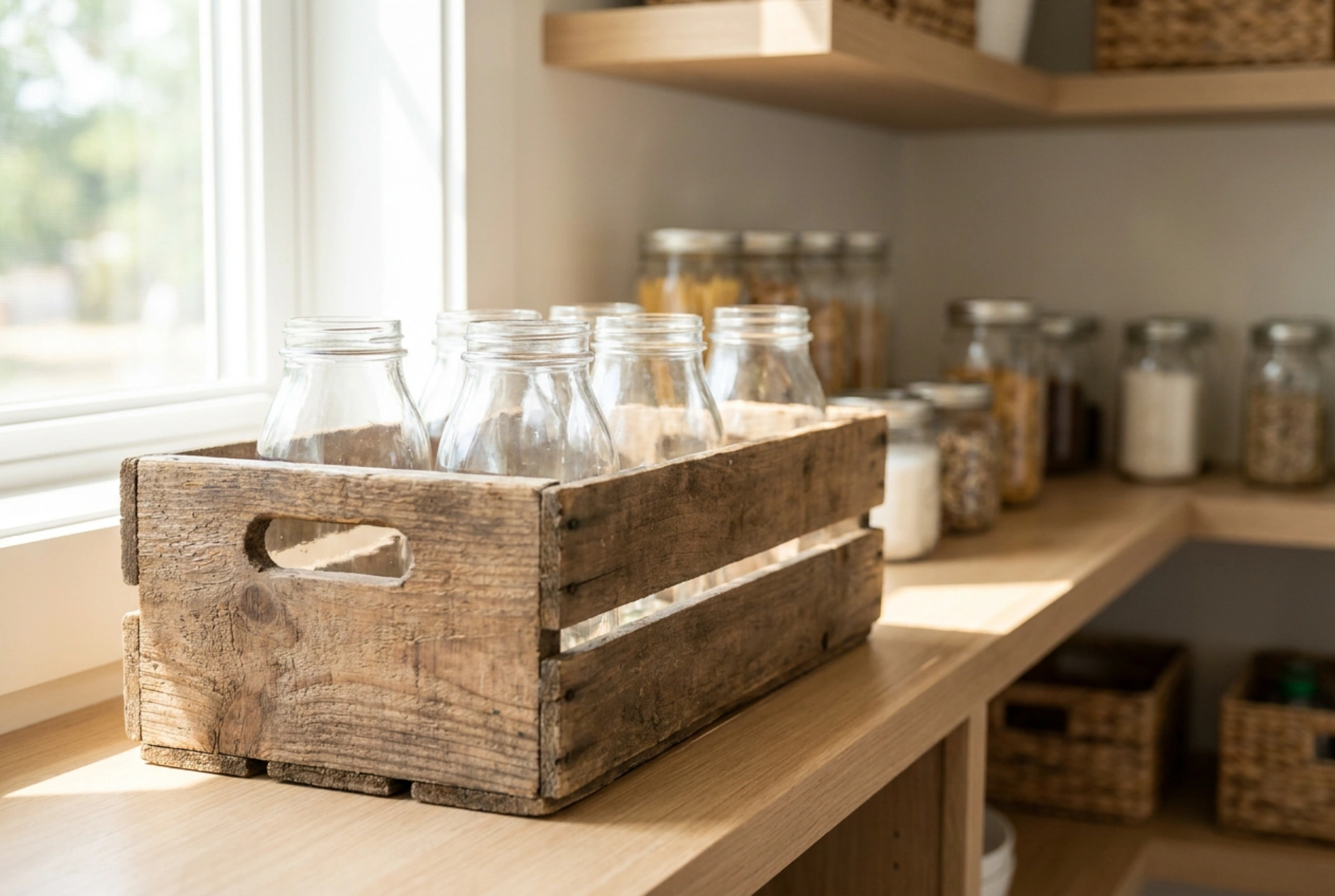


Wooden beer crates offer an exceptionally sturdy, compartmentalised solution for pantry organisation, but utilising them effectively requires understanding wood chemistry and structural loading. Transitioning these rustic containers into clean, food-safe storage units involves proper surface preparation, material sealing, and strategic spatial arrangement.
The Material Physics of Wooden Crates
Wooden crates are structurally superior to flimsy plastic bins because of their cellular alignment. Wood is composed of cellulose fibres bound by lignin, creating a natural composite material that absorbs kinetic energy. When storing heavy glass bottles, the individual compartments of a traditional beer crate act as mechanical barriers that prevent glass-on-glass impact. This compartmentalisation distributes weight evenly across the base of the crate, minimising localised stress points on pantry shelving.
However, wood is also a hygroscopic material, meaning it actively absorbs and releases moisture from the surrounding air. In a damp pantry or cellar, raw wood will absorb ambient water vapour, which can lead to mold growth and wood rot. Conversely, in excessively dry environments, wood can lose moisture too rapidly, leading to warping and splitting. Understanding these atmospheric interactions is crucial when positioning wooden storage units within your home.
Preparing and Sealing Raw Wood for Pantry Use
Before introducing a wooden crate into a food storage environment, it must be thoroughly sanitised and sealed. Raw, untreated wood can harbour microscopic fungal spores and old organic residues. To clean the wood without damaging its structure, avoid soaking it in water. Instead, use a solution of sodium percarbonate (oxygen bleach) dissolved in warm water (about 40 degrees Celsius). This compound breaks down organic stains and sanitises the surface through oxidation without leaving harmful chemical residues.
Once the wood is completely dry, sand the surface to eliminate splinters and open up the wood pores. Start with a medium 120-grit sandpaper and finish with a fine 180-grit paper, always sanding parallel to the wood grain. To seal the wood against moisture and spills, apply a natural polymerising oil, such as raw linseed oil or pure tung oil. These oils penetrate deep into the wood fibres and undergo a chemical reaction with oxygen (polymerisation) to create a durable, water-resistant, food-safe barrier. Apply two thin coats with a lint-free cloth, allowing 24 hours of drying time between applications.
Airflow Management and Spoilage Prevention
The slatted design of wooden crates is highly beneficial for storing root vegetables, such as potatoes, onions, and garlic. These crops release moisture and small amounts of carbon dioxide through respiration. In a sealed plastic container, this moisture accumulates, creating a high-humidity microclimate that accelerates fungal decay and sprouting.
The open slats of a wooden crate allow continuous air circulation, facilitating passive evaporative cooling and moisture dissipation. However, keep in mind the chemical interactions between different crops. For example, onions produce ethylene gas, a natural ripening agent that accelerates the spoilage of nearby potatoes. Utilising separate wooden compartments or dedicated crates spaced at least one metre apart prevents gas accumulation and significantly extends the shelf life of your produce.
Weight Distribution and Shelf Ergonomics
When organising heavy items like bottled preserves, oils, or home-brewed beverages, physics dictates that weight distribution must be carefully managed. Always place the heaviest wooden crates on the lowest pantry shelves to maintain a low centre of gravity and prevent shelving units from tipping. Ensure the shelf material can handle the concentrated load; a fully loaded wooden crate can weigh upwards of fifteen kilograms, requiring reinforced support brackets or solid wood shelving rather than thin particleboard.
Long-Term Maintenance and Hygiene Protocol
To maintain the structural integrity and hygiene of your wooden storage crates, implement a strict dry-cleaning protocol. Avoid using liquid dish soaps or harsh chemical sprays, which can degrade the oil sealant. Instead, wipe down the interiors weekly with a dry microfibre cloth to remove dust and dry debris. For sticky spills, use a slightly damp cloth wrung out in warm water, wipe the area immediately, and dry it with a clean towel. Reapply a thin layer of natural tung oil once a year to restore the protective hydrophobic barrier.