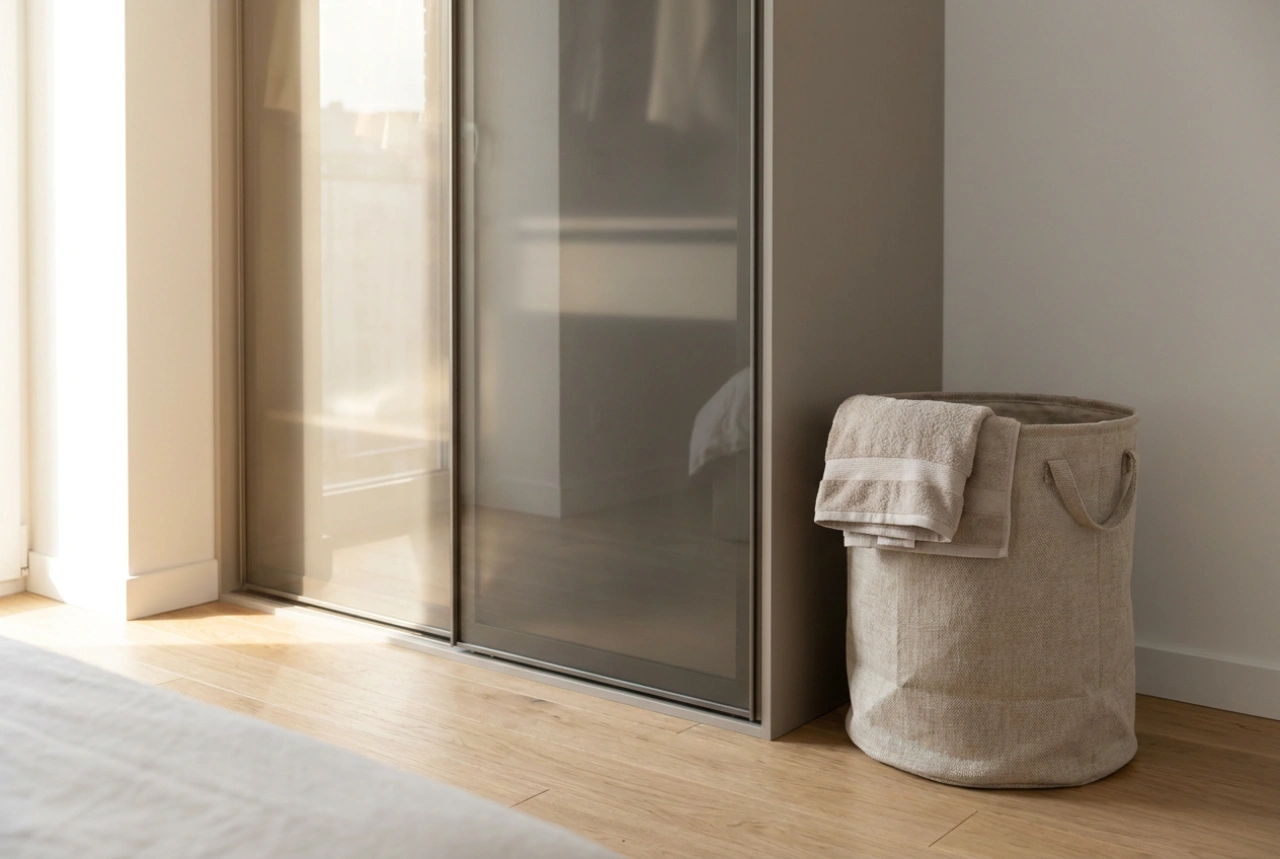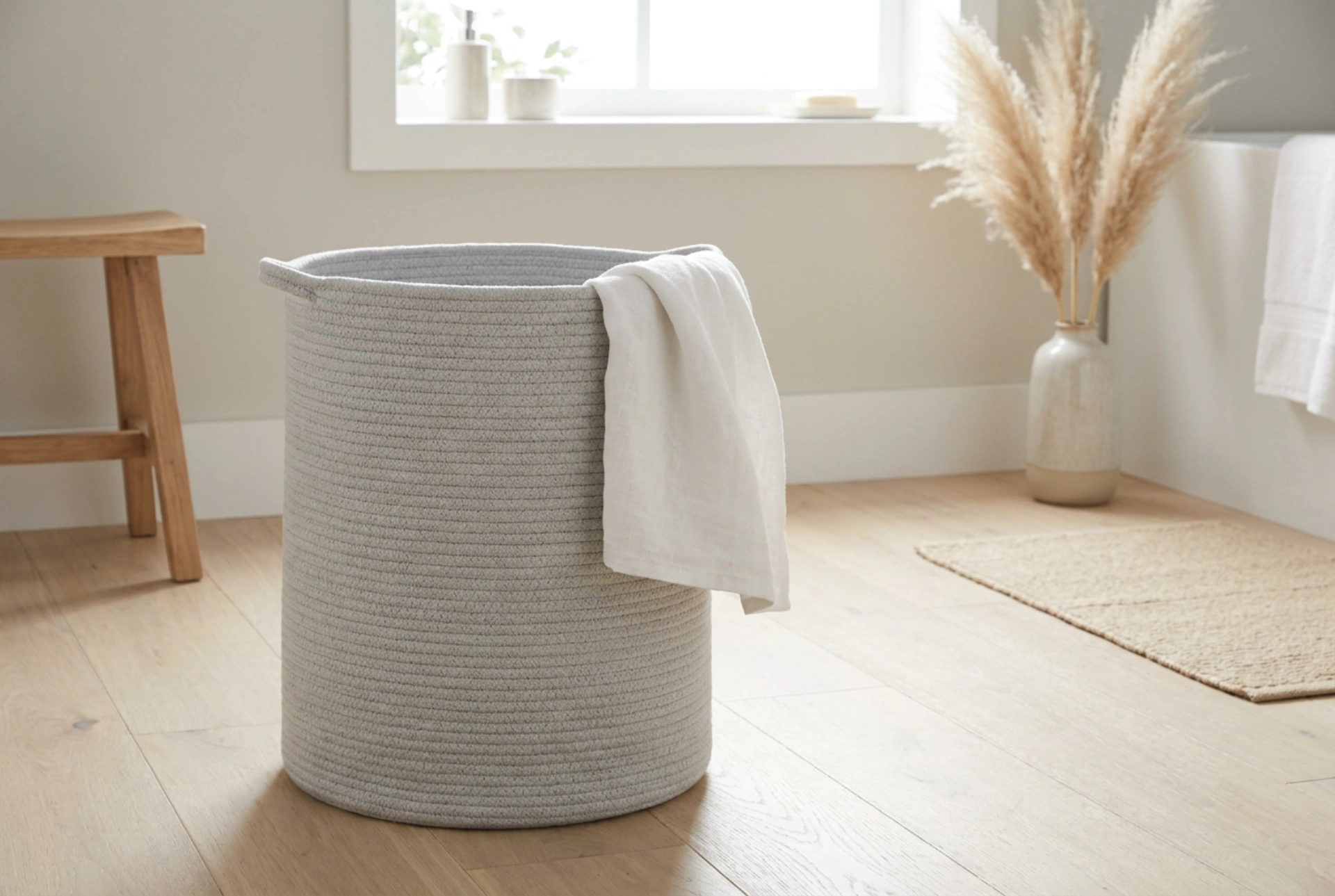


Managing dirty laundry efficiently relies on understanding airflow, moisture control, and material science, starting with the strategic placement of a neutral grey laundry basket. A well-designed containment system prevents mildew growth and simplifies the pre-wash phase before fabrics even reach the washing machine.
The Physics of Airflow and Moisture Control
Soiled textiles, especially towels and activewear, carry residual moisture and organic matter from human skin. When trapped in a non-ventilated container, this creates a high-humidity microclimate ideal for the proliferation of fungal spores and anaerobic bacteria. This bacterial activity breaks down organic compounds, producing volatile organic compounds that manifest as sour, stale odours.
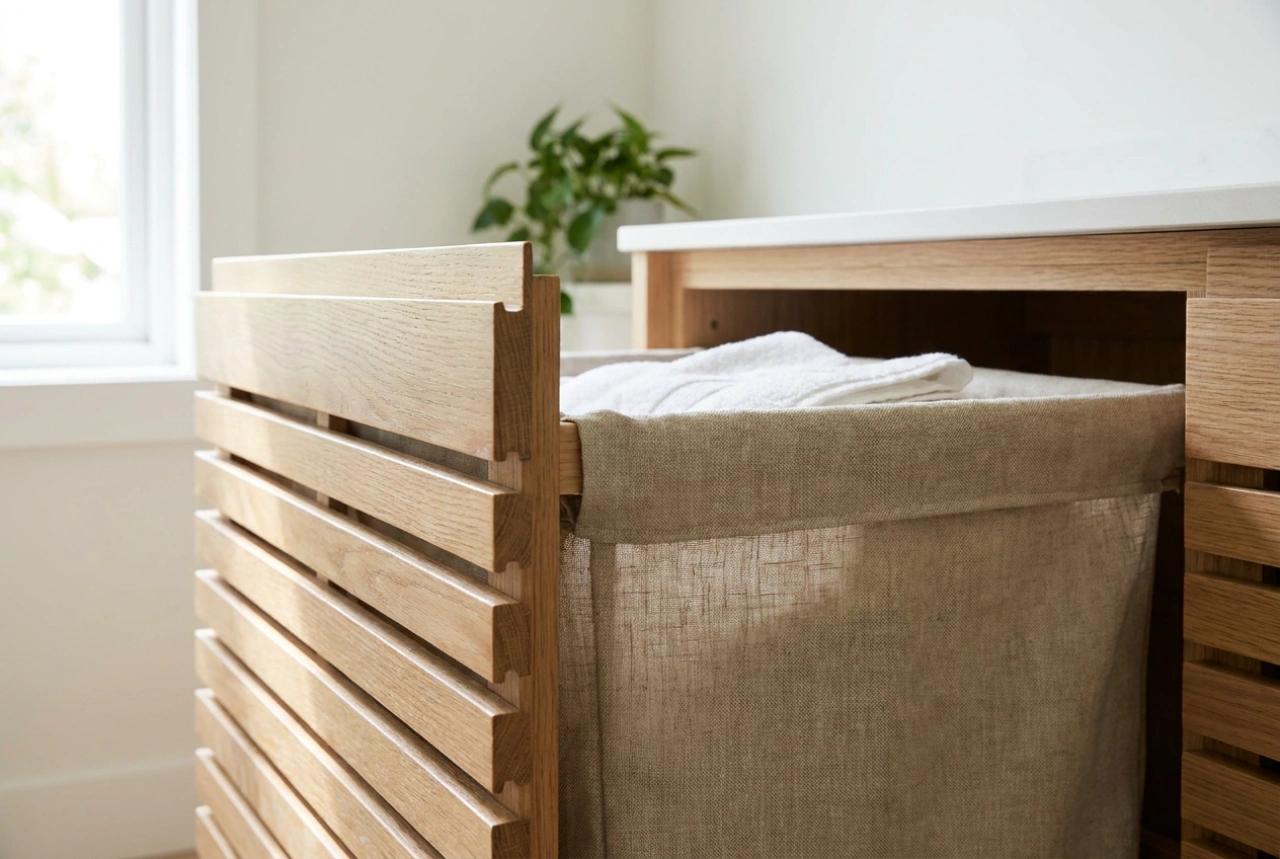
To counteract this, the physical structure of a laundry basket is critical. Woven designs—whether using natural cane, bamboo, or perforated synthetic polymers—rely on passive convection. Air passes through the gaps, carrying away moisture and keeping the internal relative humidity low. When choosing a location, place the basket away from direct shower steam to prevent ambient moisture from settling on the dry garments inside.
Material Selection and Visual Psychology
The choice of a grey hue is not merely aesthetic; it serves a practical purpose in visual organisation. Bright white containers easily show scuffs, dust, and shadow lines, while black containers can make a small bathroom feel cramped and dark. A neutral grey acts as a visual buffer, absorbing light subtly and concealing minor wear. It integrates seamlessly into modern bathroom finishes, from concrete and slate to light oak.
From a material science perspective, the composition of the basket dictates its longevity and hygiene:
- Synthetic Polymers: High-density polyethylene or polypropylene baskets are highly resistant to moisture, non-porous, and easy to sanitise. They do not absorb odours but require adequate perforation to allow air circulation.
- Natural Fibres: Seagrass, bamboo, and rattan offer excellent natural breathability. However, they are hydrophilic. If placed in highly humid bathrooms without proper ventilation, the fibres can absorb water, leading to mould growth within the weave itself.
- Fabric and Liners: Removable inner bags made of unbleached cotton or linen are ideal. They can be washed at high temperatures alongside the laundry to eliminate accumulated bacteria and dust mites.
Optimising the Pre-Sorting Process
Efficiency in the laundry room begins in the bathroom. Instead of a single deep bin that requires manual sorting on the floor, a compartmentalised grey basket system streamlines the wash cycle. Sorting textiles by colour and temperature threshold at the point of disposal reduces handling time and minimises the risk of dye transfer.
Separating by Fiber and Temperature
Grouping fabrics based on their chemical composition prevents structural damage during washing. For instance, heavy denim and coarse zippers should not be mixed with delicate knitwear, as the mechanical action of the wash drum causes friction that damages delicate fibres. A dual-compartment basket allows for immediate separation of high-temperature cottons from low-temperature synthetics and delicates.
Sanitation and Odour Mitigation Techniques
Even with excellent ventilation, the interior of a laundry basket accumulates skin cells, lint, and bacterial residue over time. Regular sanitation prevents the container from becoming a vector for cross-contamination.
For synthetic baskets, wipe the surfaces monthly with a solution of warm water and oxygen bleach or a mild liquid detergent. Avoid chlorine detergent on coloured plastics to prevent discolouration. For natural fibre baskets, vacuuming the crevices with a brush attachment removes dust and lint. If dampness has occurred, sprinkling a thin layer of sodium bicarbonate at the bottom of the basket or inside the fabric liner neutralises acidic odour molecules through simple chemical reactions, keeping the bathroom environment fresh.