

Managing a child's paperwork—from medical records to academic certificates—requires a logical, physical system that prevents paper degradation and allows for instant retrieval during emergencies.
The Chemistry of Preservation: Selecting the Right Materials
Paper is organic and highly susceptible to environmental factors such as humidity, acid, and light. When choosing folders and sleeves for long-term storage, the chemical composition of the materials is critical. Avoid PVC (polyvinyl chloride) plastic pockets; they release volatile plasticizers over time, which degrade paper fibers and lift ink or toner right off the page. Instead, opt for chemically inert polypropylene (PP) sleeves or acid-free cardboard folders. Polypropylene is highly stable, moisture-resistant, and does not react with printing inks, ensuring that vital birth certificates and immunization records remain legible for decades.
Categorization by Function: Designing the System
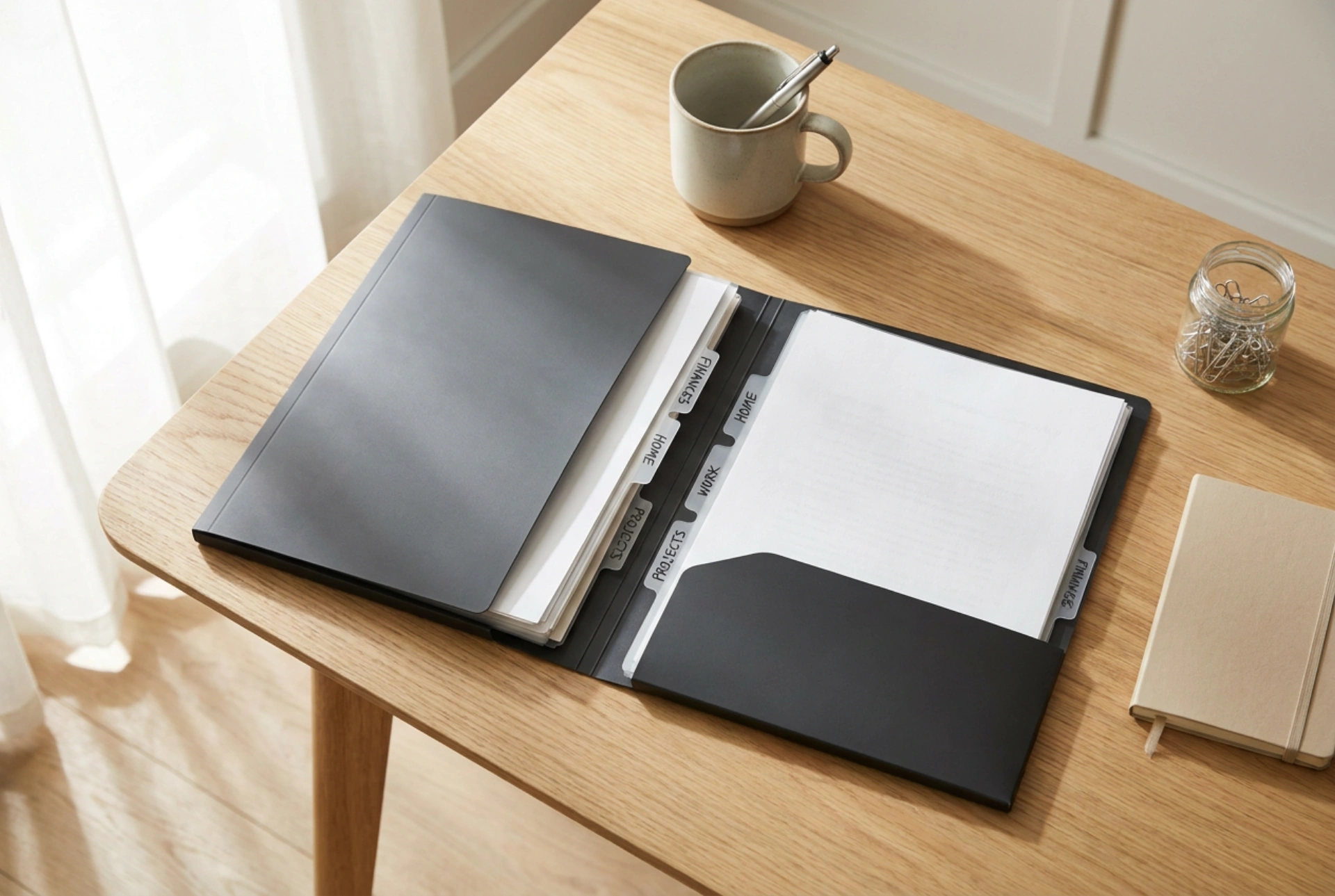
An effective filing system relies on clear, functional division rather than a simple chronological pile. To build an intuitive folder, divide your child’s documents into four main sections using heavy-duty tab dividers:
- Identity & Legal: Birth certificates, passports, adoption papers, and social security cards. These are high-security documents that should be placed in the most secure, central sleeve of the binder.
- Medical & Health: Pediatric growth charts, vaccination logs, allergy diagnoses, and specialist reports. Grouping these chronologically ensures you can quickly hand the entire section to a new medical provider.
- Education & Development: School reports, developmental milestones, educational assessments, and language certificates. Keep only final annual reports rather than daily worksheets to avoid bulk.
- Extra-curricular & Achievements: Music school certificates, sports club memberships, and significant artistic milestones. This section should be highly curated to keep the volume manageable.
Optimizing Retrieval with Color-Coding and Indexing
The human brain processes colors and visual hierarchies much faster than text. Utilize color-coded tabs to mark your main categories—for example, red for medical, blue for identity, and green for education. At the very front of the folder, insert a clear, single-page index sheet. This index should act as a table of contents, listing what is stored in each colored tab. When a document is added or removed, update the index immediately. By placing the most frequently accessed documents (such as current school registration papers) near the front of their respective sections, you minimize handling and wear on older, more fragile documents stored deeper in the folder.
The Maintenance Protocol: Preventing Folder Bloat
A physical archiving system is only as good as its maintenance. Establish a twice-yearly review schedule—typically at the start of the school year and during the new year. During this review, apply the 'keep-or-discard' rule. Daily homework, minor medical prescriptions that have expired, and duplicate copies should be shredded. For documents that are no longer active but must be kept for historical reasons, transition them out of the primary folder into a deep-archive box stored in a cool, dry, dark environment. This keeps the active folder light, portable, and ready for immediate use in case of travel or urgent medical consultations.