

Designing a wedding album is an exercise in visual pacing, spatial balance, and archival preservation that transforms a collection of images into a cohesive, enduring narrative. By understanding the principles of layout geometry, color transitions, and material science, you can curate a physical book that flows effortlessly while resisting environmental degradation over time.
Visual Pacing and the Rules of Narrative Rhythm
A successful album relies on a deliberate rhythm, alternating between complex, high-energy layouts and quiet, minimalist spreads. This flow prevents visual fatigue and directs the viewer's emotional journey. To establish a natural rhythm, treat each double-page spread as a single canvas rather than two separate pages.
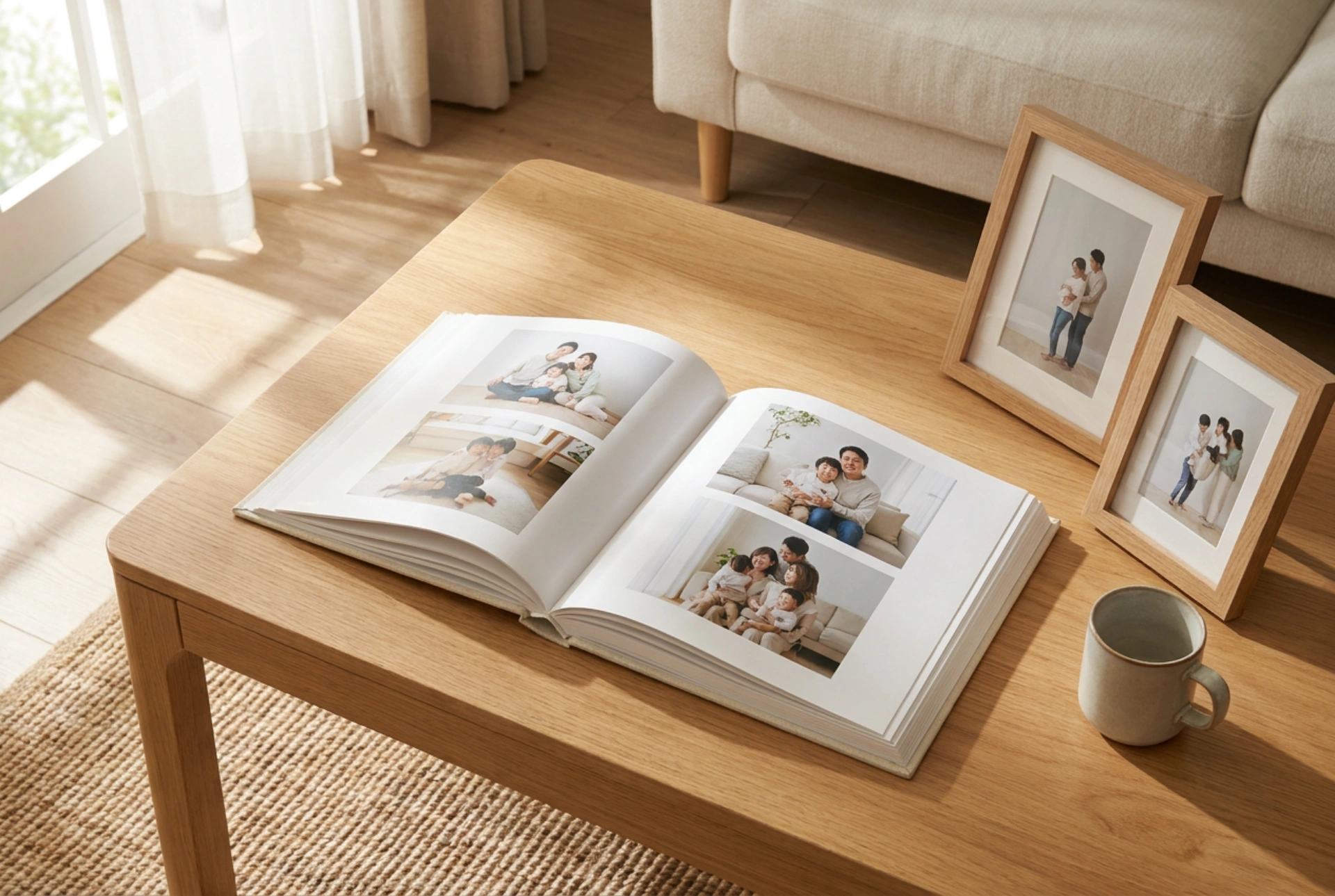
- The Anchor Image: Every spread needs a dominant focal point. Dedicate one full page to a single, impactful shot, while using the facing page for two or three smaller, supporting detail shots.
- Negative Space: Leave ample white space (margins) around images. This "breathing room" draws the eye inward and elevates the perceived quality of the photographs, mimicking gallery-style presentation.
- The Gutter Safe Zone: Never place critical elements, such as faces or horizon lines, directly in the center crease (the gutter). For lay-flat albums, a 2 mm safety margin is recommended, whereas traditional bound books require at least 10 to 15 mm of clearance to account for page curvature.
Tonal Continuity and Color Transitions
A wedding day transitions through vastly different lighting conditions, from soft morning window light to harsh midday sun, and finally to artificial reception lighting. Compiling these without a transition plan leads to jarring visual jumps. To maintain aesthetic continuity, group images by their dominant color temperature and luminous intensity.
When transitioning between different parts of the day, use neutral "bridge" spreads. These are pages composed of details—such as architectural elements, textures, or flora—that carry a muted color palette. They act as a visual palate cleanser, easing the viewer’s eye from the bright, natural tones of outdoor portraits into the warm, saturated tungsten or LED light of the evening reception.
The Chemistry of Archival Material Selection
The longevity of a physical album depends entirely on the chemical stability of the paper, adhesive, and binding materials. Standard printing papers contain lignin and acids that break down over time, causing yellowing and brittleness.
- Acid-Free and Lignin-Free Paper: Choose cotton rag or alpha-cellulose papers certified as acid-free and lignin-free. These materials have a neutral pH (around 7.0 to 8.5) and contain calcium carbonate buffers to neutralize environmental pollutants.
- Pigment-Based Inks: Ensure the printer uses pigment-based archival inks rather than dye-based inks. Pigments consist of microscopic solid particles that sit on top of the paper fibers and resist UV degradation, whereas dyes dissolve into the paper and fade rapidly when exposed to light.
- Avoid Optical Brightening Agents (OBAs): Many ultra-white papers contain OBAs that fluoresce under UV light. Over time, these chemical agents degrade, returning the paper to its natural warm yellow tone, which unevenly alters the highlights of your printed images. Select natural white or warm white papers instead.
Structural Engineering of Bindings and Layout Styles
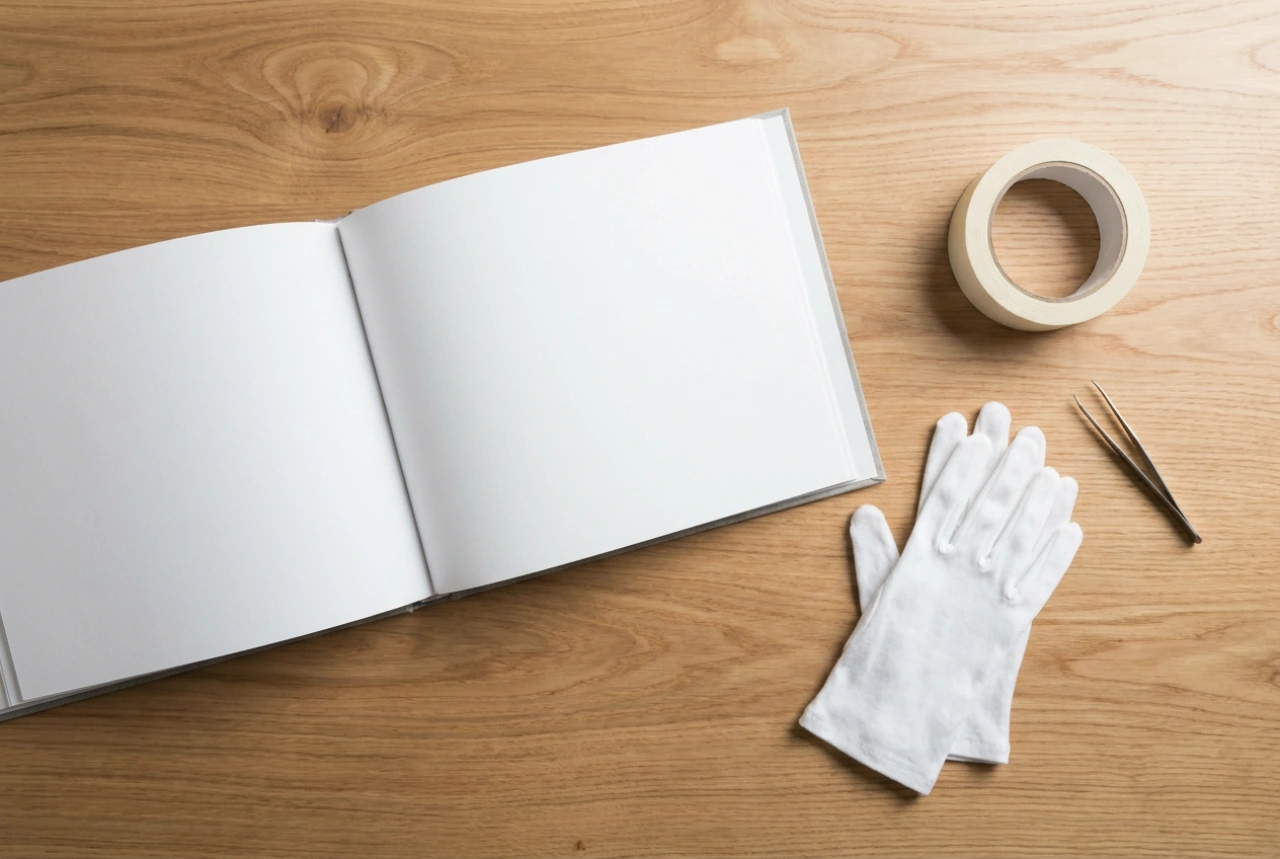
The physical construction of the album determines how easily it can be handled and how well it will withstand repeated opening. Lay-flat binding is the optimal choice for modern photographic narratives. In this style, individual spreads are printed on single continuous sheets of heavy-gauge paper (typically 200 to 400 gsm) and mounted back-to-back, allowing panoramic images to stretch seamlessly across the gutter without loss of detail.
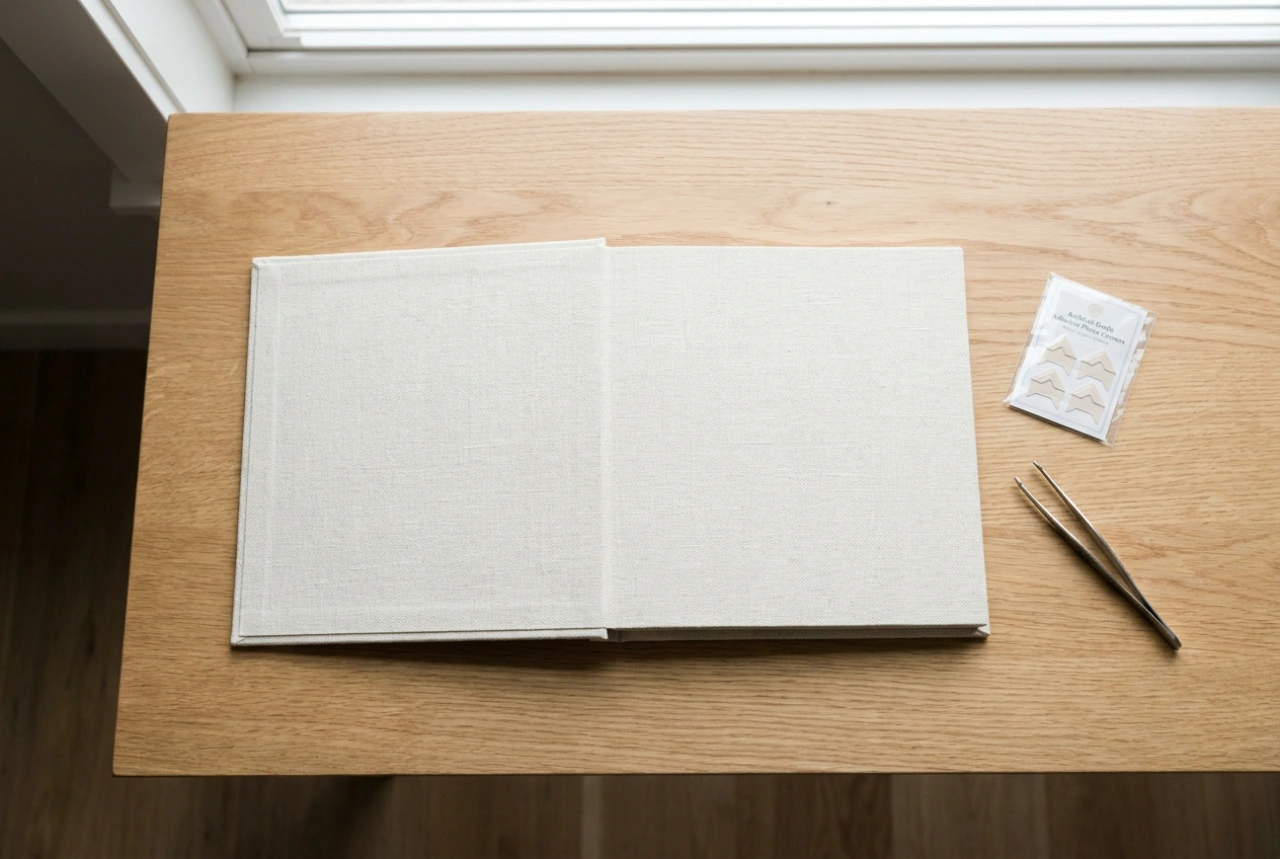
For cover materials, natural linen and top-grain leather offer superior durability. Linen is highly resistant to abrasion and allows the cover to breathe, while genuine leather develops a natural patina. Synthetic materials should be avoided unless they are rated as inert and non-plasticised, as certain vinyls can off-gas compounds that yellow adjacent photographic prints.
Maintenance and Preservation Protocols
To prevent structural warping and chemical deterioration, store the finished album in a climate-controlled environment. The ideal storage temperature is between 15°C and 22°C, with a relative humidity (RH) maintained strictly between 30% and 50%. High humidity triggers mold growth and softens adhesives, while excessive dryness causes the paper fibers to shrink and warp. Always store heavy photo albums horizontally rather than vertically to relieve gravitational strain on the spine and prevent the pages from sagging over time.