

Creating a physical photo album for your child preserves tangible memories, but long-term preservation requires an understanding of material science to prevent yellowing, fading, and physical degradation over time. Selecting the correct archival materials and organizing them with structural intent ensures these keepsakes survive for generations.
The Chemistry of Degradation: Why Acid-Free Materials Matter
To understand why photographs deteriorate, we must look at the chemical composition of paper and plastics. Traditional wood-pulp paper contains lignin, an organic polymer that oxidises when exposed to oxygen and light. This oxidation process releases acidic compounds that turn paper yellow and brittle. This acidity transfers directly to the photographs, destroying the silver halides or organic dyes in the print. When selecting an album, always choose paper certified as acid-free and lignin-free.
Additionally, avoid clear plastic sleeves made of Polyvinyl Chloride (PVC). PVC contains unstable plasticisers that off-gas over time, releasing hydrochloric acid. This acid degrades the photographic emulsion, turning images sticky and permanently altering their colours. Instead, opt for chemically inert plastics such as polypropylene, polyester, or polyethylene, which do not release harmful chemical by-products.
Securing Photos Safely without Chemical Damage
Applying the wrong adhesive is one of the most common mistakes in photo preservation. Standard liquid glues and pressure-sensitive sticky tapes contain volatile organic compounds and acidic adhesives that eat through photo backing. Over time, these adhesives crystallise, leaving permanent dark brown stains on the front of the image.
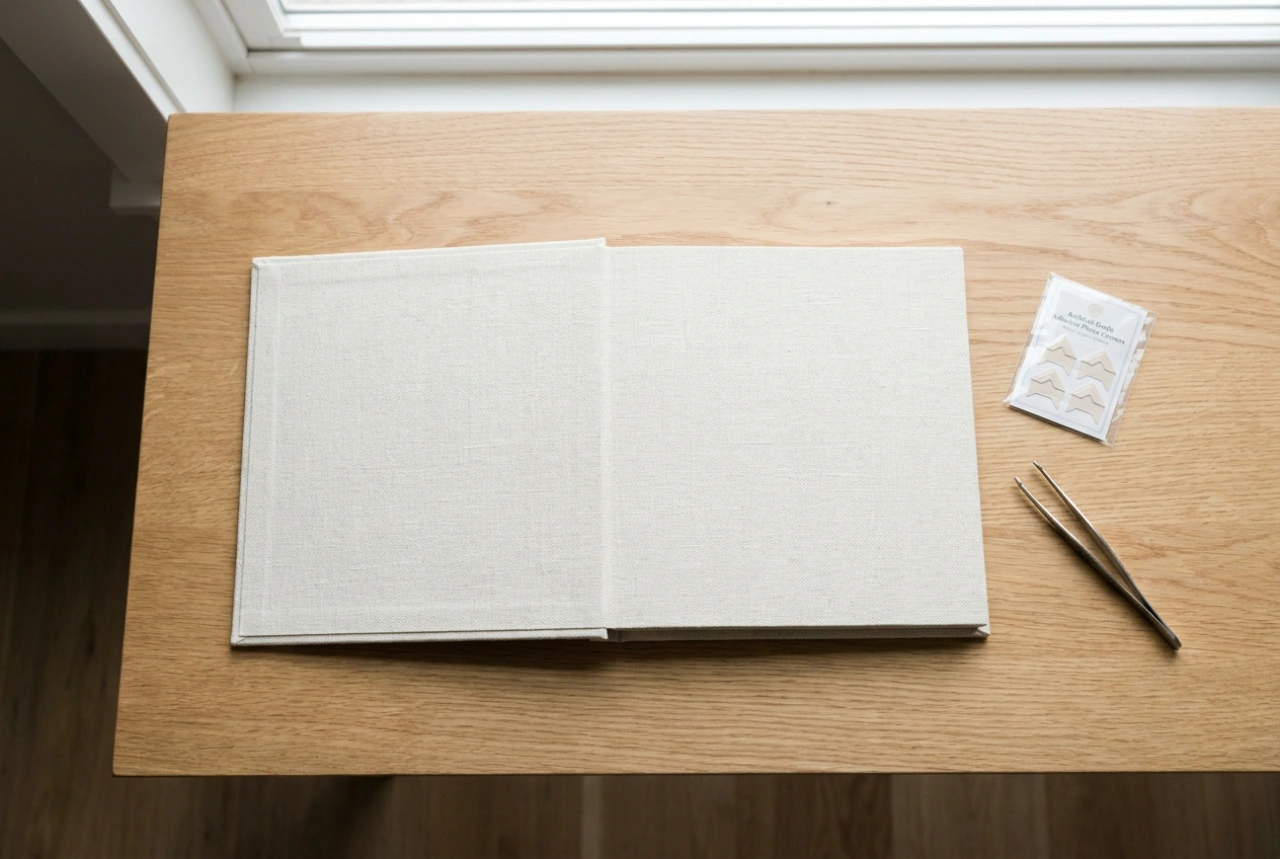
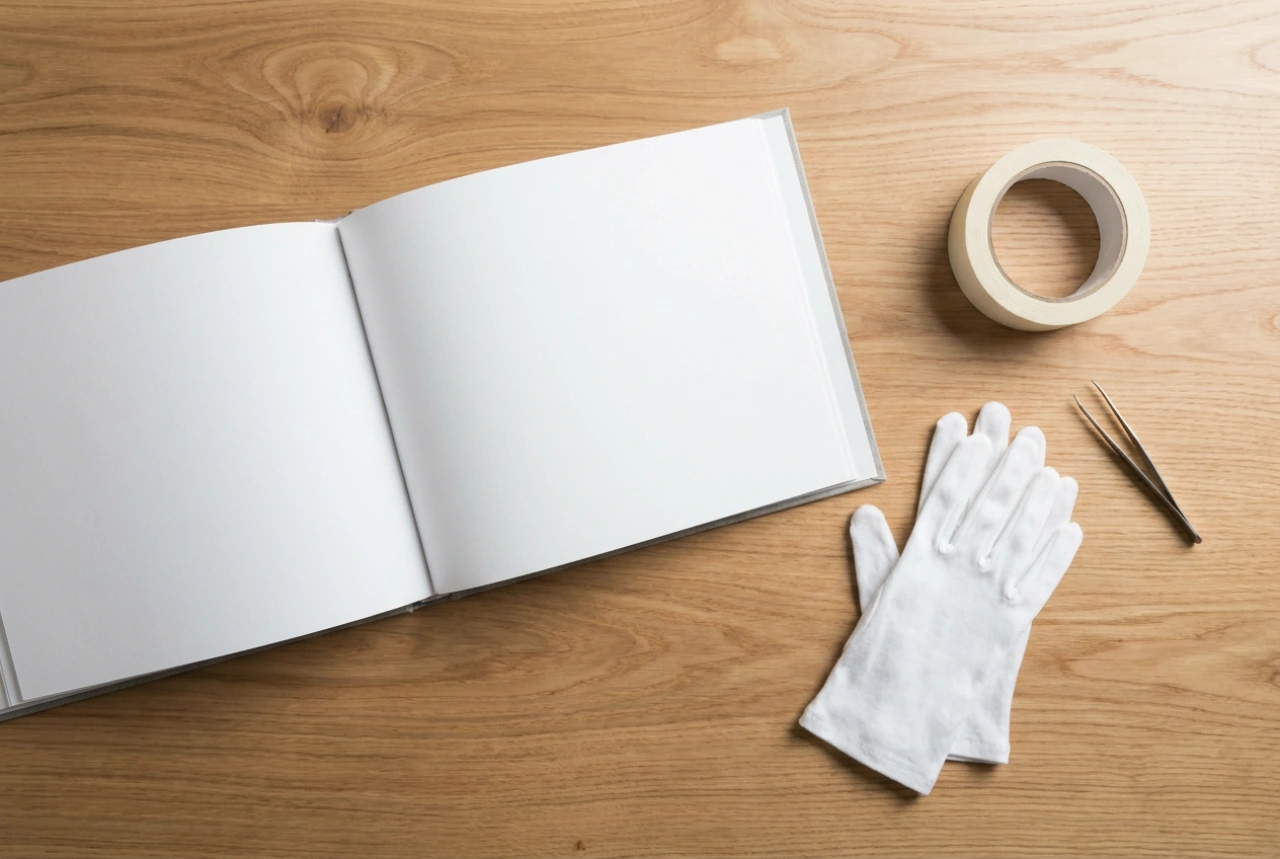
For a non-destructive mounting method, utilise self-adhesive archival photo corners made of acid-free paper or inert polyester. These corners secure the photograph by its edges without any adhesive actually contacting the print itself. This allows the photograph to expand and contract naturally with changes in room humidity without warping. If you prefer direct mounting, use specialized double-sided archival tape or pH-neutral starch paste (such as wheat or rice starch) which is chemically stable and reversible.
Structural Organisation: Curating the Narrative
Organising a child's album requires a balance between chronology and thematic flow to make the narrative engaging. Start by categorising images into key developmental milestones rather than trying to document every single day. Chronological sequencing works best for the first year of life, where physical changes occur rapidly.
When laying out photos on a page, use the principle of visual weight. Place larger or more chemically vibrant focal photos in the lower-right or upper-left quadrants to guide the viewer’s eye naturally across the layout. Always leave adequate margins of at least two centimetres around each photo. This allows for safe handling of the pages without touching the actual prints, as human skin oils contain sebum and lactic acid which permanently tarnish photographic surfaces.
Environmental Physics: Storing the Completed Album
Even the highest quality archival album will degrade if stored in the wrong environmental conditions. High relative humidity above sixty percent encourages mould growth and gelatin swelling, causing photos to stick together. Conversely, low humidity below thirty percent makes the paper and emulsion brittle and prone to cracking.
The ideal storage environment is a stable space with a temperature below twenty-one degrees Celsius and a relative humidity between thirty and fifty percent. Avoid storing albums in uninsulated attics or damp basements where temperature fluctuations cause continuous expansion and contraction of the paper fibres, weakening the binding. Store your albums vertically on a sturdy shelf away from direct ultraviolet light, which accelerates photolytic degradation and fades colour dyes.
Preservation Checklist for Long-Lasting Albums
- Always use paper labeled acid-free and lignin-free to prevent yellowing.
- Avoid PVC plastic sleeves; use polypropylene or polyester alternatives.
- Secure images using archival photo corners to prevent adhesive stains.
- Leave safe handling margins around photos to protect them from skin oils.
- Store albums upright in a climate-controlled room away from direct sunlight.