

Maintaining an organised home first aid kit is not just about aesthetics; it is a critical safety measure that ensures immediate access to essential supplies when every second counts. By understanding the environmental factors that degrade medical products and applying systematic physical zoning, you can establish a reliable, chaos-free home pharmacy.
The Environmental Physics of Medical Degradation
Many households instinctively store medicines in the bathroom cabinet, yet this is chemically the least suitable environment. High relative humidity and rapid temperature fluctuations accelerate the hydrolysis of active ingredients in tablets and capsules. When moisture penetrates packaging, it initiates chemical reactions that degrade molecular stability, reducing efficacy or rendering the substance inactive. Gelatine capsules can soften and fuse together, while effervescent formulations can react prematurely.
To preserve the chemical integrity of your supplies, choose a storage location that is consistently cool, dark, and dry, ideally maintaining a temperature between 15°C and 25°C. A high shelf in a hallway cupboard or a dedicated drawer in a bedroom is far superior to a bathroom or kitchen. Keeping supplies away from direct sunlight prevents ultraviolet radiation from photolysing sensitive compounds, such as certain antiseptic solutions and liquid suspensions.
The Audit: Chemical Expiry and Safe Disposal
Before organising, you must execute a strict audit of all contents. This requires evaluating both the printed expiration dates and the physical state of the items:
- Solid oral dosage forms: Inspect tablets for discolouration, crumbling, or a powdery residue, which indicate moisture damage.
- Semisolids (creams and ointments): Look for phase separation, where oil and water layers split, or changes in viscosity and odour, indicating emulsion failure.
- Sterile dressings: Check the integrity of the paper packaging. If the seal is compromised or shows water stains, the item is no longer sterile and must be discarded.
Never dispose of expired pharmaceuticals in domestic waste bins or flush them down the drain. Active chemical compounds can leach into the water table, disrupting ecosystems and contributing to antibiotic resistance. Instead, collect expired items in a secure container and transport them to a local pharmacy disposal point equipped to handle chemical waste incineration.
Zoning and Spatial Architecture
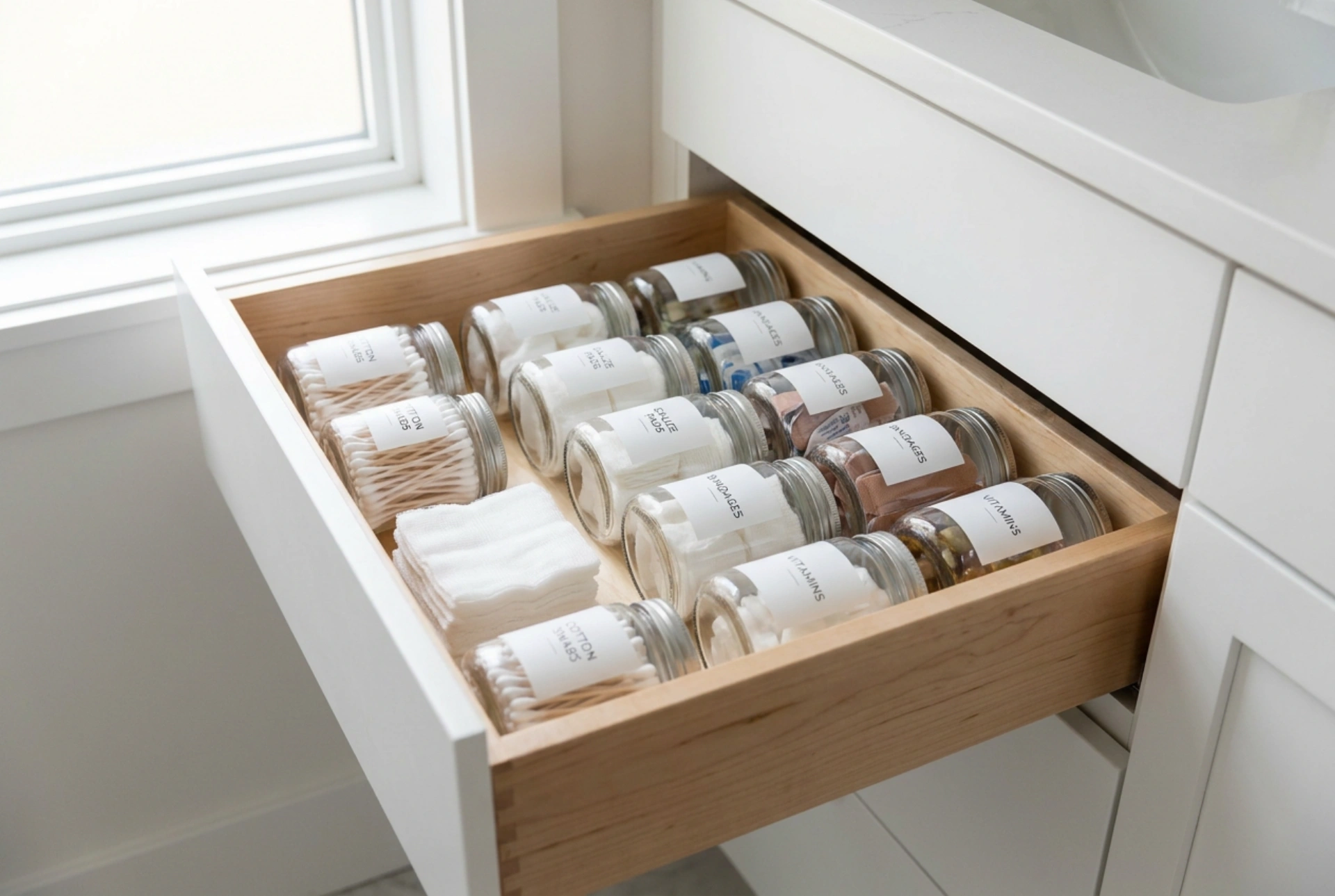
The layout of your first aid kit should follow a strict hierarchy of urgency. Group items by function and store them in clear, inert polymer or borosilicate glass containers. This allows for instant visual recognition without the need to rummage through drawers during an emergency. Create three distinct zones within your storage unit:
Zone 1: Acute Emergency and Trauma Care
This zone must occupy the most accessible position, requiring zero obstruction. It should contain items necessary to stop bleeding, clean wounds, and treat minor burns: sterile gauze pads, cohesive bandages, medical tape, tweezers, shears, and antiseptic solutions. Store these items in a brightly marked, portable container that can be pulled out instantly.
Zone 2: Common Ailments and Symptom Relief
Positioned just behind or below the emergency zone, this section houses everyday medications. Group them by therapeutic class, such as analgesics (pain relief), antihistamines (allergy relief), and gastrointestinal treatments. Use small, modular dividers to keep bottles upright, preventing accidental spills and leaks.
Zone 3: Chronic and Prescribed Medications
If members of the household take daily prescription medicines, these should be separated from general first aid supplies. Keep them in personalised, clearly labelled compartments. This avoids dangerous dosage confusion and ensures compliance with daily routines.
Standardising Labels and Maintenance
An organised kit is only as good as its labelling system. Avoid using brand-specific names on storage containers; instead, label dividers by symptom or generic category (e.g., "Wound Care" or "Pain Relief"). This ensures that any visitor or family member can navigate the kit instinctively. Establish a biannual audit schedule—coinciding with daylight saving time changes—to cross-check expiry dates, restock depleted items, and clean the storage container surface with an isopropyl alcohol solution to maintain hygienic standards.