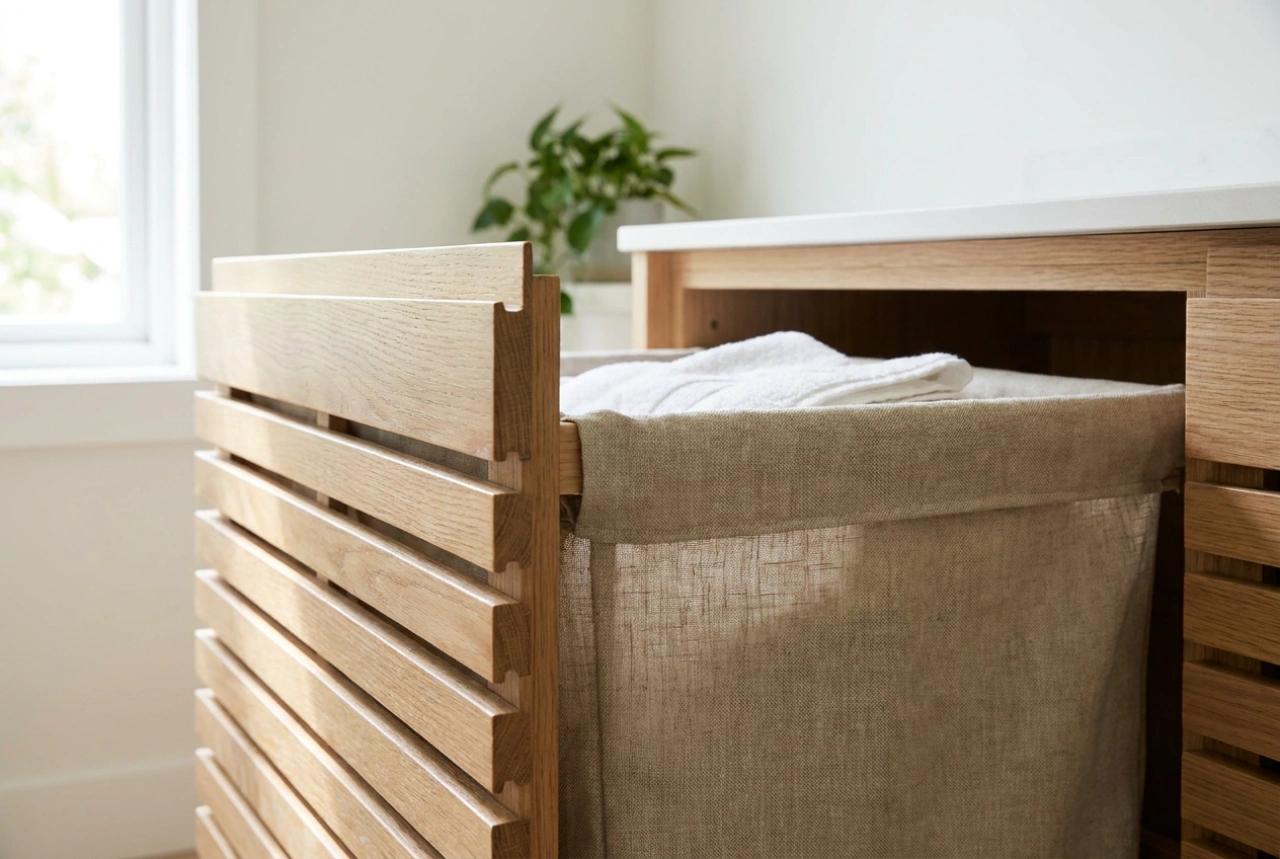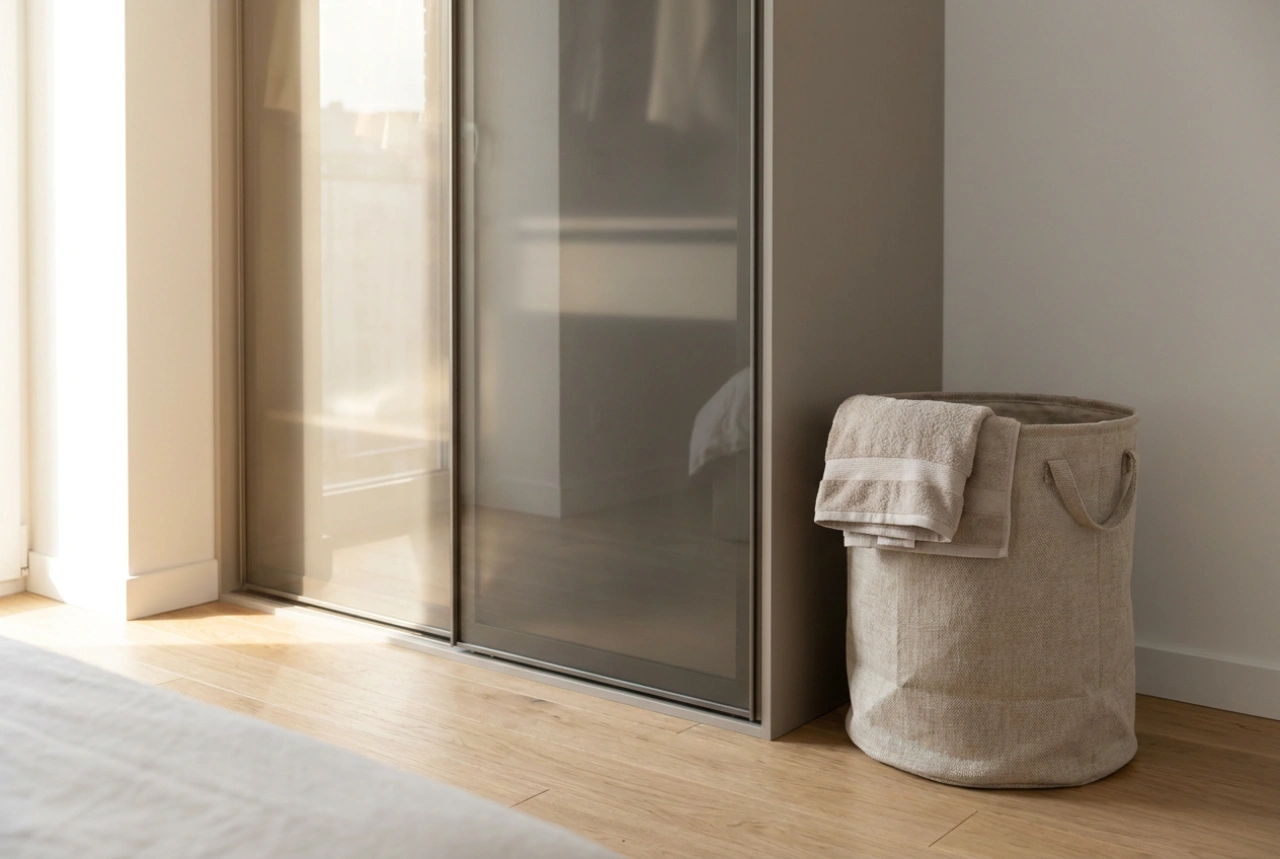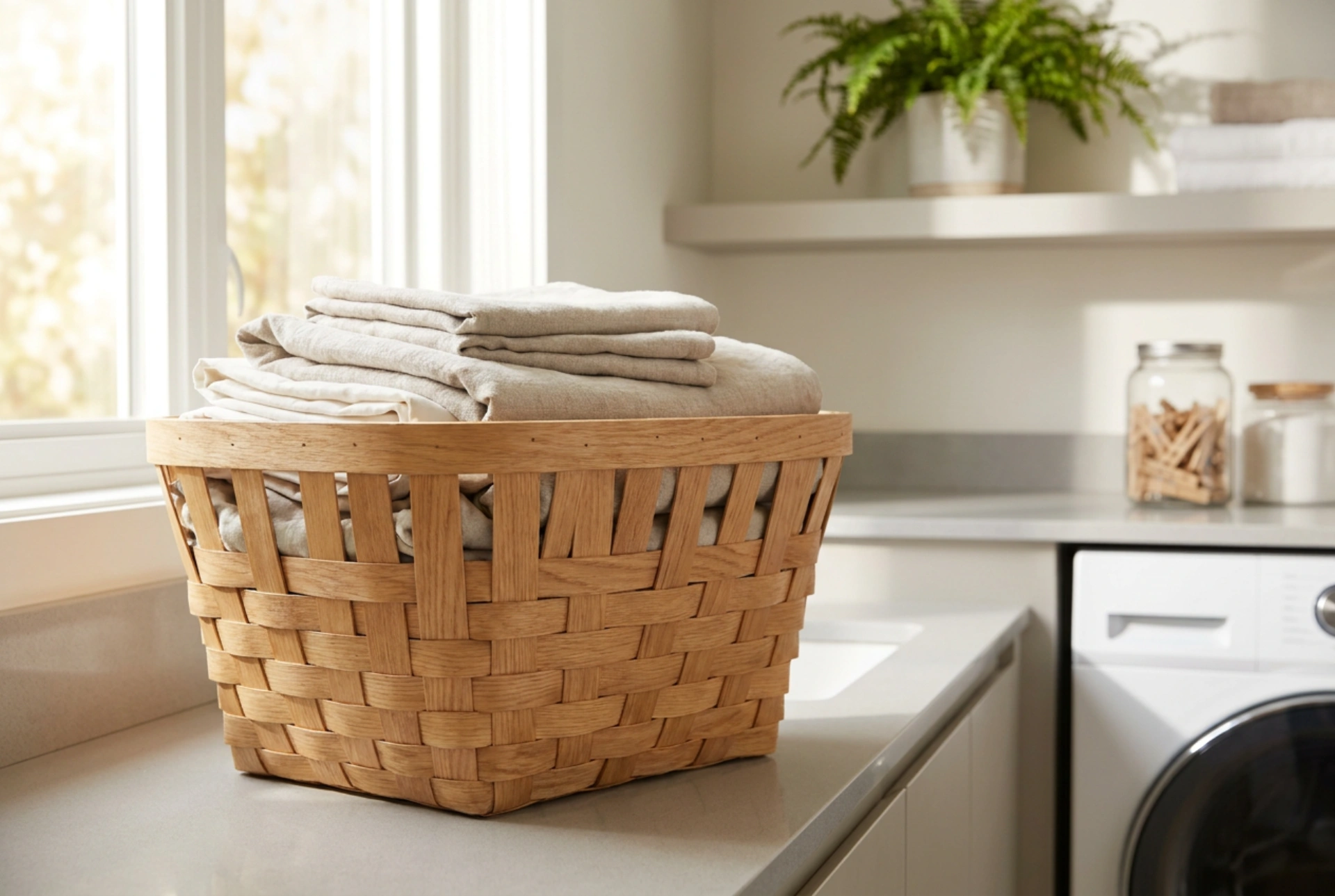


Wooden laundry baskets add natural warmth to a bathroom, but the combination of damp clothes and high humidity creates a hostile environment for organic fibers. Protecting the wood through proper sealing and physical barriers is essential to prevent warping, rot, and mold growth.
Understanding Wood and Moisture Absorption
Wood is naturally hygroscopic, meaning it constantly absorbs and releases moisture to equilibrate with its surrounding environment. At a microscopic level, wood consists of cellulose and lignin fibers that readily attract water molecules via capillary action. When a wooden laundry basket is filled with damp towels or placed in a poorly ventilated bathroom, these fibers swell. As the wood dries, it contracts. This continuous cycle of swelling and shrinking weakens the structural integrity of the wood, leading to warping, cracking, and splitting. Furthermore, trapped moisture in the grain creates an ideal substrate for fungal spores, resulting in unsightly black mold and musty odors.
Choosing the Right Protective Coating: Oils vs. Sealants
To interrupt the capillary action of water absorption, you must apply a protective finish. Two main categories of finishes are suitable for wooden household items: penetrating oils and film-forming sealants.
Penetrating Oils
Natural oils, such as pure tung oil or polymerised linseed oil, penetrate deep into the wood pores rather than sitting on top. Once inside, they undergo oxidation and polymerisation, transforming from a liquid to a solid, water-resistant barrier. This process maintains the natural, matte texture of the wood and allows it to breathe slightly while repelling liquid water. It is an excellent choice for hardwoods with tight grains.
Film-Forming Sealants
Water-borne or solvent-borne polyurethane sealants form a continuous, impermeable plastic barrier over the wood surface. This physical layer completely blocks liquid water and humidity from reaching the wood fibers. For high-humidity environments, a thin, clear satin polyurethane coat offers the highest level of protection, though it alters the tactile feel of the natural grain. Opt for low-VOC, moisture-resistant formulations to ensure longevity in bathroom conditions.
Step-by-Step Sealing Technique
Effective protection relies entirely on surface preparation and precise application. Follow this methodical approach to seal your basket successfully:
- Preparation and Sanding: Begin by thoroughly cleaning the wood to remove any surface oils or dust. Sand the entire surface using a progression of sandpaper grits, starting with 120-grit to level any rough patches, and finishing with 240-grit to open the pores without burning the wood. Always sand in the direction of the wood grain to avoid micro-scratches that can trap moisture.
- De-dusting: Vacuum the basket completely, then wipe it down with a tack cloth or a lint-free microfibre cloth dampened with mineral spirits to remove the finest dust particles.
- Application of the Finish: If using a penetrating oil, apply a generous coat with a natural-bristle brush or lint-free rag. Let it soak into the wood for 20 to 30 minutes, then vigorously wipe away any unabsorbed oil on the surface to prevent a sticky, uneven film. If using polyurethane, apply thin, even coats with a high-quality synthetic brush, sanding lightly with 320-grit sandpaper between coats to ensure adhesion.
- Curing: Allow the basket to cure in a dry, well-ventilated room. Drying is not curing; while the surface may feel dry to the touch within hours, full chemical curing and hardening can take anywhere from 48 hours to several weeks depending on the product used. Do not expose the basket to moisture during this window.
Crucial Structural and Operational Preventive Measures
Chemical protection should always be paired with smart physical practices to minimise moisture contact. Never throw soaking wet garments directly onto the bare wood. Utilising a heavy-duty, removable canvas or cotton liner acts as a critical buffer. The fabric absorbs initial dampness and can be easily washed and dried separately, keeping the wood dry. Additionally, ensure the basket has adequate airflow. If the basket sits directly on a tiled bathroom floor, add small rubber or felt pads to the base to elevate it slightly, preventing water from pooling underneath and wicking up into the end-grain of the legs.