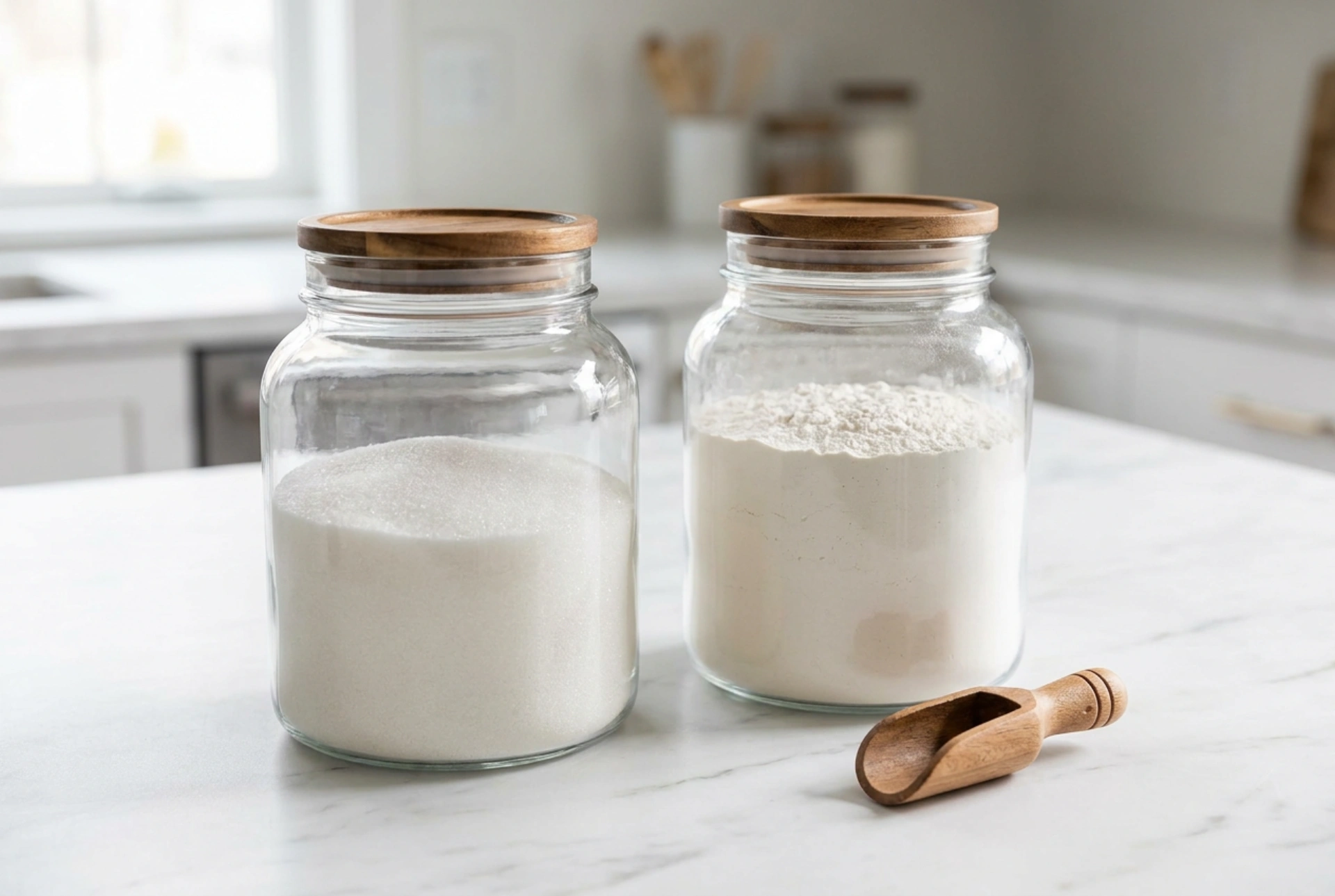


Damp flour clumps and spoils rapidly, while sugar absorbs atmospheric water to form rock-hard blocks. Understanding the physical principles of humidity and material behavior is key to maintaining a perfectly dry pantry and preventing food waste.
The Chemistry of Clumping: Why Flour and Sugar Attract Water
Both flour and sugar are highly hygroscopic substances, meaning they actively attract and hold water molecules from their surrounding environment. However, they react to moisture in fundamentally different ways due to their chemical structures.
Granulated white sugar consists of sucrose crystals. When relative humidity rises above approximately sixty percent, a thin film of water forms on the surface of each sugar crystal. This dissolves a tiny amount of sucrose. When the humidity drops again, this water evaporates, recrystallizing the dissolved sugar and fusing the individual granules together into a solid mass. Flour, on the other hand, is composed of starches and proteins. These organic polymers absorb water molecules directly into their cellular matrix. Excess moisture triggers enzymatic activity, turning starches into sugars and creating an ideal environment for mold spores and bacterial growth.
Container Materials: Glass versus Plastics
Selecting the correct vessel requires an understanding of material permeability. Not all solid materials block water vapor equally.
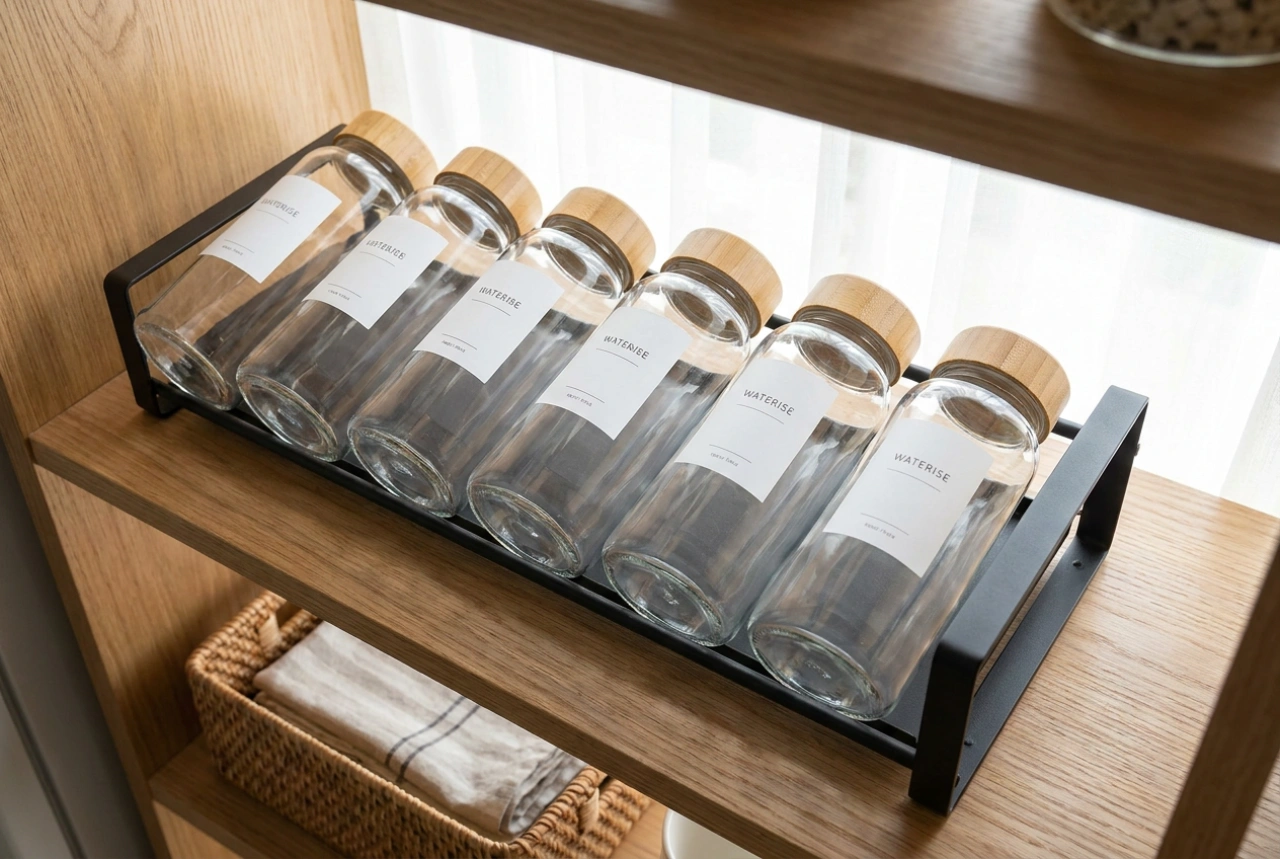
- Glass: This is an inorganic, non-porous material that provides an absolute barrier to water vapor and gases. Glass does not degrade over time or absorb odors, making it the premier choice for long-term dry food storage.
- Plastics: While convenient, all polymers have a measurable Water Vapor Transmission Rate. Over several months, trace amounts of moisture can permeate through plastic walls, especially in high-humidity kitchens. If using plastic, opt for thick-walled polypropylene with high-quality sealing mechanisms.
The Critical Role of Silicone Gaskets
A rigid lid resting on a rigid jar will never form an airtight seal due to microscopic surface irregularities. An effective seal requires an elastomeric gasket, typically made of food-grade silicone. When the lid is clamped or screwed down, it exerts mechanical pressure on the silicone, causing it to deform and fill every microscopic gap. This physical barrier stops air exchange driven by changes in household barometric pressure and temperature.
Mechanical Force and Latch Systems
The mechanical force applied to the seal determines its long-term efficacy. Threaded screw-on lids require manual torque to compress the gasket. Over time, friction can cause uneven compression. Conversely, wire-bail jars apply constant, spring-loaded vertical pressure. This continuous force ensures the silicone gasket remains uniformly compressed, accommodating minor thermal expansion and contraction of the container materials without losing its seal.
Active Moisture Mitigation Techniques
Even in an airtight container, some ambient air is trapped during sealing. To manage internal moisture, you can introduce sacrificial absorbents.
Sacrificial Desiccants
Food-grade silica gel packets contain highly porous silicon dioxide. The immense internal surface area of silica gel adsorbs water molecules, pulling them out of the air before they can interact with your dry goods. Alternatively, a small pouch of dry white rice can be placed in the container. Rice starch acts as a natural desiccant, safely absorbing ambient moisture.
Thermal Dynamics in the Pantry
The placement of your storage containers is just as important as the containers themselves. Placing jars near heat-generating appliances like ovens, dishwashers, or refrigerators creates localized temperature fluctuations. When a container warms up, any moisture within the air inside turns to vapor; when the container cools, this vapor condenses on the cold inner walls, directly wetting the flour or sugar beneath. Jars must be stored in a cool, dark, temperature-stable environment to prevent this condensation cycle.