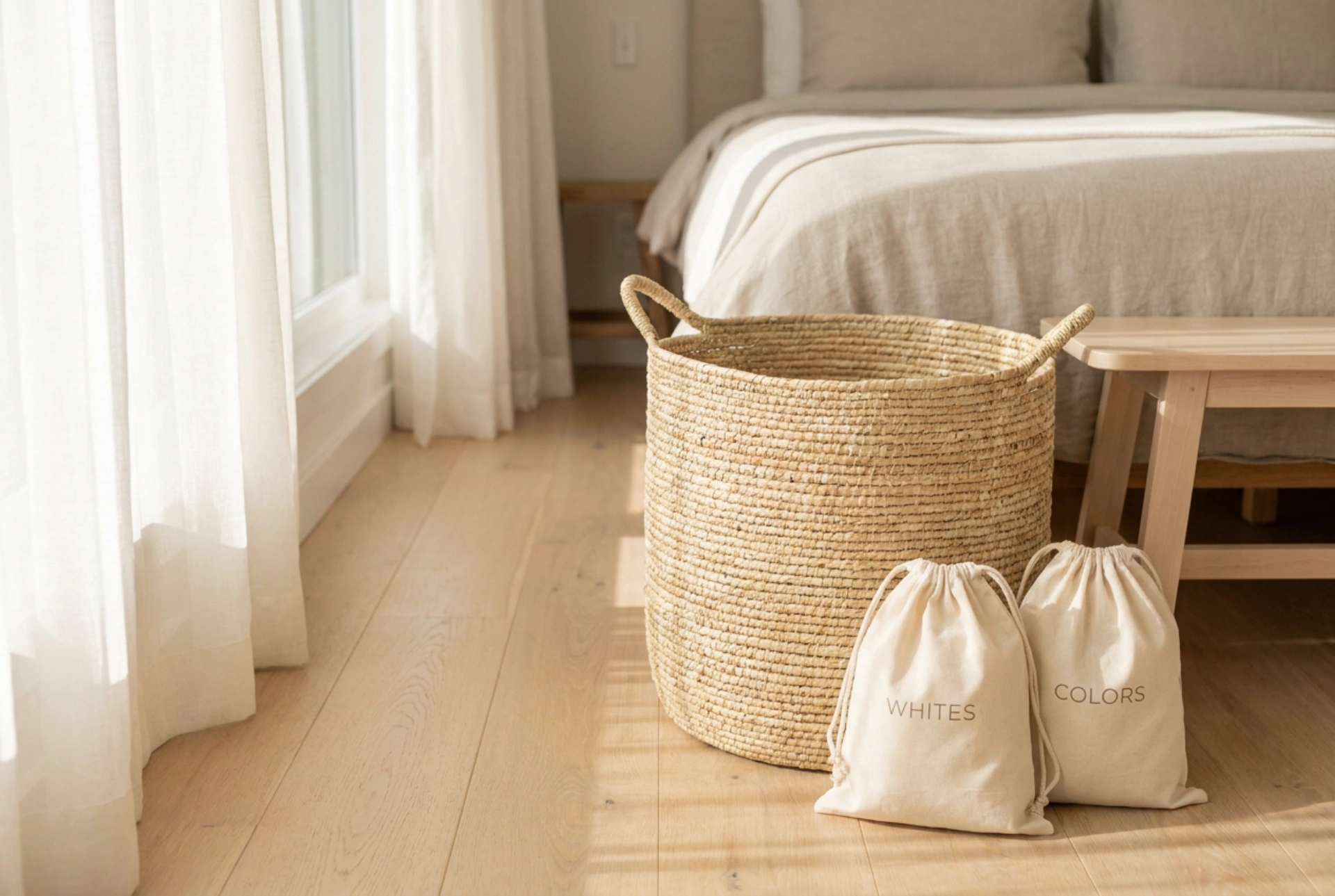


Managing dirty textiles efficiently does not require sacrificing the aesthetic harmony of your living space to unsightly plastic bins. By understanding material science and organising logistics, you can implement a concealed, elegant sorting system that preserves both garment quality and interior design.
Material Matters: Ventilation and Moisture Management
The primary challenge with dirty laundry is the accumulation of moisture and volatile organic compounds released from worn fabrics. When damp garments are sealed in airtight, synthetic containers, they create a microclimate ideal for the proliferation of anaerobic bacteria and fungi. These microorganisms break down sweat residues into organic acids, resulting in persistent musty odours and potential fibre degradation.
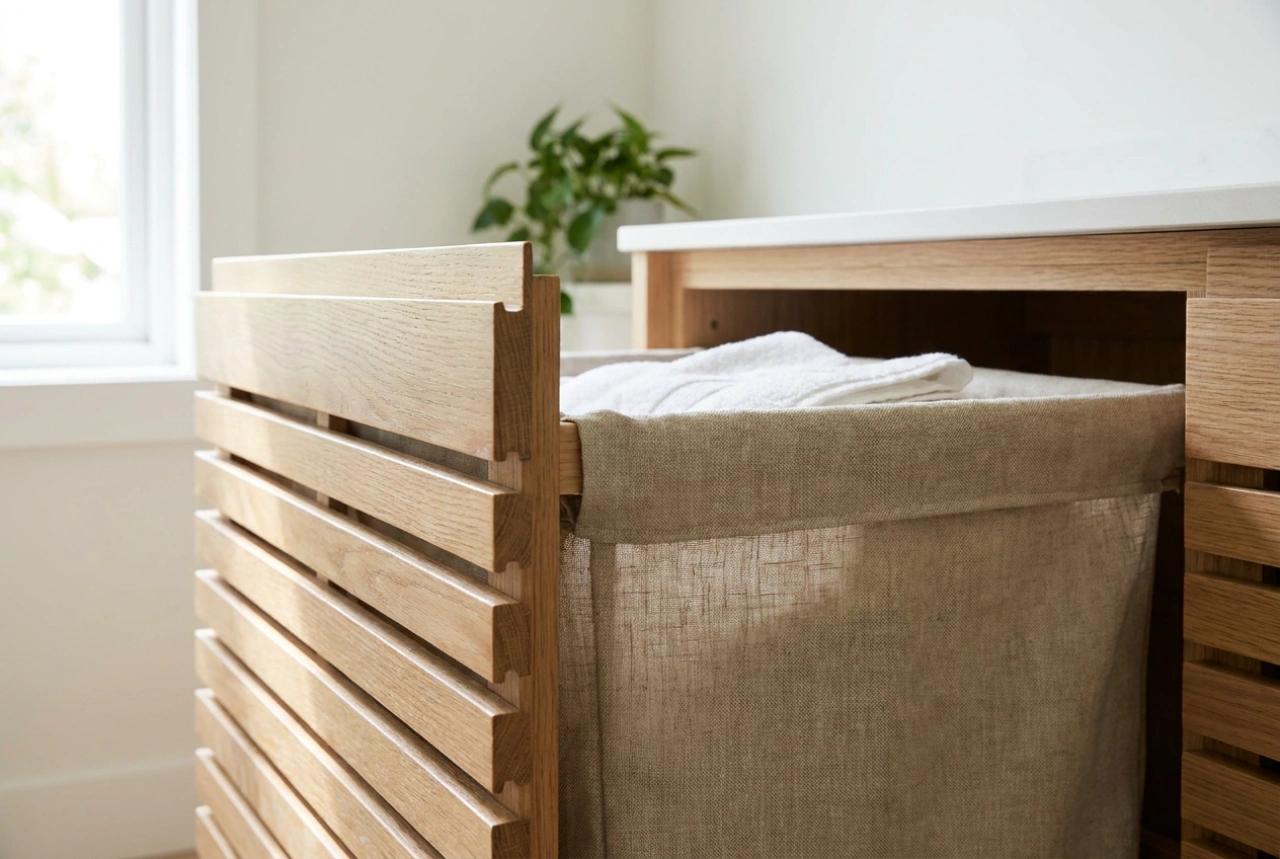
To prevent this, an elegant laundry basket must utilise breathable materials. Natural woven fibres such as rattan, bamboo, or sea-grass act as structural outer shells that allow continuous air exchange. On a microscopic level, these materials feature natural capillaries that help dissipate ambient humidity rather than trapping it. Inside, a removable, breathable liner made of unbleached cotton or linen should be used. These natural textiles absorb excess moisture without encouraging bacterial growth and can be easily laundered alongside your garments.
The Science of Sorting: Designing an Efficient Multi-Compartment System
Effective laundry management relies on segregating textiles at the point of disposal rather than immediately before washing. This reduces handling, minimises fibre friction, and prevents cross-contamination of dyes and soil. A truly elegant sorting system achieves this through internal compartmentalisation within a single, cohesive outer vessel.
1. Temperature-Based Separation
The most critical division in household laundry is between low-temperature fabrics (30°C to 40°C) and high-temperature utility textiles (60°C and above). Grouping synthetics, wool, and delicate silks away from robust cotton towels and bedding prevents premature wear. High-temperature items often carry higher moisture loads and bacterial presence, making early segregation vital to stop the spread of odour-causing microbes to delicate garments.
2. Pigment and Dye Protection
Dry textiles can transfer microscopic dye particles through physical friction. Separating darks, lights, and intense colours within dedicated internal canvas inserts eliminates the risk of grey transport—the gradual dulling of white fabrics caused by suspended dyes in the wash water. Using a three-compartment internal bag system allows for instant, visual classification without exposing unsightly piles of dirty clothes to the room.
Maintaining Hygiene in Fabric Liners
The internal lining of a laundry bin acts as a primary filter, capturing skin flakes, sebum, and dust. Over time, these organic residues can turn the liner itself into a source of odour. To maintain absolute hygiene, the inner sorting bags must be washed regularly. Choose liners made from heavy-duty canvas that can withstand washing temperatures of at least 60°C. Washing the liners with an oxygen-based bleaching agent once a month sanitises the fabric by releasing active oxygen molecules, which oxidise cellular membranes of bacteria and fungi without leaving chemical residues that could irritate sensitive skin.
Placement and Ergonomic Flow
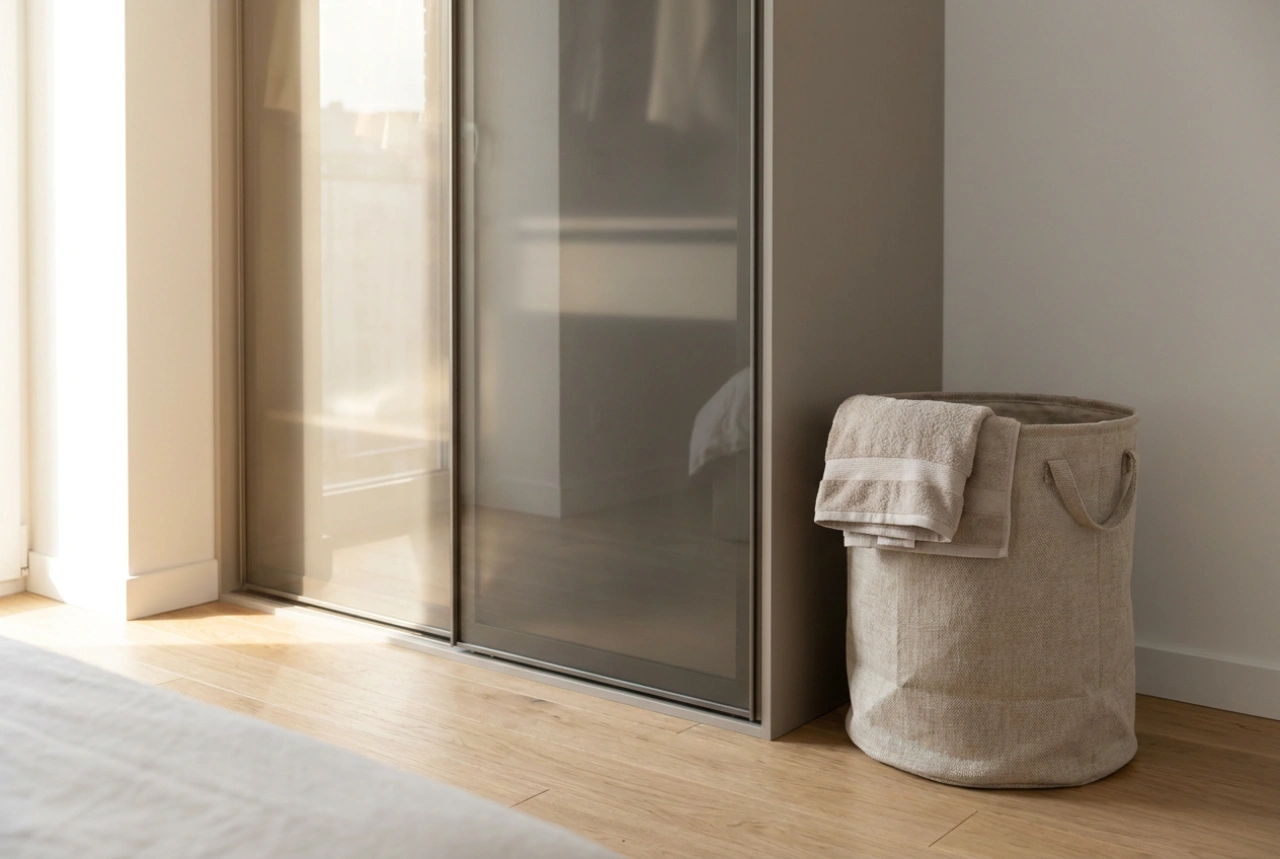
The placement of your sorting system dictates its utility. While the bathroom is a common choice, the elevated relative humidity of bathing areas accelerates fungal growth on soiled textiles. Placing a well-ventilated, aesthetic basket in a dry dressing room or bedroom is scientifically preferable. Ensure the basket is positioned away from direct heat sources, which can bake organic stains into natural fibres, making them significantly harder to remove during the wash cycle.