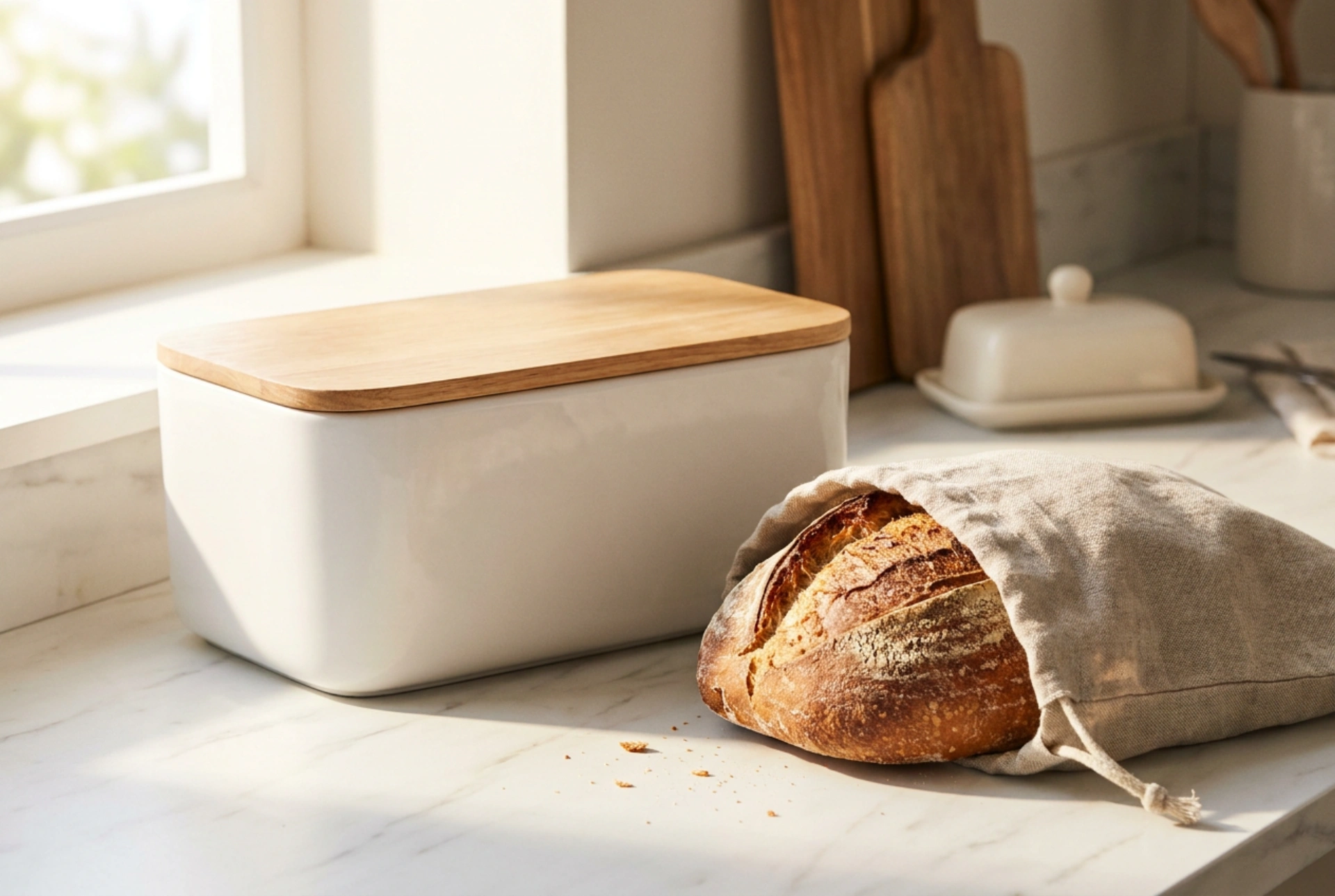


Keeping bread fresh depends on controlling humidity and air circulation to prevent both staling and mold growth. A hybrid bread bin combining a non-porous white body with a natural wooden lid offers the ideal microclimate, provided both materials are maintained correctly.
The Science of Bread Preservation: Retrogradation and Moisture
To understand why a bread bin is essential, one must look at the chemical process of bread aging. Staling is not merely the drying out of bread; it is a chemical reaction known as starch retrogradation. During baking, starch gelatinizes by absorbing water. As soon as the bread cools, these starch molecules slowly realign and recrystallize, forcing water out of the crumb and into the crust. This process occurs fastest at temperatures just above freezing, which is why bread should never be stored in a domestic refrigerator.
Conversely, excess humidity trapped around the bread creates an ideal environment for mold spores (such as Penicillium or Aspergillus) to germinate. The ideal storage relative humidity lies between 60% and 70%. A sealed plastic bag traps almost 100% humidity, softening the crust and encouraging rapid mold development within days. An open countertop allows too much moisture loss, turning the loaf rock-hard.
Why the Wood and Metal/Ceramic Combination Works
A hybrid bread bin utilizes two distinct material properties to manage this microclimate:
- The Non-Porous Body: Typically made of powder-coated steel, ceramic, or thick melamine, the white exterior shell acts as a barrier against external airflow and fluctuations in room temperature, stabilizing the internal climate.
- The Wooden Lid: Wood is a highly hygroscopic material. It naturally breathes, absorbing excess moisture released by the bread when humidity is high, and releasing it back into the chamber when the air inside becomes too dry. This acts as a natural humidity regulator.
Maintaining the White Exterior and Wooden Lid
Since a hybrid bin contains two completely different materials, cleaning them requires distinct chemical approaches. Using the wrong agent can permanently discolor the white finish or warp the wood.
Caring for the Wooden Component
Never submerge the wooden lid in water or place it in a dishwasher. Water absorption causes wood fibers to swell unevenly, leading to warping or cracking. Clean the wood by wiping it with a damp cloth wrung out with water and a drop of pH-neutral dish soap. To disinfect the wood without harsh chemicals, wipe it with a dilute solution of white vinegar (acetic acid), which naturally inhibits mold spores without leaving harmful chemical residues.
Every few months, apply a thin layer of food-grade mineral oil or beeswax. This saturates the wood fibers, preventing them from absorbing excessive ambient moisture and stopping organic food particles from penetrating the pores, which would otherwise feed mold growth.
Preserving the White Exterior
White powder-coated steel or ceramic finishes easily show fingerprints, grease, and kitchen grime. To clean the white body, use a soft microfiber cloth and a mild degreasing agent. Avoid abrasive scouring pads or alkaline cleaners (like baking soda paste) on painted steel, as they can cause micro-scratches that dull the glossy finish and trap dirt over time. For persistent oil stains, a cloth dampened with a small amount of isopropyl alcohol will safely dissolve the lipids without damaging the cured powder coating.
Best Practices for Bread Storage Inside the Bin
To maximize the efficiency of your hybrid bread bin, follow these operational rules:
- Avoid Plastic Bags: Place crusty, artisanal sourdough loaves directly into the bin or wrap them in a breathable linen or cotton bag. The fabric protects the cut surface of the loaf while letting the wood lid regulate moisture.
- Cool Before Storing: Never place warm, freshly baked bread into the bin. The residual heat will cause rapid condensation on the cold metal or ceramic walls, creating localized high-humidity zones that trigger mold within hours.
- Regular Crumb Removal: Bread crumbs are highly hygroscopic and organic, making them prime feeding grounds for mold. Empty the bin weekly, vacuuming out crumbs and wiping the interior dry before restocking.