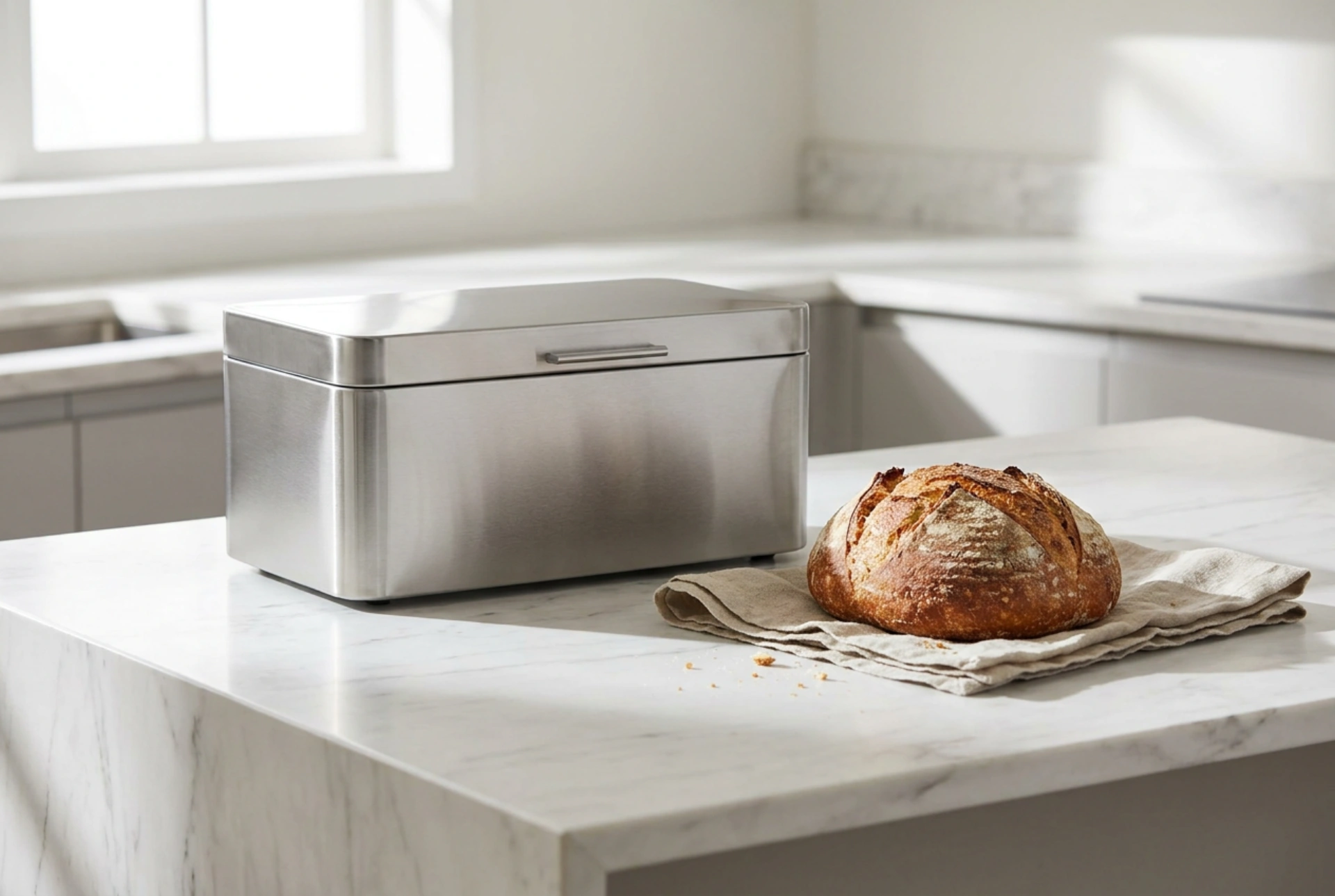


Stainless steel bread bins offer excellent durability and a sleek aesthetic, but their non-porous surface can easily trap moisture, leading to soft crusts and rapid mould development. Managing the microclimate inside a metal container requires a basic understanding of relative humidity, thermal conductivity, and airflow.
The Physics of Metal and Condensation
Unlike ceramic, wood, or clay, stainless steel is entirely non-porous. This means it cannot absorb any moisture released by the bread. When bread is baked, the starch undergoes gelatinisation; as it cools and ages, a process called retrogradation occurs, during which water is slowly released from the starch network back into the surrounding air. In a sealed steel environment, this moisture has nowhere to go. Furthermore, stainless steel has high thermal conductivity. If the kitchen temperature drops, the metal walls of the bread bin cool down rapidly. When the warm, humid air inside the bin contacts the cold steel surface, it reaches its dew point, transforming into liquid water droplets. This condensation pools on the bottom or drips onto the bread, creating the ideal damp environment for mould spores to germinate.
Implementing Hygroscopic Buffers
To counteract the non-porous nature of stainless steel, you must introduce a secondary material that acts as a moisture buffer. Wrapping your loaf before placing it in the bin is the most effective way to regulate humidity. Avoid plastic bags, which trap 100% of the moisture and accelerate staling and mould. Instead, wrap the bread in a clean, dry linen or cotton cloth, or place it in an unbleached paper bag. These natural fibres are hygroscopic, meaning they can absorb excess water vapour from the air when humidity is high and release it back when the environment becomes dry. This keeps the crust crisp while preventing the crumb from drying out too quickly.
Thermal Management and Placement
The location of your stainless steel bread bin plays a critical role in its internal climate. Because steel reacts quickly to external temperature changes, you must place the bin away from active heat and moisture sources. Never position it near a stove, oven, kettle, toaster, or dishwasher. The heat generated by these appliances will warm the metal, accelerating evaporation from the bread, which then condenses as soon as the appliance cools down. Similarly, avoid placing the bin in direct sunlight. If your kitchen has cold stone or marble worktops, place a wooden cutting board, a cork mat, or silicone feet underneath the steel bin. This acts as thermal insulation, preventing the cold countertop from chilling the bottom of the bin and causing localized condensation.
Controlling Airflow and Internal Volume
Air circulation is essential for dispersing trapped moisture. When selecting or using a stainless steel bread bin, check for small ventilation holes, usually located at the back or sides. Ensure these vents are never blocked by kitchen towels or pushed flush against a wall. If your bread bin is completely airtight, you must actively manage the airflow. Open the lid for five to ten minutes once or twice a day—ideally when removing or slicing bread—to allow fresh, drier air to replace the humid air inside. Additionally, avoid overloading the bin. Packing multiple fresh loaves into a tight space increases the absolute moisture content beyond what the air volume can hold, virtually guaranteeing a damp interior.
Sanitation and Acetic Acid Treatment
Even with perfect moisture control, microscopic mould spores will eventually enter the bin when it is opened. Over time, these spores settle on the metal surfaces. To prevent contamination, establish a weekly sanitisation routine. Empty the bin completely and vacuum out any crumbs, which can absorb moisture and rot. Wipe down the entire interior with a solution of equal parts water and white distilled vinegar (acetic acid). Acetic acid penetrates the cell walls of mould spores, neutralizing them effectively without damaging the food-grade stainless steel. Allow the bin to dry completely with the lid open before returning any bread. Avoid using chlorine-based detergents or abrasive scrubbers, which can strip the protective chromium oxide layer of the stainless steel, leading to micro-scratches where bacteria and moisture can accumulate.