

Creating a physical childhood photo album that survives for decades requires more than aesthetic choices; it demands an understanding of material chemistry and preservation physics. By selecting materials that resist chemical degradation and environmental wear, you can ensure that printed memories remain pristine for generations.
The Chemistry of Paper: Acid-Free and Lignin-Free Selection
The primary agent of paper degradation is acid. Standard wood-pulp paper contains lignin, a natural polymer that binds cellulose fibres. Under light, oxygen, and moisture, lignin oxidises and generates acidic compounds. This triggers acid hydrolysis, a chemical reaction breaking down cellulose chains, making paper yellow and brittle. To prevent this, select photo albums constructed using paper certified as both acid-free and lignin-free.
High-quality archival papers feature an alkaline reserve, typically 2% to 3% calcium carbonate. This alkaline buffer acts as a chemical shield, neutralising migrating acids introduced by handling, atmospheric pollutants, or nearby storage materials. Opt for backing paper with a verified pH value between 7.5 and 9.5 to ensure long-term chemical neutrality.
The Mechanics of Binding: Distributing Physical Stress
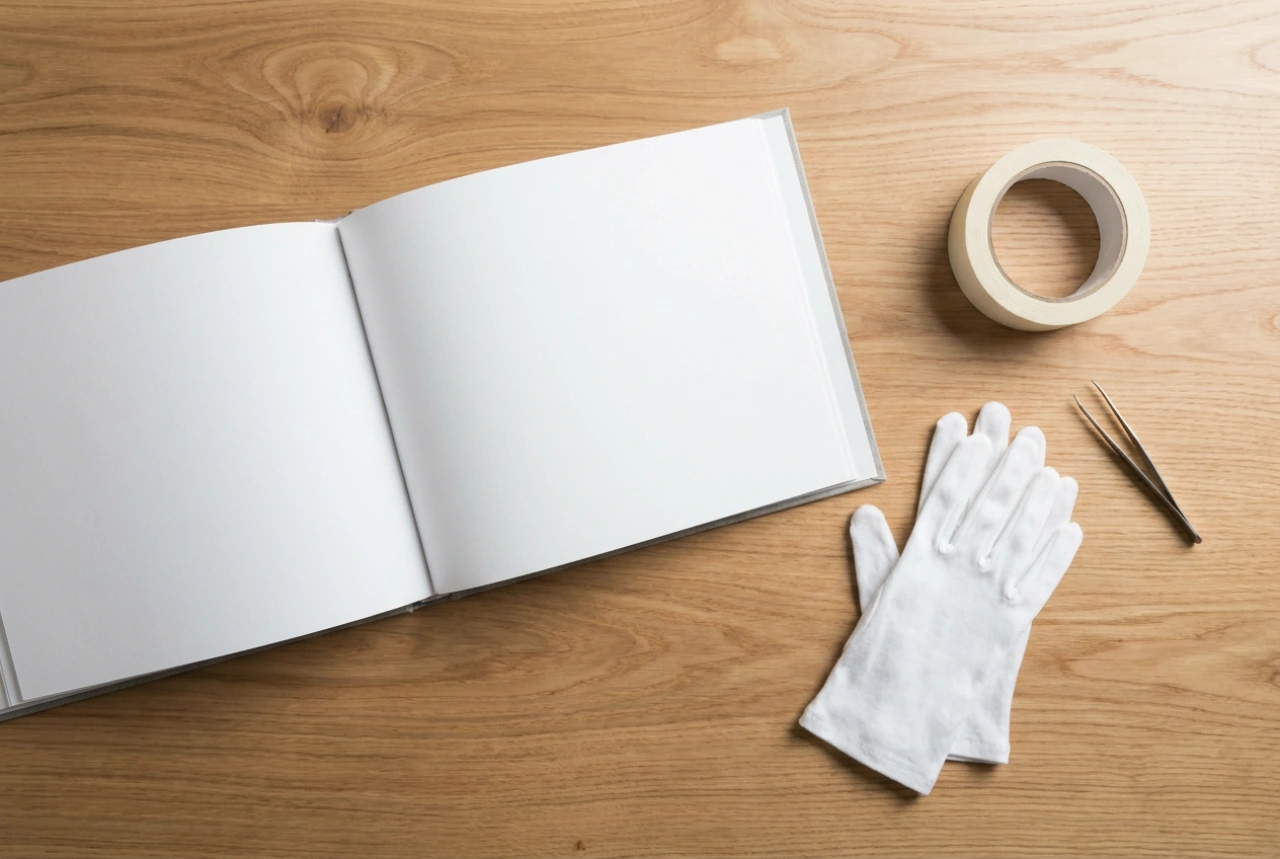
An album intended to last for decades must withstand repetitive mechanical strain. Traditional book-bound albums with sewn spines offer the highest structural durability. Sewn bindings distribute the physical stress of page-turning evenly across the spine, preventing pages from pulling loose. Post-bound or ring-bound systems concentrate stress on small punch holes, causing tearing and wear over time.
Page weight is equally critical. To prevent pages from sagging under the weight of mounted photographs, select a minimum paper weight of 200 gsm (grams per square metre). Furthermore, ensure any protective sleeves are made from chemically inert plastics. Avoid polyvinyl chloride (PVC); PVC degrades, releasing hydrochloric acid and volatile plasticisers that permanently bond with photographic emulsions. Opt instead for stable, inert polymers like polypropylene or polyester.
Adhesive Science: Preventing Chemical Migration
Many standard household glues and commercial adhesive tapes rely on volatile solvent-based formulas. Over time, these solvents evaporate and migrate through the paper backing, directly attacking the photographic emulsion. This results in severe yellow staining, chemical fading, and adhesive failure.
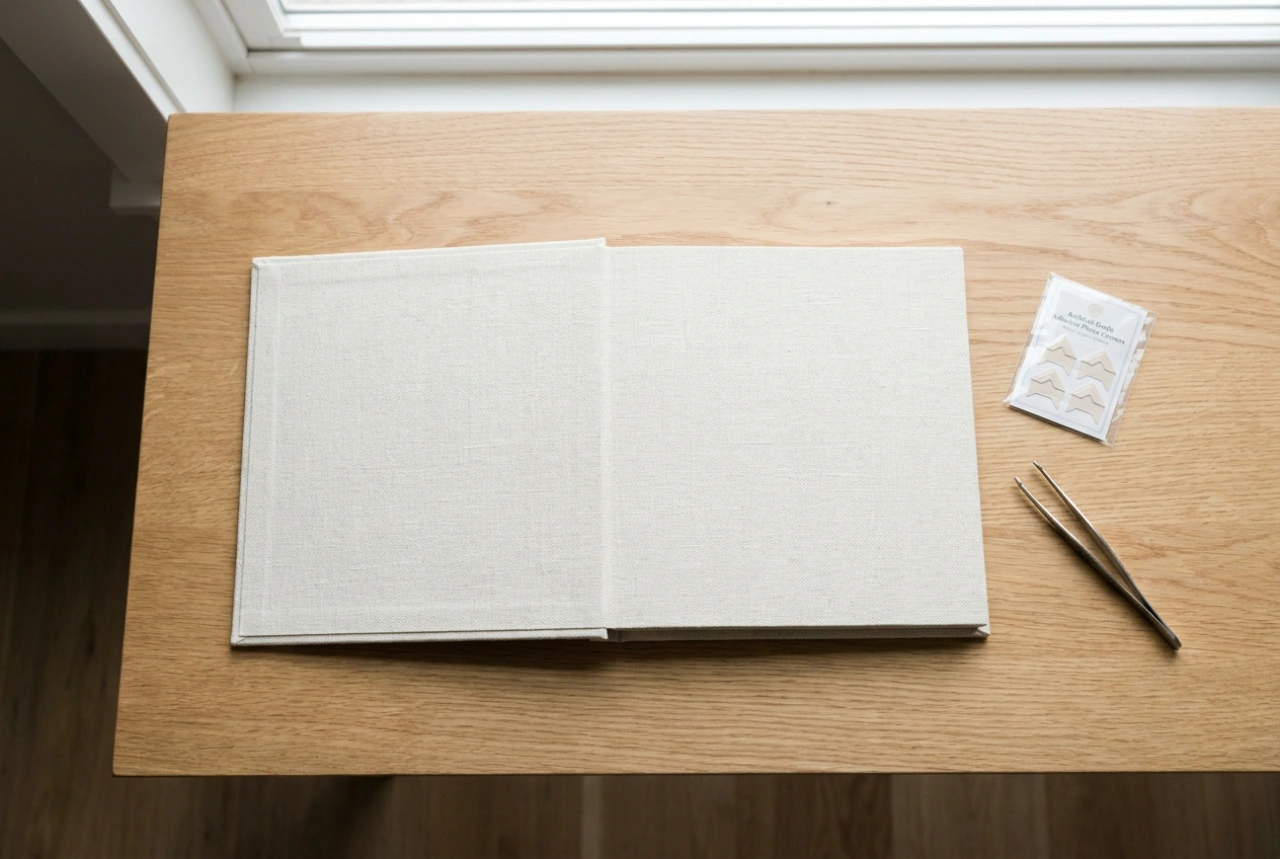
The safest mounting method is entirely non-adhesive: archival photo corners made of polyester. These corners slide over the edges of the print, keeping the photo secure without chemical contact and allowing the paper to expand and contract naturally with humidity changes. If using adhesives, select pressure-sensitive, double-sided acrylic tapes that have passed the Photographic Activity Test (PAT, ISO 18916), ensuring no chemical reaction occurs with the photo layers.
Printing Technologies: Pigments versus Dyes
The chemical makeup of your printed photos dictates their lifespan. Traditional silver halide (chromogenic) prints feature silver crystals or organic dyes suspended in gelatin. While highly stable, their longevity depends on proper chemical washing during development to remove residual sodium thiosulphate, which can cause silver mirroring and fading.
For digital printing, pigment-based inkjet prints (giclée) are far superior to dye-based prints. Dye inks dissolve in liquid and penetrate paper fibres, but they suffer rapid photolysis (fading) when exposed to ultraviolet light and atmospheric ozone. Pigment inks consist of microscopic solid mineral particles that sit on top of the paper fibres, offering exceptional resistance to light-induced fading and chemical breakdown.
Environmental Physics: Controlling Climate and Light
Even the most durable materials degrade in unstable environments. The rate of chemical reactions, including dye fading and paper hydrolysis, increases exponentially with temperature. According to the Arrhenius equation, reaction rates roughly double with every 10°C increase. Store albums in climate-controlled spaces (ideally below 20°C) with a stable relative humidity (RH) between 30% and 50%.
Excessive humidity (above 60% RH) leads to gelatin softening, mould growth, and accelerated acid reactions, while low humidity (below 30% RH) makes photo emulsions brittle and prone to cracking. Finally, store albums flat rather than upright to prevent gravitational stress on the binding, and keep them inside acid-free, closed storage boxes to shield them from dust, ultraviolet light, and ozone.