

Under-bed storage compartments offer an excellent way to save space, but without proper management, this dark and low-airflow environment can easily trap moisture and dust, leading to fiber degradation and musty odours. Understanding the physical principles of air circulation and material science is key to keeping your spare duvets, pillows, and sheets pristine.
The Microclimate of Under-Bed Storage
The space beneath a bed is subject to unique thermodynamic conditions. Positioned close to the floor, this area experiences lower temperatures and reduced air movement compared to the rest of the room. When warm, humid room air meets the cooler floor surface beneath the bed, the relative humidity in this zone rises, creating a risk of condensation. Without adequate ventilation, this stagnant, damp environment becomes a breeding ground for mildew, mould spores, and dust mites.
To mitigate these risks, it is essential to ensure that your bed frame has ventilation gaps or that you periodically open the storage compartment to allow air exchange. Wood and textile elements can absorb ambient moisture, so monitoring the room's overall humidity—ideally keeping it between 40% and 50%—is the first line of defence in protecting stored fabrics.
Material Science: Breathable vs. Airtight Barriers
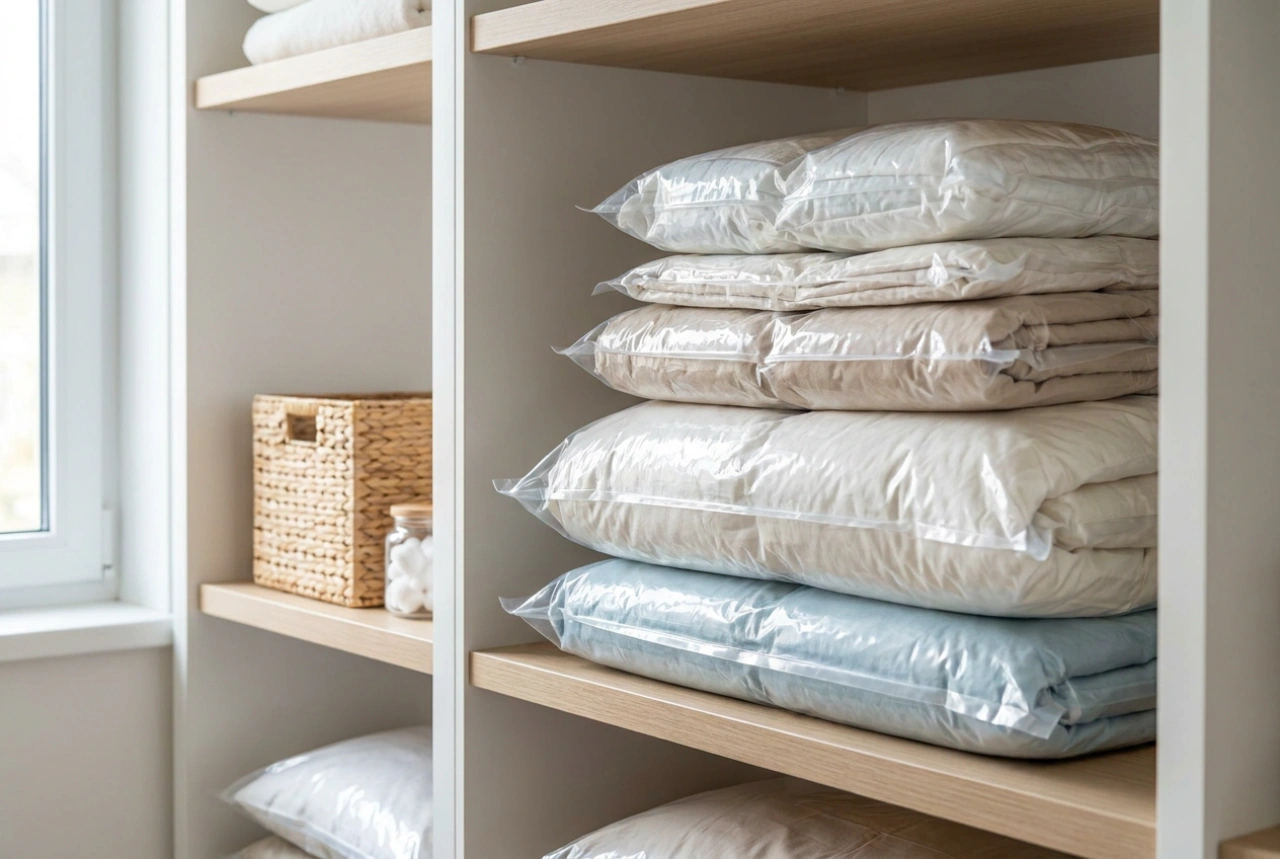
How you package your bedding determines how well the fibers survive long-term storage. While plastic bins and vacuum bags seem convenient, they are not always suitable for every fabric type:
- Natural Fibres (Cotton, Linen, Silk): These organic materials contain microscopic amounts of natural moisture essential for maintaining their elasticity. Sealing them in airtight plastic bags can suffocate the fibers, causing them to yellow, weaken, and develop sour odours. Instead, use breathable cotton or non-woven fabric storage bags that shield against dust while allowing air exchange.
- Down and Feather Fillings: Vacuum-packing down duvets or pillows crushes the delicate loft of the feathers, breaking the keratin structures that trap air and provide insulation. Once compressed for too long, natural down loses its ability to loft. Store these loosely in large canvas bags.
- Synthetics (Polyester, Microfibre): These non-porous materials are highly resistant to moisture-induced rot and can be safely compressed in vacuum bags to save space, provided they are completely dry before sealing.
Preparation and the Drying Protocol
The most critical step in preventing musty smells occurs before the bedding even reaches the storage compartment. Any residual moisture from washing will be trapped and multiplied in the dark under-bed environment. Even if sheets feel dry to the touch, they may still retain up to 10% moisture deep within their weaves.
Always allow washed linens to air dry in a well-ventilated space for at least 4 to 6 hours beyond the point they feel dry, or run them through a complete dryer cycle followed by a cooling-down period. Never fold and store warm bedding directly from the tumble dryer; as the fabric cools, it absorbs ambient moisture from the air, which then becomes locked within the folds.
Strategic Organisation and Folding Techniques
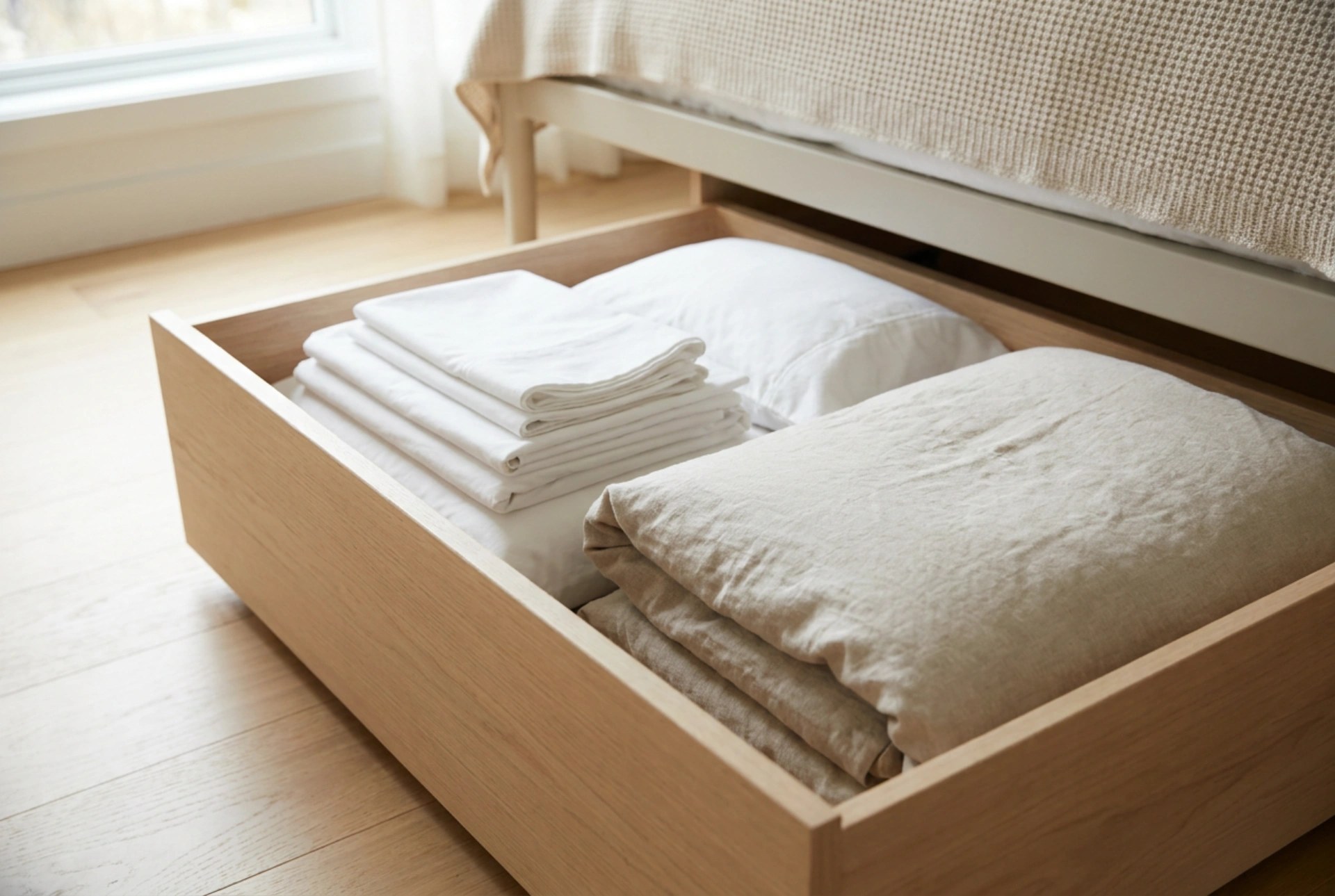
Maximising under-bed space requires systematic organisation that minimises fabric strain. Heavy items, such as thick winter duvets and heavy blankets, should be placed at the bottom of the compartment to prevent them from crushing delicate sheets. Store complete bedding sets together by folding the duvet cover and flat sheets neatly and sliding them inside their matching pillowcase. This keeps sets organised and reduces the surface area exposed to dust.
To prevent creases that can weaken cotton and linen fibers over time, avoid sharp, heavy creases when folding. Instead, employ a soft rolling technique or loose folds, which distributes physical stress more evenly across the textile grid.
Natural Moisture and Pest Management
Instead of relying on harsh synthetic chemical repellents, utilise simple chemistry and natural materials to protect your fabrics. Placing silica gel packets inside your fabric storage boxes will actively adsorb residual moisture from the immediate air, preventing localised humidity spikes. For pest prevention, small blocks of natural cedarwood or sachets of dried lavender act as highly effective, non-toxic deterrents against moths, while leaving a clean, fresh scent that does not damage delicate natural fibers.