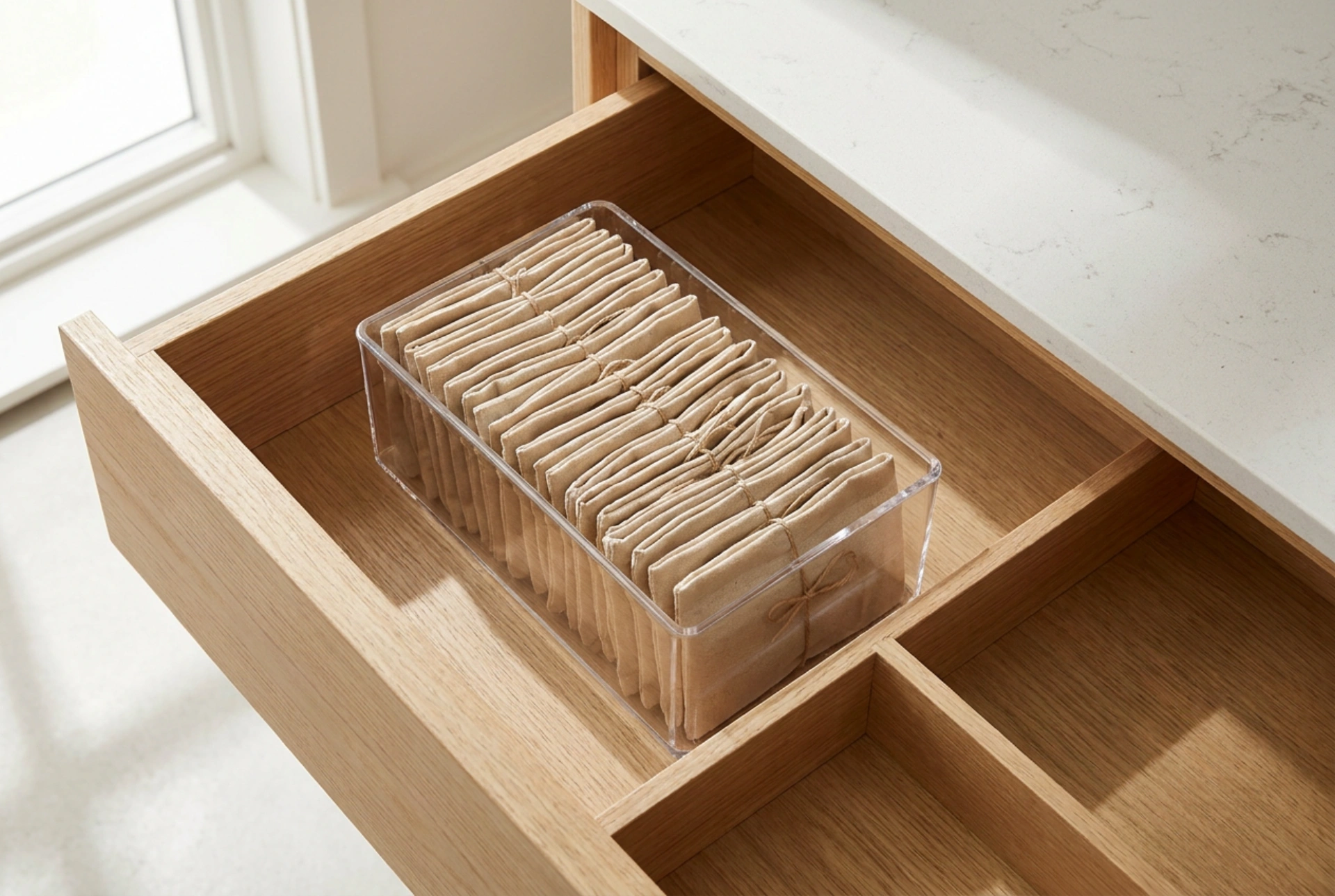


Storing spice pouches in a single container prevents kitchen clutter, but without a structured approach, flexible packets quickly collapse, spill, and lose their volatile aromatic compounds. By applying simple physical principles of support, friction, and environmental barrier protection, you can transform a chaotic pile of spice bags into a highly functional, compact pantry system.
The Physics of Pouch Storage: Gravity and Spillage
Unlike rigid jars, flexible spice pouches lack structural integrity. When placed upright without lateral support, gravity forces them to sag, crumple, and slip down, which often leads to accidental spills of fine powders like paprika or turmeric. Furthermore, open pouches expose ground spices to air, accelerating the evaporation of volatile essential oils—such as piperine in black pepper or cinnamaldehyde in cinnamon—rendering them flavourless. To prevent this, a successful single-container system must provide constant physical support, keeping the packets vertical and tightly sealed to preserve chemical potency.
Selecting the Optimal Container: Dimensions and Materials
The foundation of this organising system is the containment vessel. To choose the right container, you must measure your drawer or pantry shelf depth and match it with the standard height of your spice pouches. Typically, a rectangular organiser with straight, non-tapered walls is most space-efficient, as sloped sides create dead space at the bottom.
- Material Considerations: Food-grade polyethylene or heavy-duty acrylic containers are lightweight and easy to wash. Glass is highly inert and does not absorb odours, but adds significant weight to drawers.
- Friction and Slip Resistance: Look for containers with a textured, ribbed, or rubberised base. This texture increases the coefficient of friction, preventing the bottom edge of the pouches from slipping forward when the container is partially empty.
- Internal Dividers: Movable plastic partition walls are ideal. They act as artificial bulkheads, allowing you to adjust the storage volume as you use up spices, keeping the remaining pouches upright.
The Vertical Filing Method: Maximising Space and Visibility
The most efficient way to arrange spice pouches in a single container is the vertical filing system, similar to an office file drawer. Never stack pouches horizontally on top of one another; this hides the lower packets and forces you to rummage, increasing the risk of tearing the paper packaging.
How to File Your Pouches:
Arrange the pouches front-to-back rather than side-to-side. This alignment matches the natural line of sight when you pull out a kitchen drawer. Group the pouches by chemical category or culinary usage—for instance, grouping sweet baking spices (nutmeg, cloves) separately from savoury herbs (oregano, thyme, rosemary). To ensure instant identification, write the name of the spice on the top margin of the pouch using a permanent marker, or apply small colour-coded labels that protrude slightly above the packet line.
Sealing Mechanics and Preserving Volatile Compounds
Once a spice packet is cut open, its barrier properties are compromised, exposing the contents to oxygen, moisture, and light. Photodegradation breaks down natural pigments like carotenoids, fading the vibrant red of chilli powder to a dull brown and reducing flavour complexity. To protect these sensitive organic compounds inside a single storage box:
Avoid bulky wooden or plastic pegs, which occupy too much physical volume and prevent the pouches from sitting flush against each other. Instead, use slim, flat plastic sealing clips or wire binder clips. For an even more space-saving method, employ the double-fold technique: fold the cut top edge of the pouch down tightly twice to expel excess air, then secure it with a small strip of low-tack, reusable paper tape. This minimises the internal oxygen headspace and keeps the packets extremely flat, allowing you to pack more spices into a single organiser.
Routine Maintenance and the FIFO Principle
Because spices lose their aromatic oils over time, keeping your single-container organiser functional requires active inventory management. Apply the First-In, First-Out (FIFO) method: when purchasing duplicates, place the older packet at the front of its designated section and the new, unopened packet directly behind it. Every six months, inspect the container for loose powder at the bottom. Wipe the base with a dry microfibre cloth to remove fine organic dust, which can attract moisture and lead to clumping or mould formation.