

Storing potatoes correctly prevents premature sprouting, softening, and the accumulation of toxic solanine. Choosing the right container depends entirely on managing light, humidity, and airflow to arrest the potato's natural growth cycle.
The Biology of Sprouting: Why Potatoes Wake Up
Potatoes are dormant, living tubers that continue to respire after harvest. Under the right environmental cues—specifically warmth, moisture, and light—the tuber triggers its transition from dormancy to active growth, resulting in sprouts. When exposed to light, potatoes undergo photosynthesis, synthesizing chlorophyll which turns the skin green. Simultaneously, this process stimulates the production of solanine, a toxic glycoalkaloid that acts as a natural defence mechanism against pests but is harmful to humans. Furthermore, high ambient temperatures accelerate the conversion of stored starches into sugars, providing the metabolic energy required for eyes to sprout. To halt this biological clock, the storage environment must mimic the underground conditions where the tuber naturally remains dormant.
Key Material Characteristics for Potato Containers
Selecting the correct material for your storage container is a matter of chemical and physical regulation. The container must balance air exchange with light exclusion to maintain a stable microclimate.
- Woven Natural Fibres (Jute and Cotton): Jute sacks and cotton bags are highly breathable, allowing metabolic moisture emitted by the potatoes to dissipate. This prevents condensation from settling on the skin, which would otherwise trigger fungal spores and root development. Ensure the weave is tight enough to block ambient light while still permitting gas exchange.
- Unglazed Terracotta and Clay: Terracotta is naturally porous, meaning it can absorb excess humidity from the air and release it when the surrounding environment becomes too dry. This passive humidity regulation keeps potatoes firm without creating the wet conditions that encourage sprouting. Terracotta pots designed for vegetable storage must feature ventilation holes near the base to encourage convection currents.
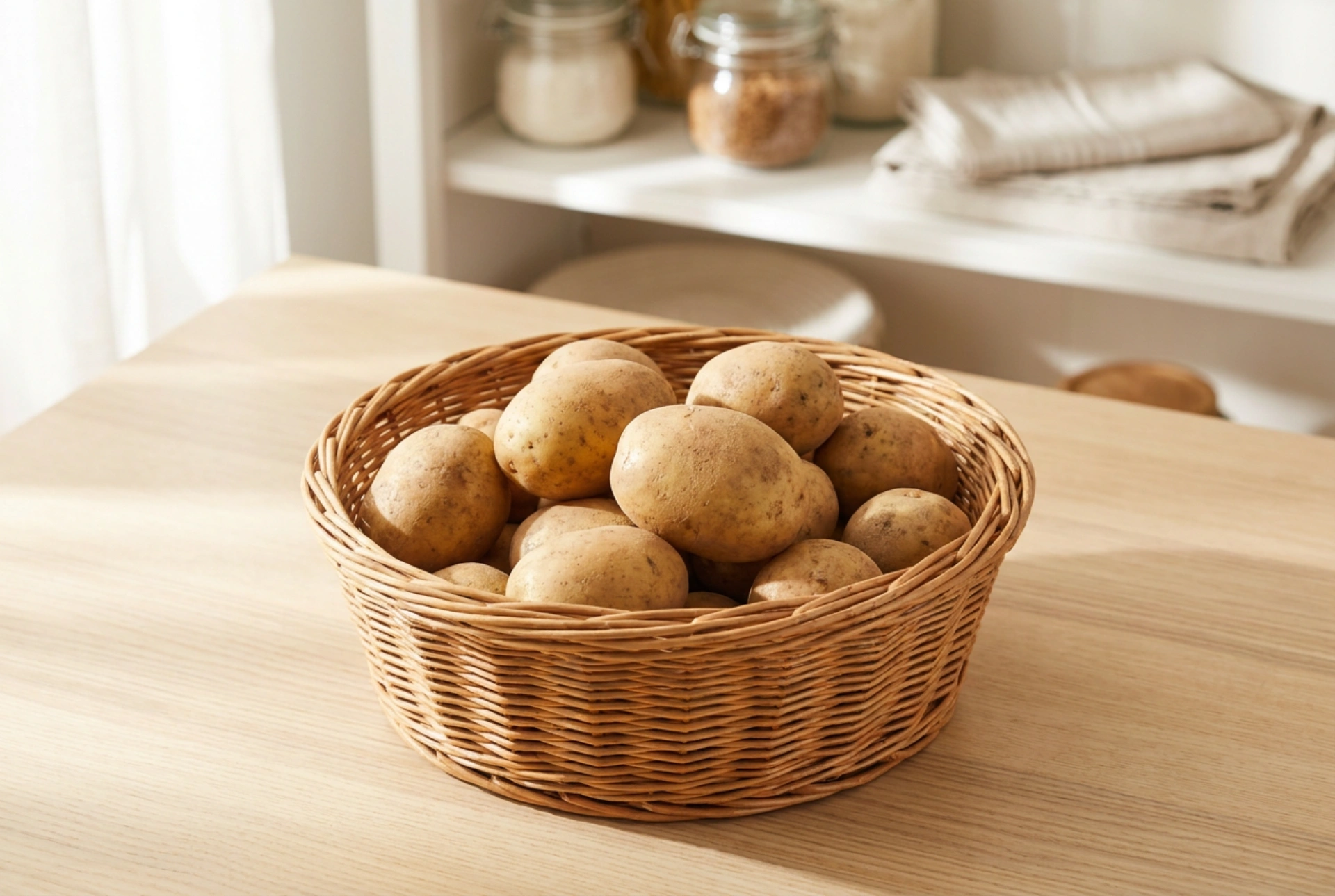
- Wooden Crates and Wicker Baskets: Wooden slats and woven wicker provide exceptional structural airflow. However, because they let in significant amounts of light, they must be stored inside a completely dark pantry or cupboard, or draped with a breathable, dark fabric.
The Danger of Airtight Plastics and Metal
Airtight plastic containers or non-ventilated metal bins are unsuitable for potato storage. When potatoes respire, they release water vapour and carbon dioxide. In an airtight environment, this moisture has nowhere to escape, creating a high-humidity microclimate inside the container. This trapped humidity triggers the growth of adventitious roots and accelerates decay. If you must use plastic, it must be food-grade, opaque to block light, and extensively perforated to ensure constant air circulation.
Optimising the Microclimate: Temperature and Co-habitation
Even the best container will fail if placed in the wrong environment. The physical laws of thermodynamics and chemistry dictate where your potatoes should reside. The ideal temperature range is between 7°C and 10°C. Storing potatoes in the refrigerator (below 6°C) causes an undesirable chemical reaction where starches convert to reducing sugars, altering the flavour and increasing acrylamide formation during high-temperature cooking. Conversely, temperatures above 12°C signal the end of dormancy, triggering rapid sprouting.
Additionally, chemical interactions between different produce types must be managed. Never store potatoes in the same container or immediate vicinity as onions, apples, or bananas. These fruits and vegetables release ethylene gas, a natural ripening agent that accelerates the sprouting process in potatoes, leading to premature spoilage.
Step-by-Step Guide to Setting Up Your Storage
To maximise the shelf life of your potatoes, follow this systematic preparation and storage routine:
- Do Not Wash: Keep the soil on the potatoes. Washing introduces moisture into the microscopic crevices of the skin, initiating fungal growth and breaking dormancy. Only brush off loose dirt gently with a dry cloth.
- Layering: If using a deep container like a wooden crate, place a sheet of clean, dry cardboard or brown paper at the bottom to absorb excess moisture and block light from beneath.
- Inspect Regularly: Check the container bi-weekly. Remove any potatoes showing signs of softening or damage. A single decaying potato releases high concentrations of moisture and heat, which can quickly trigger sprouting and rot throughout the rest of the batch.