

Maintaining the correct water temperature for infant formula while away from home is not just a matter of convenience, but a crucial safety measure to prevent bacterial growth. Using a vacuum-insulated thermal bottle effectively requires an understanding of thermodynamics and strict hygiene protocols.
The Physics of Vacuum Insulation
Traditional insulating materials rely on trapping air pockets to slow down conductive heat transfer. However, the most efficient thermal bottles utilise a double-wall stainless steel construction with a near-complete vacuum sealed between the layers. Because a vacuum contains no air molecules, it virtually eliminates both conduction and convection—the two primary mechanisms of heat transfer. The inner surface of the stainless steel is often copper-plated or highly polished to reflect electromagnetic thermal radiation back into the liquid, minimising radiative heat loss. For baby bottles and formula preparation, food-grade 18/8 stainless steel (304 grade) is the optimal material. It is inert, highly resistant to corrosion from acidic or alkaline cleaning agents, and does not leach chemicals into the water.
Microbiological Safety and the Danger Zone
When preparing formula on the go, managing water temperature is critical to preventing the proliferation of pathogens such as Cronobacter sakazakii and Salmonella. Bacteria multiply rapidly in the temperature range between 5°C and 60°C, known in food science as the danger zone. To prepare formula safely outside the home, two distinct methods are scientifically viable. The first involves carrying sterile water that has been boiled and cooled to no less than 70°C inside the vacuum flask; at this temperature, the hot water sanitises any potential pathogens present in the dry formula powder upon mixing. The second method relies on carrying completely cooled, previously boiled sterile water in the flask to mix with formula that will be consumed immediately, ensuring the liquid never sits in the danger zone for more than two hours.
Pre-Conditioning the Thermos for Maximum Thermal Retentivity
To extend the thermal efficiency of a vacuum bottle, you must manage the initial thermal energy of the container itself. If you pour hot water into a cold stainless steel flask, energy is immediately transferred from the liquid to the metal walls to reach thermal equilibrium, instantly lowering the water temperature by several degrees. To prevent this, always pre-condition the vessel. Fill the flask with boiling water, seal it, and let it sit for three to five minutes. This pre-heats the internal stainless steel layer. Empty this water completely before pouring in the target volume of water intended for the outing. This simple thermodynamic adjustment ensures the water maintains its target temperature for hours longer.
Systematic Organisation and Contamination Control
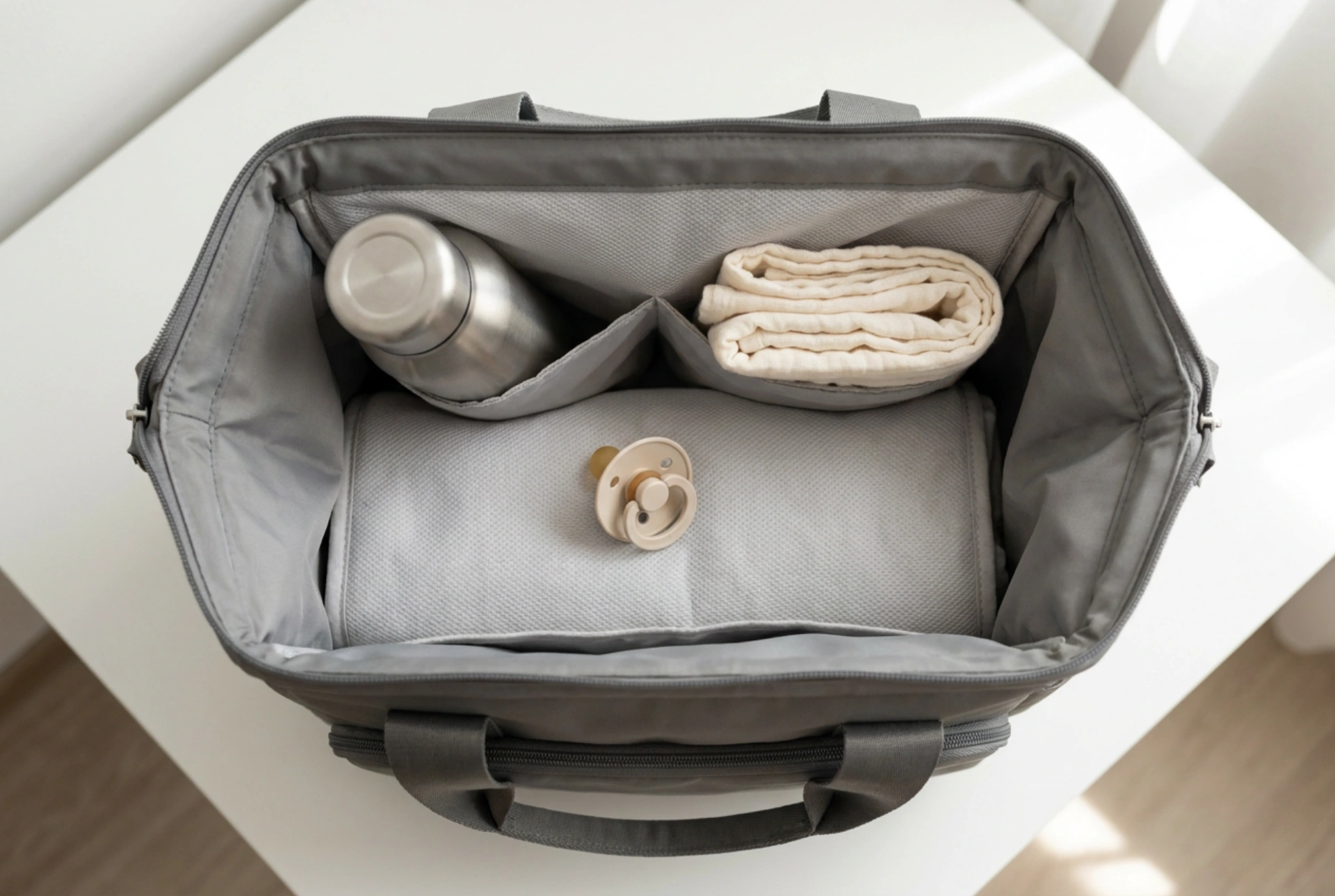
Organising a travel bag is an exercise in surface hygiene and contamination prevention. Cross-contamination occurs when sterilised items, such as bottle teats and pacifiers, come into contact with high-touch surfaces or moisture. To maintain a sterile chain, pack your bag using a strict spatial hierarchy. Keep the vacuum-insulated bottle upright in a dedicated insulated pocket to prevent physical shocks that could rupture the vacuum seal. Group sterilised accessories inside non-porous silicone pouches rather than fabric bags, as silicone does not support bacterial growth and can be easily boiled or sanitised. Always place dry, clean items (like muslin cloths and fresh nappies) in the upper, dry zones of the bag, while damp items or used bottles must be relegated to isolated, waterproof compartments at the bottom to prevent capillary transfer of moisture and bacteria.