

External mailboxes are constantly exposed to environmental stressors and security risks, requiring proactive measures to prevent water damage, material corrosion, and mail theft.
Combating Water Ingress and Condensation
The primary threat to paper correspondence is moisture, which enters either through direct rainwater penetration or internal condensation. To prevent capillary action—where water is drawn through tight seams by surface tension—a mailbox must feature a pronounced drip edge (a projecting lip over the opening slot). This edge forces rainwater to pool and drop off before reaching the seal.
Internal moisture control relies on two factors: sealing and ventilation. High-quality external mailboxes use synthetic rubber gaskets, such as ethylene propylene diene monomer (EPDM) or silicone, which maintain elasticity under extreme temperatures. These gaskets should line the access door to create a compression seal. Conversely, complete airtightness causes condensation when ambient temperatures drop, trapping humid air inside. Incorporating small, shielded drainage and ventilation holes at the lowest point of the mailbox allows pressure equalisation and prevents standing water from pooling beneath your letters.
Understanding Material Science and Corrosion Resistance
The choice of material determines how well a mailbox resists atmospheric degradation. When choosing or maintaining an external letterbox, understanding the chemistry of metals prevents premature failure:
- Stainless Steel (Grade 304 or 316): These alloys contain chromium, which reacts with oxygen to form an invisible, self-healing layer of chromium oxide. Grade 316 is particularly suited for coastal environments as it contains molybdenum, resisting chloride-induced pitting.
- Powder-Coated Galvanised Steel: Galvanisation coats steel in zinc, providing sacrificial protection; the zinc corrodes in place of the underlying iron. A secondary polyester powder-coated finish adds a UV-resistant barrier that blocks water and atmospheric pollutants.
- Anodised Aluminium: Anodisation electrochemically thickens the natural oxide layer on aluminium, making it exceptionally hard and resistant to scratching and atmospheric corrosion.
Mechanical Security and Anti-Fishing Design
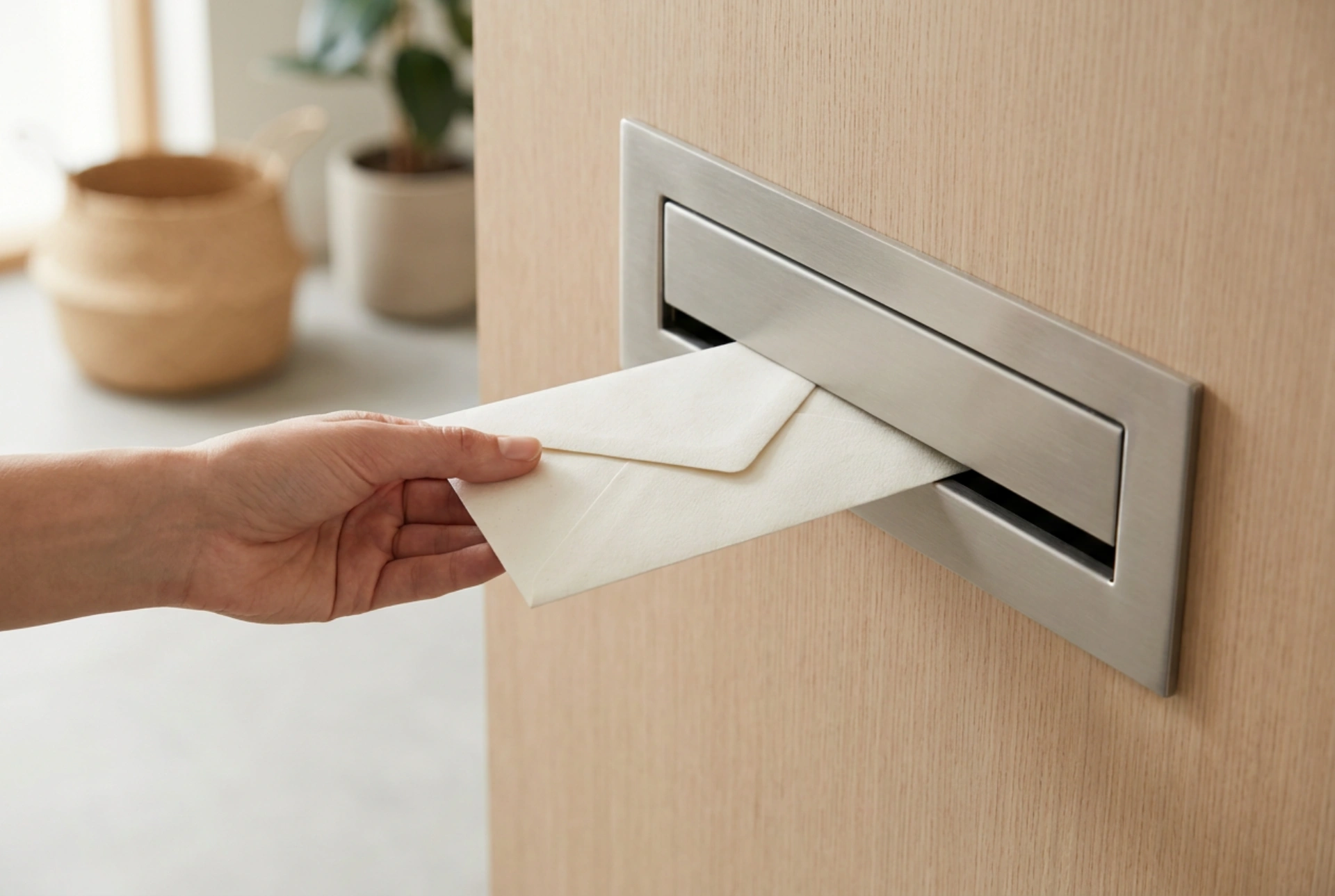
Mail theft often relies on "fishing" techniques, where thieves use adhesive tools or hooks inserted through the delivery slot. Securing your correspondence requires a mailbox design that exploits physical barriers. Look for internal baffle plates—angled metal flaps located just beneath the slot. When a letter is pushed through, the baffle swings open; once the letter drops, gravity returns the plate to its resting position, blocking any upward access.
The locking mechanism itself must withstand both physical tampering and weather. Double-bitted locks or disc-tumbler cylinders offer higher resistance to picking than standard pin-tumbler locks. Ensure the locking cam (the metal bar that rotates to secure the door) engages deeply with the frame to resist leverage attacks with basic hand tools.
Routine Maintenance and Lock Care
Maintaining a mailbox's integrity requires simple, regular physical care. Lock cylinders should never be lubricated with standard wet oils or multipurpose sprays, as these attract airborne dust, pollen, and grit, eventually jamming the internal pins. Instead, use dry graphite powder or PTFE-based dry lubricants, which lubricate the moving parts without leaving a sticky residue. Periodically inspect the rubber gaskets for cracking or hardening, and clean the exterior with a mild surfactant solution to remove salts and acidic deposits before they can compromise the protective oxide layer of the metal.