

Organising a high-capacity album containing 1,000 photos requires a systematic indexing strategy to prevent physical deterioration and cognitive overload when searching for specific memories. Without a structured framework, navigating a dense volume becomes an exhausting chore that risks damage to the fragile photographic emulsion through excessive handling.
The Materials Science of Large-Scale Photo Storage
Before sorting a single image, you must understand the physical constraints of high-capacity storage. A 1,000-photo album carries significant weight, putting structural strain on bindings and page seams. Selecting polypropylene or polyester pockets is critical; avoid polyvinyl chloride (PVC) plastics, which release hydrochloric acid over time, degrading the photographic paper and causing the emulsion to stick to the plastic cover. Use acid-free, lignin-free paper dividers to separate sections. When handling the physical prints, wear lint-free cotton gloves. This simple precaution prevents the transfer of sebaceous oils and salt from your skin, which can slowly etch into the gelatine silver or dye-coupler layers of the photographs, leading to irreversible fingerprint staining.
Chrono-Thematic Indexing: Building the Framework
The most reliable method for categorising a vast collection is the chrono-thematic matrix. Purely chronological filing often fails because human memory recalls events by associations rather than precise dates. Conversely, purely thematic filing makes it difficult to trace historical progression. Divide your 1,000-photo capacity into logical blocks, such as years, decades, or major life chapters, and then apply sub-themes within those blocks.
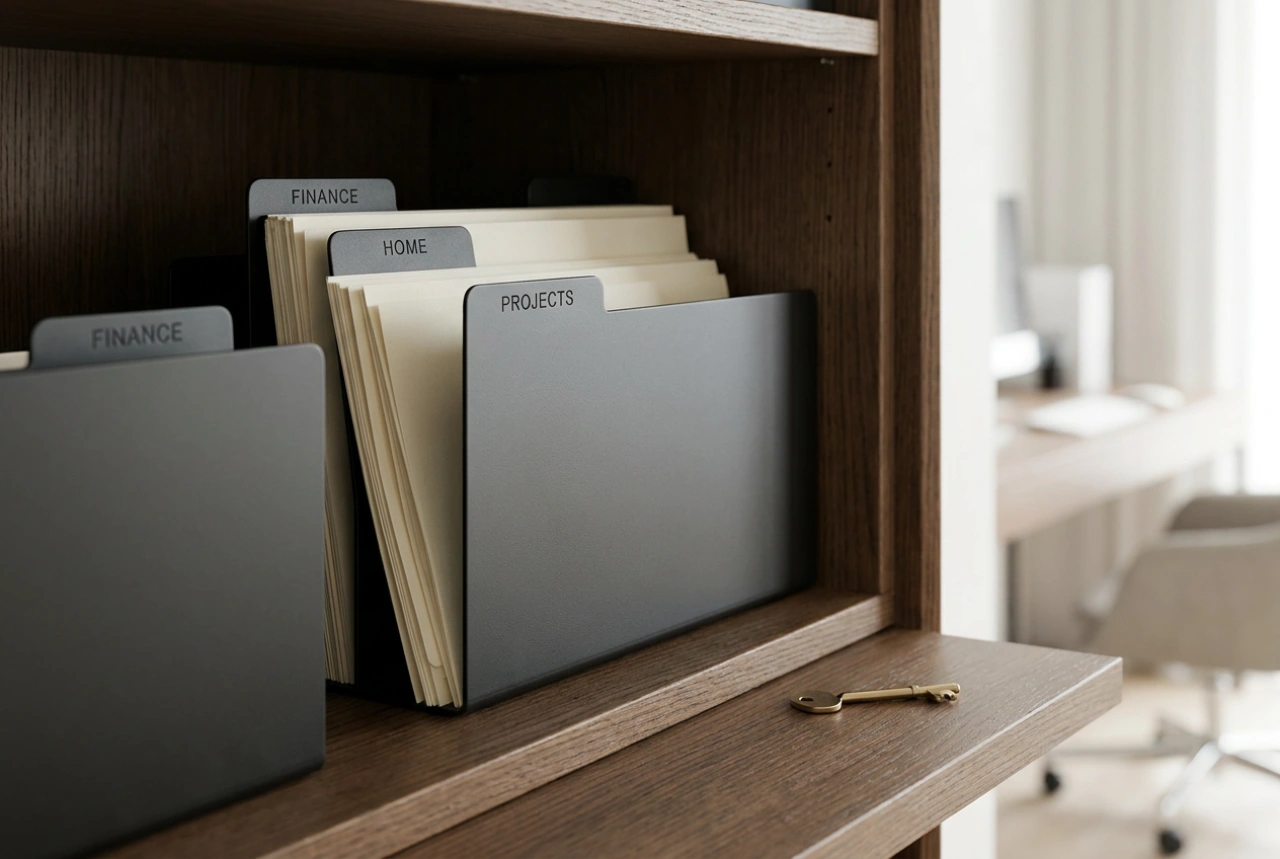
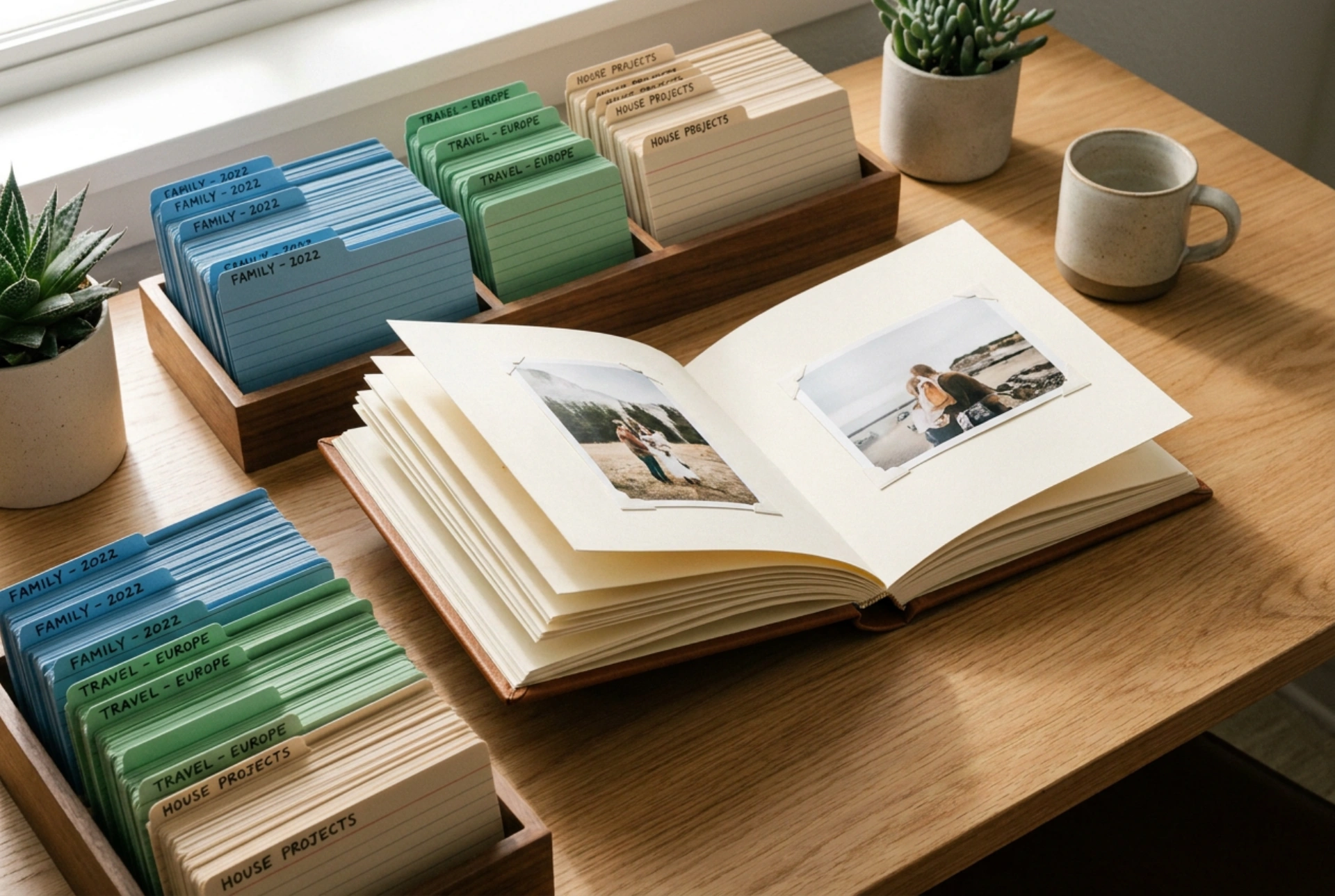
- Primary Chronological Dividers: Establish major intervals (e.g., blocks of 100 to 200 photos representing specific eras or years). Use thick, archival card stock as physical tabs.
- Secondary Thematic Markers: Within each chronological block, cluster images by event type or location (e.g., seasonal changes, domestic celebrations, travel).
- The Anchor Image System: Start each section with an "anchor photo"—a highly recognisable, iconic image that immediately communicates the context of the subsequent pages, acting as a visual bookmark.
The Physics of Layout and Weight Distribution
The mechanical structure of a large photo album is highly susceptible to gravity and shear forces. If you pack all dense, heavy panoramic prints on one side, the binding will warp over time. Balance the thickness of your pages by distributing multi-layered layouts evenly. Leave a systematic margin of safety: allocate approximately five per cent of the album pockets to remain empty. These blank spaces serve as buffer zones, allowing the pages to flex naturally without creating high-pressure pinch points that squeeze the photos against each other, which can lead to physical fusion in high-humidity environments.
Labelling Techniques Without Chemical Contamination
Standard ink-jet printouts and standard ballpoint pens are major hazards in photo preservation. Ballpoint ink contains solvents that can migrate through paper, while common adhesive labels contain acidic glues that degrade backing materials. To label your index cards and dividers safely:
- Use dedicated archival pigment liners or soft graphite pencils (2B or softer) to write on the dividers. Graphite is chemically inert and will not bleed or off-gas.
- If applying printed labels, ensure the adhesive is acrylic-based and certified as passing the Photographic Activity Test (PAT).
- Place all descriptive metadata—such as names, dates, and locations—on the back of the divider tabs or on dedicated index cards inserted behind the photographs, never directly on the physical prints themselves.
Long-Term Preservation and Storage Alignment
Once indexed, the physical orientation of the album dictates its lifespan. Heavy 1,000-photo albums should never be stored vertically like standard books. Gravity pulls the heavy pages downwards, warping the spine and straining the binding rings. Always store high-capacity albums horizontally (flat) on a stable shelf. Keep them in a climate-controlled room where relative humidity remains between 30% and 50% and the temperature stays below 20 degrees Celsius. Maintaining these conditions prevents the expansion and contraction cycles that cause photo emulsions to crack and peel away from their paper bases.